Best Adapter for Cruise Ship Cabins
Introduction
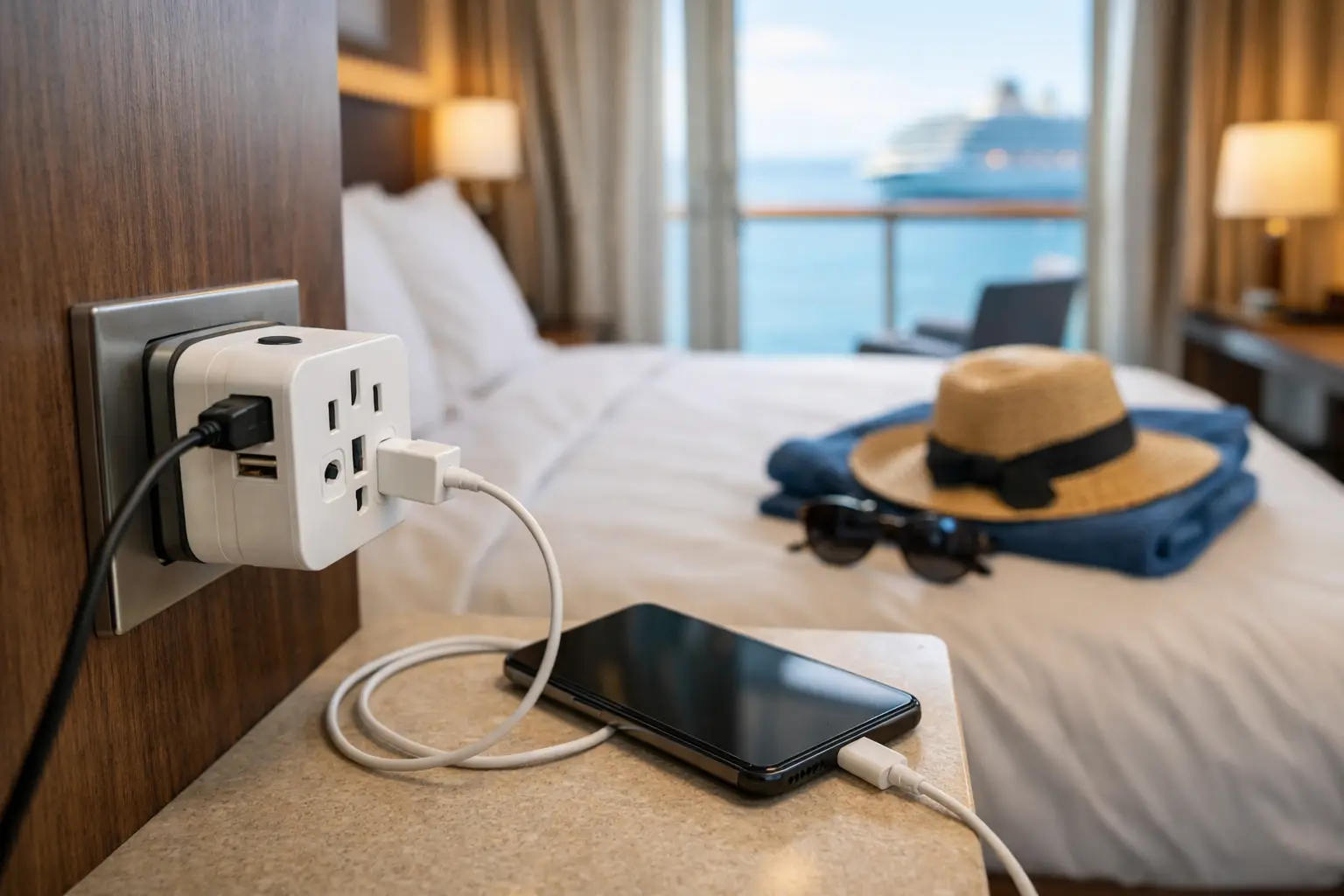
You notice it the first evening onboard. One plug socket by the dressing table, another tucked awkwardly behind the bed, and two phones already on low battery. Finding the best adaptor for cruise ship cabins is less about buying the fanciest gadget and more about choosing something that works with cruise line rules, your cabin layout and the devices you actually use.
For most UK travellers, the right answer is not a bulky travel adaptor, with a surge protector built in. In many cases, that is exactly the type of item cruise lines prohibit. What usually works best is a compact, non-surge-protected adaptor or USB charging hub that gives you a few extra charging options without creating a safety issue or taking up half the desk.
What makes the best adaptor for cruise ship use?
Cruise cabins are different from hotel rooms in one important way. Power access is limited, and cruise lines take electrical safety more seriously than many land-based properties. That means the best adapter for cruise ship travel needs to be practical, compact and compliant.
The first thing to check is whether your ship offers UK, EU or US-style sockets in the cabin. Many ocean cruise ships aimed at the UK market still include a mix of European two-pin and US two-flat-pin sockets, while some newer ships may add USB ports by the bed. River ships vary as well, especially if they are built for a predominantly European guest base. You cannot assume your usual holiday plug will fit.
The second factor is cruise line policy. Some lines prohibit extension leads and adaptors with surge protection. Others are stricter about anything that multiplies outlets at all. This is where people get caught out. A power cube that is perfectly acceptable in a hotel may be removed from your luggage during embarkation if it breaches the ship’s electrical rules.
Why surge protection matters on a cruise ship
If you only remember one thing, make it this: avoid surge-protected adapters unless your cruise line specifically permits them.
Ships use complex electrical systems, and cruise operators tend to restrict surge-protected extension leads and power strips because they can interfere with onboard circuitry or create avoidable risks. A standard non-surge adaptor is the safer choice. Some products are marketed loosely, so it is worth reading the specification rather than relying on the front of the box.
This is also why the best adaptor for cruise ship cabins is often quite simple. You are not trying to power a home office. You just need to charge a phone, smartwatch, tablet, e-reader or perhaps a camera battery in an organised way.
The best type of adaptor for most UK cruise passengers
For most travellers sailing from the UK, the most useful option is a compact European plug adaptor with USB ports, provided it is non-surge-protected and allowed by your cruise line. That covers a large number of cabins where the easiest available spare socket is the European one.
If your ship mainly offers US sockets, a compact US adapter with USB charging can be equally useful. Some experienced cruisers pack one of each, especially if they are travelling as a couple and know they will need to charge several devices at once.
There is a difference between an adaptor and a converter, and most people do not need the latter. A plug adaptor changes the shape of the plug so it fits the socket. A voltage converter changes electrical output. Phones, tablets, laptops and most modern chargers are dual voltage, so an adaptor is usually enough. Hair tools are another matter, which is why many cruise passengers leave them at home and use the cabin hairdryer instead.
What to look for before you buy
Small details make a big difference in a cabin. Size matters because sockets can be close to a mirror shelf or placed where a wide adapter blocks the second outlet. Weight matters because you want it to stay secure rather than droop out of the wall.
USB-A and USB-C ports are particularly helpful now that many people travel with newer phones, earbuds and watches. An adapter with a mix of both is more flexible than one built around older charging cables only. That said, faster charging is not always essential on a cruise. Overnight charging in a well-placed hub is often more useful than one high-speed port and no room for anything else.
It is also worth looking for a simple design with clear labelling. If you are packing for a fly-cruise, staying in a hotel the night before and then joining the ship, one adaptor that works across several stages of the journey is easier to manage than several oddly shaped back-ups.
Cabin realities that affect your choice
The best adapter for cruise ship cabins depends partly on where and how you cruise. On a newer mainstream ocean ship, you may find USB ports beside the bed and a couple of international sockets at the desk. In that case, you may only need a single compact adapter as a backup.
On an older vessel, especially one that has not had a recent cabin refurbishment, charging points can be far less convenient. You may need to charge everything from one desk area, which is frustrating if you use your phone as an alarm or want a device by the bed overnight.
River cruises can be a little easier if the ship is strongly geared towards European travellers, but not always. Expedition and smaller ships may have even tighter cabin layouts, where oversized adaptors are especially awkward. It really is one of those areas where ship age and cabin design matter.
Should you take a multi-port USB charger?
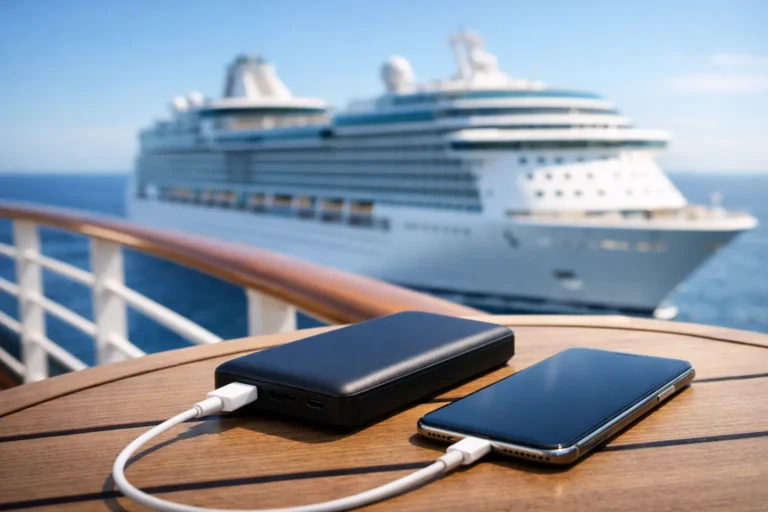
Often, yes, but choose carefully. A compact wall charger with several USB ports can be one of the most useful things in your cabin, especially if you are charging low-draw devices rather than plugging in heavy appliances. It helps reduce the scramble for sockets and keeps cables in one place.
The catch is that not all multi-port chargers are treated the same way by cruise lines. A straightforward wall charger is generally less problematic than an extension lead, tower strip or desk-top power station. The more it resembles a home power strip, the more likely it is to raise questions at security.
For couples, a compact charger with two to four USB outputs is usually plenty. For solo travellers, even a simple dual USB adapter may be enough. More ports are not always better if the item becomes bulky and unstable.
What to avoid packing
The easiest way to avoid issues at embarkation is to skip anything that looks excessive. Extension leads, surge-protected power strips and high-wattage converters are the main things to be cautious with. Heated styling tools can also be restricted on some lines, especially if they are seen as a fire risk.
You should also avoid assuming that every cabin needs a complicated setup. Many travellers over-pack gadgets for a cruise, then discover that two phones, one watch and an e-reader were the only things they needed to keep charged. A smaller, compliant adaptor is usually the smarter choice.
A simple setup that works well
If you want a sensible, low-fuss option, pack one non-surge European adapter with USB ports, one non-surge US adapter if your ship may have American sockets, and the charging cables you genuinely use. That setup covers most mainstream cruise scenarios without taking up much room.
If your cruise line clearly permits a compact multi-USB wall charger, that can replace one of the individual adapters. Just check the rules before you travel rather than relying on forum hearsay or old packing lists, as policies do change.
This is one of those details The Essential Cruise Shop encourages travellers to sort early, because it is much easier to choose the right adapter at home than to realise onboard that your only available socket is the wrong type.
So what is the best adapter for cruise ship travel?
The best adaptor for cruise ship travel is usually a compact, non-surge-protected plug adaptor with built-in USB charging, chosen to match the socket types your ship is likely to offer. For UK travellers, European and US plug compatibility are the key things to think about, along with cruise line restrictions.
There is no single perfect adaptor for every ship and every passenger. A solo guest on a short sailing needs less than a couple on a two-week itinerary with phones, tablets, watches and cameras. But if you keep it simple, safe and suited to your cabin, you will avoid one of the most common small frustrations at sea.
A good cruise is often about getting the practical details right before you leave home, and your charging setup is one of those small choices that makes the whole trip feel easier.
Quick Reference Tables
Cruise Line |
Surge-Protected Strips |
Non-Surge Multi-AC Outlets |
|
❌ Banned |
Allowed |
|
|
❌ Banned |
❌ Banned |
|
|
❌ Banned |
Allowed |
|
|
❌ Banned |
❌ Banned |
|
|
❌ Banned |
Allowed |
|
|
❌ Banned |
❌ Banned |
|
|
❌ Banned |
⚠️ Discouraged |
|
|
❌ Banned |
❌ Banned |
|
|
❌ Banned |
Allowed |
|
|
❌ Banned |
❌ Banned |
|
|
❌ Banned |
Allowed |
|
|
❌ Banned |
⚠️ Restricted |
|
|
❌ Banned |
Allowed |
|
|
❌ Banned |
Allowed |
|
|
❌ Banned |
❌ Banned |
|
|
❌ Banned |
⚠️ Discouraged |
|
|
❌ Banned |
Allowed |
|
|
❌ Banned |
Allowed |
|
|
❌ Banned |
❌ Banned |
|
|
❌ Banned |
⚠️ Restricted |
Cruise Line |
USB-Only Hubs &High Power Chargers |
Extension Cords(Non-Surge) |
|
Allowed |
Allowed |
|
|
Allowed |
❌ Banned |
|
|
Allowed |
Allowed |
|
|
Allowed |
❌ Banned |
|
|
Allowed |
Allowed |
|
|
Allowed |
❌ Banned |
|
|
Allowed |
Allowed |
|
|
Allowed |
❌ Banned |
|
|
Allowed |
Allowed |
|
|
Allowed |
❌ Banned |
|
|
Allowed |
Allowed |
|
|
Allowed |
⚠️ Small leads only |
|
|
Allowed |
Allowed |
|
|
Allowed |
Allowed |
|
|
Allowed |
❌ Banned |
|
|
Allowed |
Allowed |
|
|
Allowed |
Allowed |
|
|
Allowed |
Allowed |
|
|
Allowed |
Allowed |
|
|
Allowed |
Allowed |
The Two Golden Rules for Cabin Power
- The “No-Cord” Multiplier Loophole: On lines where multi-AC blocks and extensions are strictly banned (Royal Caribbean, Celebrity, Disney, Costa, Fred. Olsen, Azamara, Oceania), multi-port USB/USB-C wall blocks are universally accepted because they don’t feature an extra AC socket or extension wire.
- Medical Exceptions: If you use a CPAP machine or electronic medical equipment, every single line on this list will provide you with a compliant extension cord and distilled water free of charge. You simply need to notify their accessibility desk prior to boarding or ask your cabin steward on day one.
Frequently Asked Questions
Disclaimer
The Essential Cruise Shop Blog provides this guide for informational purposes and does not act as a travel agency or relevant professional adviser. The information contained in this guide is for general guidance only. While we endeavour to keep information correct and up to date, we make no representations or warranties of any kind regarding its completeness or accuracy. Cruise line electrical safety rules, prohibited item lists, permitted power adapter specifications, and cabin socket configurations are subject to change without notice. We strongly recommend that you verify all electrical requirements and cabin details directly with your cruise line or a certified travel agent before making purchases, travel decisions, or financial commitments. We cannot be held liable for any financial loss caused by a reader's failure to follow this advice.
Affiliate Disclosure
Many of the links are affiliate links, The Essential Cruise Shop Blog may receive a commission from qualifying clicks, orders or bookings. This income helps support our efforts to provide and improve our site and turn it into a one stop resource for travellers with a bias towards cruising.
Frequently Asked Questions
Additional Resources

The Essential Cruise & Travel Shop

Disclaimer
The Essential Cruise Shop Blog provides this guide for informational purposes and is not a travel agency. The information contained in this guide is for general guidance only. While we do our best to ensure the information is up-to-date and correct, we make no representations or warranties of any kind about its completeness or accuracy.
Cruise line policies, itineraries, and loyalty programs are subject to change without notice. We strongly recommend that you verify all details directly with your cruise line or a certified travel agent before making any bookings or financial commitments.
We cannot be held liable for any financial loss due to the reader’s failure to follow the above advice.
Affiliate Disclosure
Many of the links are affiliate links, The Essential Cruise Shop Blog may receive a commission from qualifying clicks, orders or bookings. This income helps support our efforts to provide and improve our site and turn it into a one stop resource for travellers with a bias towards cruising.