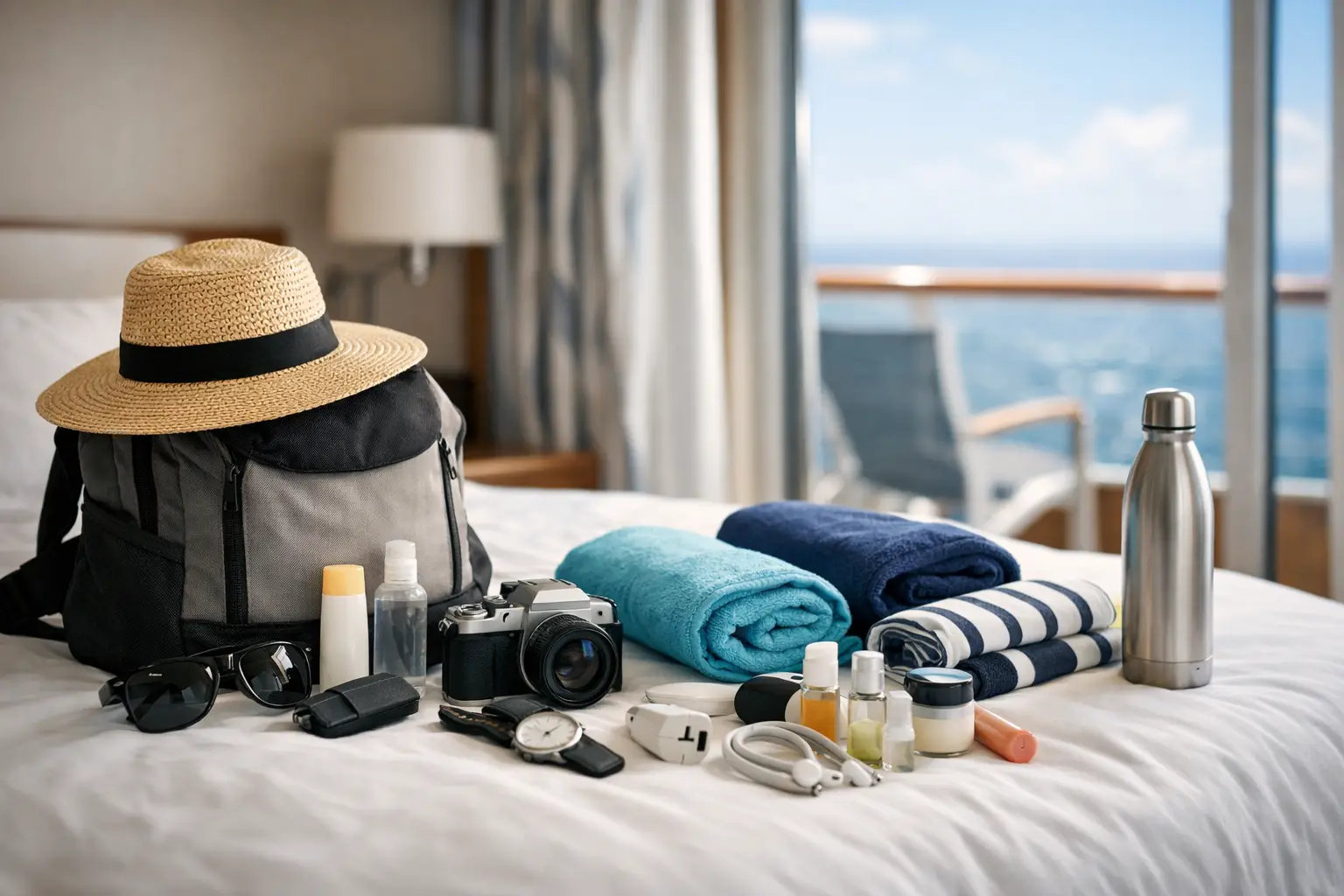
Cruise Cabin Essentials: Pack Smarter & Save Space
Introduction
You usually notice a cruise cabin’s limitations about ten minutes after opening your suitcase. There is never quite as much drawer space as you hoped, the bathroom shelf is smaller than expected, and if you have forgotten one useful little item, you will either pay ship prices for it or manage without. That is exactly why a cruise cabin essentials checklist matters – not for over packing, but for making your space easier to live in from embarkation to disembarkation.
A good cabin setup can make the whole holiday feel calmer. It helps you stay organised, keeps day-to-day routines simple, and avoids the irritating scramble for chargers, medicines or tomorrow’s excursion bag. Whether you are sailing on a large ocean ship or a smaller river vessel, the same principle applies: pack for the cabin you will actually have, not the hotel room you wish you had.
What belongs on a cruise cabin essentials checklist?
The best cruise cabin essentials checklist is built around three things: comfort, organisation and cabin practicality. That means focusing less on “just in case” extras and more on items you are likely to use every day. Cabins are compact, and clutter builds quickly, so every item needs to earn its place.
For most UK cruise travellers, the real essentials are not glamorous. They are the pieces that solve small onboard annoyances before they become bigger ones. Think charging devices with too few plug sockets, swimwear that needs drying in a room with limited hanging space, or toiletries trying to balance on a tiny bathroom ledge.
It also depends on your cruise line and cabin type. A suite may offer more storage and better amenities, while an inside cabin will make space-saving choices far more important. River cruise cabins can be particularly tight, so multi-use items tend to work best there.
Charging and power without cabin chaos
One of the most commonly overlooked cabin problems is power access. Many cruise cabins still have a limited number of sockets, and their location is not always convenient. If you use a phone, smartwatch, e-reader and perhaps a camera, things can get messy quickly.
A non-surge protected multi-USB charger is often one of the most useful items you can bring, provided it meets your cruise line’s safety rules. That caveat matters. Some lines are strict about extension leads and certain power strips, especially anything with surge protection. It is worth checking your specific cruise line before packing one, because the wrong device may be confiscated for the duration of the voyage.
A longer charging cable can be just as helpful. Bedside sockets are not guaranteed, and a short cable can leave your phone charging on the desk across the room. If you like using your phone as an alarm, or you want it nearby overnight, cable length makes a difference.
Cabin organisation that saves time every day
Cruise cabins rarely become difficult because they are too small on day one. They become difficult because two people unpack without a plan. Shoes gather by the door, excursion bits pile up on the desk, and formalwear ends up sharing space with sun cream and receipts.
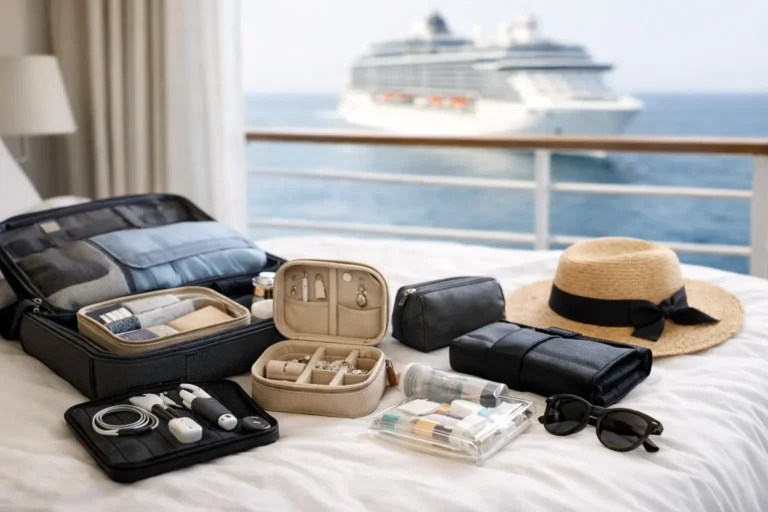
Packing cubes are one of the simplest ways to keep order. They help separate eveningwear, daytime clothes, underwear and shore items, and they make unpacking faster once you board. Instead of filling drawers loosely and losing track of what is where, you create defined sections from the start.
A small foldable laundry bag is another cabin staple. Dirty clothes accumulate faster on a cruise than many people expect, particularly if you change for dinner or return from excursions in warm weather. Keeping laundry contained stops the cabin feeling untidy, and it makes repacking much easier at the end.
If your ship permits magnetic hooks, they can be surprisingly useful because many cabin walls are metal. These can create extra hanging space for hats, lanyards, light jackets or wet items. But this is another area where policies vary. Some cruise lines welcome them, others discourage anything that could mark surfaces, so always check first.
Bathroom essentials for small spaces
Cruise cabin bathrooms are efficient rather than generous. Shelf space is usually limited, and if two people are sharing, personal items can spread quickly. This is where compact, leak-proof toiletries and a bit of planning really help.
Travel-sized bottles are usually the smarter choice, even on longer sailings. They take up less room and are easier to manage in a small bathroom. If you are loyal to particular products, decanting them into labelled containers often works better than taking full-size bottles. It is not just about suitcase space – it is about what fits comfortably once you are onboard.
A hanging toiletry bag can also be helpful, especially if the bathroom has minimal surface area. Instead of unpacking everything onto one tiny shelf, you keep items together and accessible. This is particularly useful for couples sharing one basin area during busy pre-dinner or early-excursion mornings.
Medication deserves special attention on any cruise cabin essentials checklist. Keep regular medicines in your cabin bag, not your main luggage, and bring enough for the entire sailing plus a little extra in case of delays. Basic remedies for seasickness, headaches, indigestion and minor colds are also sensible, as onboard shops and medical centres are not the place you want to discover inflated prices or limited choice.
Comfort items that genuinely earn their space
Not every cabin essential has to solve a logistical problem. Some simply make the room more comfortable, which matters more than people sometimes admit. A cruise is still a holiday, and small comforts can improve sleep, downtime and overall ease.
A lightweight cardigan or shawl is useful even in warm destinations because cabin air conditioning can feel cool in the evening. Slippers are another worthwhile addition for many travellers, especially if your cabin grade does not include them. Walking to the bathroom in the night is much nicer with something soft underfoot than on a cold cabin floor.
If you are a light sleeper, consider earplugs and a sleep mask. Cabin noise varies. You may hear corridor traffic, neighbouring doors, or early-morning announcements depending on ship layout and your location. Most of the time this is manageable, but a few small sleep aids can make a real difference.
A refillable water bottle can be helpful too, though practice differs by cruise line. Some guests like filling one in buffet areas or using bottled water from their package. Others prefer simply using cabin glasses. The best option depends on the ship’s rules and your own habits, but having a bottle for port days and excursions is often useful regardless.
Items that are useful, but not always essential
This is where packing decisions become more personal. Some items are excellent for one traveller and unnecessary for another. The goal is not to copy someone else’s suitcase exactly, but to think about how you actually use your cabin.
A small night light, for instance, can be brilliant in an inside cabin or for anyone who gets up during the night. Yet if you sleep soundly and know the cabin layout well, you may never need it. The same goes for a small cabin-friendly air freshener, reading light or insulated mug.
A door organiser is often mentioned in cruise packing discussions, but it is not right for everyone. Families in one cabin may find it very useful for storing shoes, sun cream and small accessories. Couples on a shorter cruise may decide it is unnecessary bulk. Practicality should always outweigh novelty.
What to leave out of your cruise cabin essentials checklist
A useful checklist is as much about restraint as preparation. Cruise cabins work best when they are organised, not overloaded. Overpacking creates its own inconvenience, especially when storage is limited.
Avoid bringing bulky extras that duplicate what the cabin already provides unless you know there is a specific gap. Hairdryers, pool towels, kettles and basic toiletries are often available, though standards vary by line and cabin grade. Check before you pack. There is little sense using valuable luggage space for something already waiting in the room.
Be cautious with anything electrical that may breach cruise policies. Candles, steamers and some extension devices are commonly prohibited. Even if they seem harmless, ship safety rules are strict for good reason. When in doubt, check your line’s prohibited item list rather than guessing.
A simple way to build your own cruise cabin essentials checklist
If you want a practical approach, divide your cabin items into five groups: charging, bathroom, organisation, comfort and health. That framework catches most of what people actually use onboard without encouraging unnecessary packing. It also works across different cruise styles, from a week in the Med to a longer no-fly itinerary from Southampton.
At The Essential Cruise Shop, the most helpful advice is usually the least dramatic: choose the items that make your cabin function better, not the gadgets that promise to transform it. A well-packed cabin feels tidy, easy and ready for the rhythm of ship life.
The aim is simple. When you walk back into your cabin after dinner, after a sea day, or after a long excursion, everything should be exactly where you need it – and nothing should be there by mistake.
Frequently Asked Questions
Disclaimer
The Essential Cruise Shop Blog provides this guide for informational purposes and is not a travel agency. The information contained in this guide is for general guidance only. While we do our best to ensure the information is up-to-date and correct, we make no representations or warranties of any kind about its completeness or accuracy.
Cruise line policies, itineraries, and loyalty programs are subject to change without notice. We strongly recommend that you verify all details directly with your cruise line or a certified travel agent before making any bookings or financial commitments.
We cannot be held liable for any financial loss due to the reader’s failure to follow the above advice.
Affiliate Disclosure
Many of the links are affiliate links, The Essential Cruise Shop Blog may receive a commission from qualifying clicks, orders or bookings. This income helps support our efforts to provide and improve our site and turn it into a one stop resource for travellers with a bias towards cruising.