How to Avoid Cruise Overpacking on Holiday
Introduction
The case that will not close is rarely caused by one extravagant item. It is usually the result of packing for every possible version of your cruise holiday: a formal evening that may not happen, three changes of clothes a day, and weather forecasts that look less certain than they are. Learning how to avoid cruise overpacking starts with a simple shift: pack for the itinerary you have booked, not every situation you can imagine.
Cruising does involve more moving parts than a typical hotel holiday. There may be flights, transfers, changing climates, dress codes and shore days to consider. Yet a well-planned cruise wardrobe can usually be smaller, more comfortable and easier to manage than first-time guests expect.
Start with your cruise line, ship and itinerary
Before choosing a single outfit, check the practical details of your sailing. A seven-night Mediterranean cruise on a mainstream ship calls for a very different wardrobe from a river cruise through central Europe or an expedition voyage in northern Norway. The destination matters, but so do the ship’s atmosphere, the length of the voyage and the cruise line’s evening guidance.
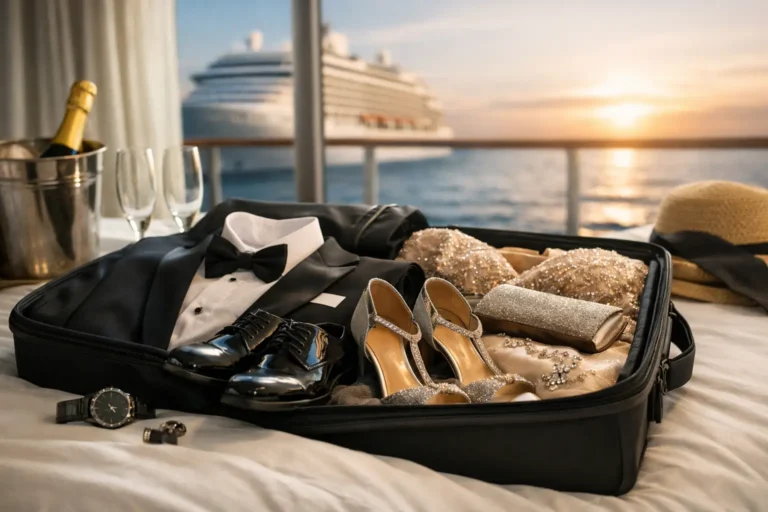
Most contemporary ocean cruise lines now favour smart-casual evenings, sometimes with optional dressier nights. Traditional lines and luxury ships may have more defined expectations, while river cruising is generally relaxed but still polished in the evenings. There is no benefit in bringing formalwear simply because cruises once had a reputation for it. If you enjoy dressing up and your line has a gala night, take an outfit you genuinely look forward to wearing. Otherwise, a smart shirt, blouse, tailored trousers, dress or jumpsuit will often cover the occasion.
It is also worth separating embarkation day from the rest of the cruise. Your main case may be delivered to your cabin later in the afternoon, so keep medication, travel documents, valuables, swimwear if needed, and a change of clothes in your hand luggage. This avoids packing an oversized cabin bag just because you are worried about those first few hours onboard.
How to avoid cruise overpacking with outfit planning
The most reliable approach is to plan outfits by activity, then make every item work more than once. Rather than packing seven daytime outfits, seven evening outfits and several emergency options, create a small group of pieces that can be mixed across the week.
For a warm-weather cruise, this might mean two or three pairs of lightweight bottoms, several tops that work with all of them, one layer for breezy decks or air-conditioned lounges, and two evening options. Dresses can be particularly efficient because they form a complete outfit without requiring additional coordination. For men, well-fitting chinos or smart shorts, polo shirts or short-sleeve shirts, and one lightweight overshirt can cover a surprising number of settings.
Choose a simple colour palette, such as navy, white, stone and one brighter colour. This is not about making your wardrobe dull. It means fewer shoes, bags and layers are needed to make outfits feel intentional. A patterned top or scarf can add variety without creating a separate outfit that only works once.
Be realistic about changing clothes. You may prefer to freshen up before dinner, particularly in hot climates, but few guests need multiple full outfit changes every day. A daytime outfit can often be worn for breakfast, time around the ship and a relaxed port call, then changed only if it is damp, sandy or unsuitable for the evening.
Use the three-wear test
Before an item goes into your case, ask whether you can wear it at least three times during the trip. This test is especially useful for bulky jumpers, statement shoes, jackets and evening clothes. If an item only suits one occasion, decide whether that occasion is important enough to justify the space.
There are sensible exceptions. A waterproof jacket for a Norwegian fjords itinerary, supportive walking shoes for port days, or a formal outfit for a special celebration may be worth taking even if worn once. The aim is not to pack as little as possible. It is to avoid carrying things that add no real comfort or value to your holiday.
Pack for the weather you are likely to have
Cruise guests often overpack because weather forecasts look changeable. The answer is layers, not a separate wardrobe for rain, sunshine and cold. A light waterproof outer layer, a cardigan or fleece, and one warmer layer can be adapted far more easily than several heavy jumpers.
Check the expected conditions in each port shortly before departure, but do not let one cool evening dictate your whole case. On a Mediterranean sailing in spring or autumn, for example, you may need a light jacket for deck time and evenings, but not a winter coat. Conversely, a Baltic, Alaska or northern Europe itinerary can feel noticeably cooler at sea than it does in port, particularly when the ship is moving.
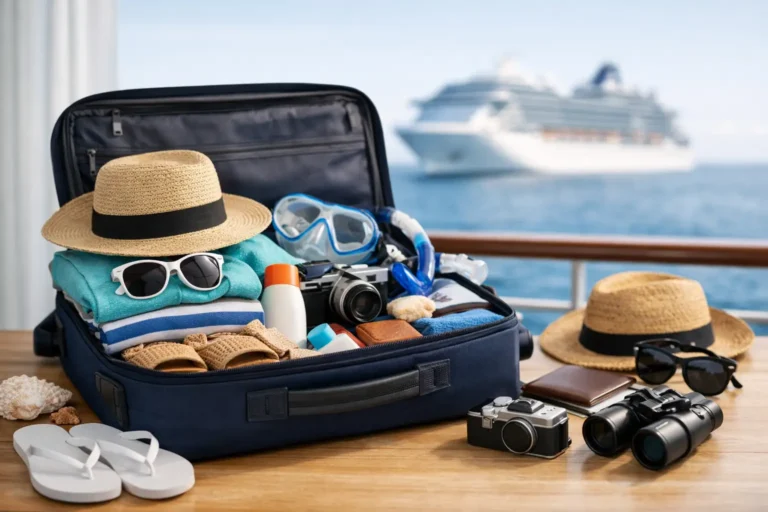
For river cruises, think about the walking involved. Cobblestones, guided tours and changeable European weather make comfortable footwear and a compact rain layer more useful than extra evening clothes. On an ocean cruise with beach-focused ports, prioritise swimwear, sun protection and a cover-up that can also be used at lunch ashore.
Limit shoes before they take over the case
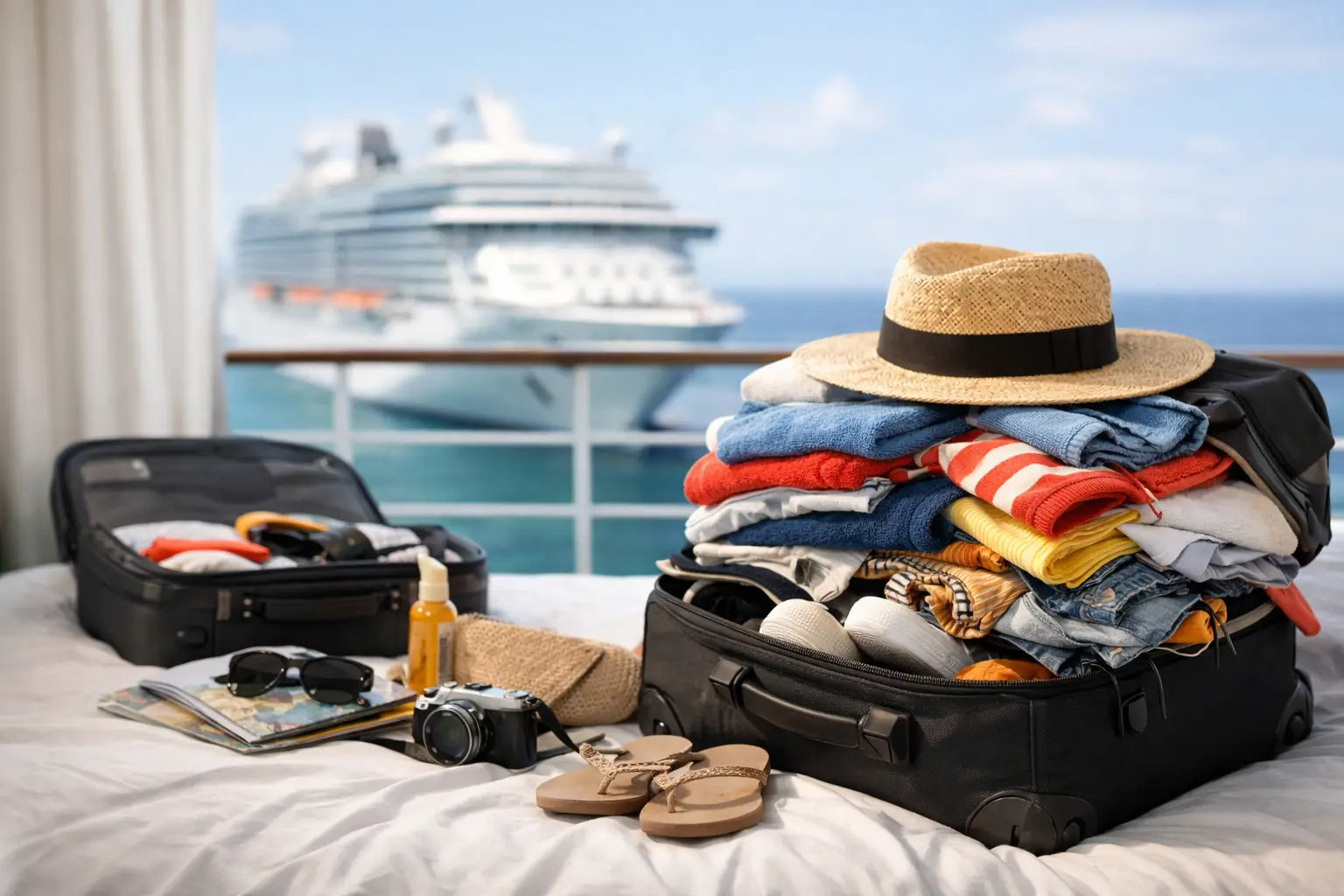
Shoes are usually the quickest route to cruise overpacking. They are heavy, awkwardly shaped and often chosen for imagined outfits rather than real plans. Most travellers can manage with three pairs: comfortable walking shoes, casual sandals or shoes for daytime, and a smarter pair for the evening.
You may need a fourth pair for a specific purpose, such as gym trainers, water shoes, hiking boots or formal shoes. Add it only when your itinerary or plans clearly require it. Wear the bulkiest pair while travelling to the port or airport, and pack shoes in bags to protect clothes from dirt.
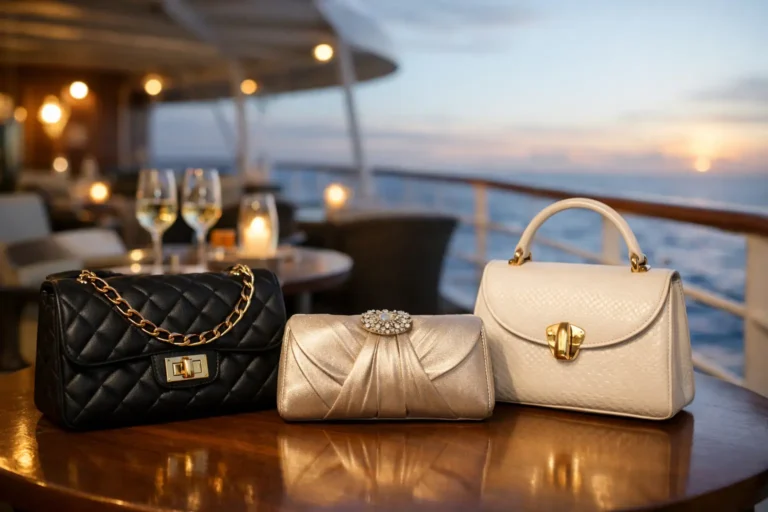
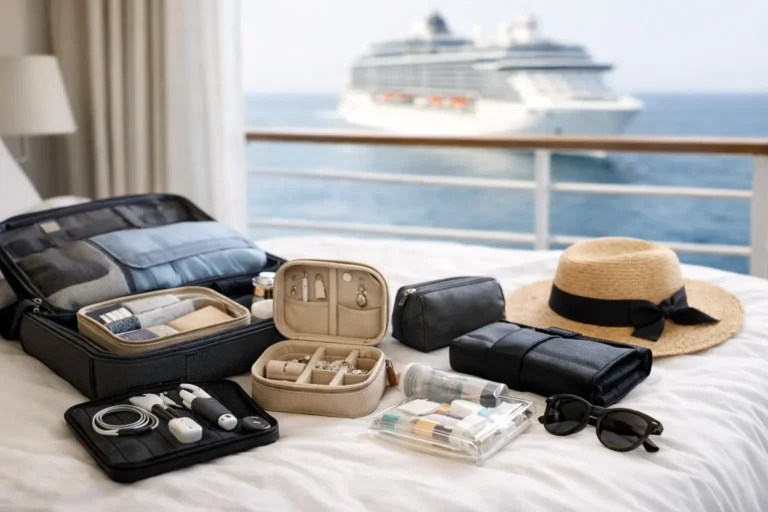
The same principle applies to handbags, belts and jewellery. One small evening bag, one practical day bag and a modest selection of accessories will cover most needs. Cruise cabins have limited storage, and a crowded wardrobe can make it harder to find the things you actually want to wear.
Do not pack a full bathroom cabinet
Toiletries can add considerable weight, particularly when flying to your embarkation port. Start with what you cannot easily replace or what your skin and health routine genuinely requires, including prescription medication. Then reduce duplicates.
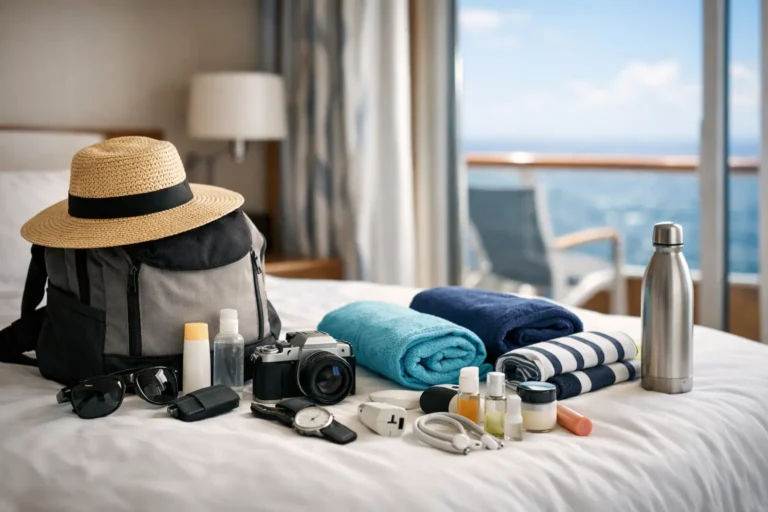
Many ships provide basic shower gel, shampoo and soap, although the quality and dispensers vary by cruise line and cabin grade. Bring your preferred products if they matter to you, but decant them into travel-sized containers rather than packing full bottles. Sunscreen is essential for warm itineraries, though buying a large bottle after airport security may be easier if you are travelling with hand-luggage restrictions.
Consider what can be shared when travelling as a couple. Hair tools, toothpaste, insect repellent, sunscreen and charging adaptors do not always need to be duplicated. Check the ship’s plug sockets before departure, as newer vessels may have UK, European and USB connections, while older ships can be more limited.
Leave room for laundry, purchases and the journey home
A cruise ship may offer self-service laundry facilities, a paid laundry service, or both. This varies considerably by line, so check in advance rather than assuming. On longer cruises, doing one small wash can reduce the amount you need to pack dramatically. Quick-drying fabrics are helpful, but even ordinary items can often be rinsed in the cabin and dried overnight where permitted.
You should also leave a little spare room. Ports can be tempting for local food, gifts and souvenirs, while formal nights may bring photographs or small purchases from onboard shops. A tightly packed case at the start of the holiday creates an unnecessary problem at the end.
If you are flying, weigh your case before leaving home and account for the airline’s allowance, not only the cruise line’s guidance. Airlines can be stricter, and transfer days are much easier when you can lift and manoeuvre your own luggage without strain.
Make a final edit before you zip the case
Lay everything out a few days before departure. This gives you time to spot duplicates, try on combinations and remove the items added through last-minute anxiety. If two similar tops do the same job, take the one that is more comfortable, quicker to dry or easier to dress up.
A useful final question is: would I notice if this stayed at home? If the answer is no, it probably should. Your holiday will feel more relaxed when your cabin has space, your luggage is manageable and getting dressed does not involve searching through clothes you never intended to wear.
A lighter case is not a sign that you have forgotten something. It is evidence that you have planned for the cruise you are actually taking, leaving more energy for the ship, the ports and the moments that make the journey memorable.
Frequently Asked Questions
Additional Resources

The Essential Cruise & Travel Shop

Disclaimer
The Essential Cruise Shop Blog provides this guide for informational purposes and is not a travel agency. The information contained in this guide is for general guidance only. While we do our best to ensure the information is up-to-date and correct, we make no representations or warranties of any kind about its completeness or accuracy.
Cruise line policies, itineraries, and loyalty programs are subject to change without notice. We strongly recommend that you verify all details directly with your cruise line or a certified travel agent before making any bookings or financial commitments.
We cannot be held liable for any financial loss due to the reader’s failure to follow the above advice.
Affiliate Disclosure
Many of the links are affiliate links, The Essential Cruise Shop Blog may receive a commission from qualifying clicks, orders or bookings. This income helps support our efforts to provide and improve our site and turn it into a one stop resource for travellers with a bias towards cruising.