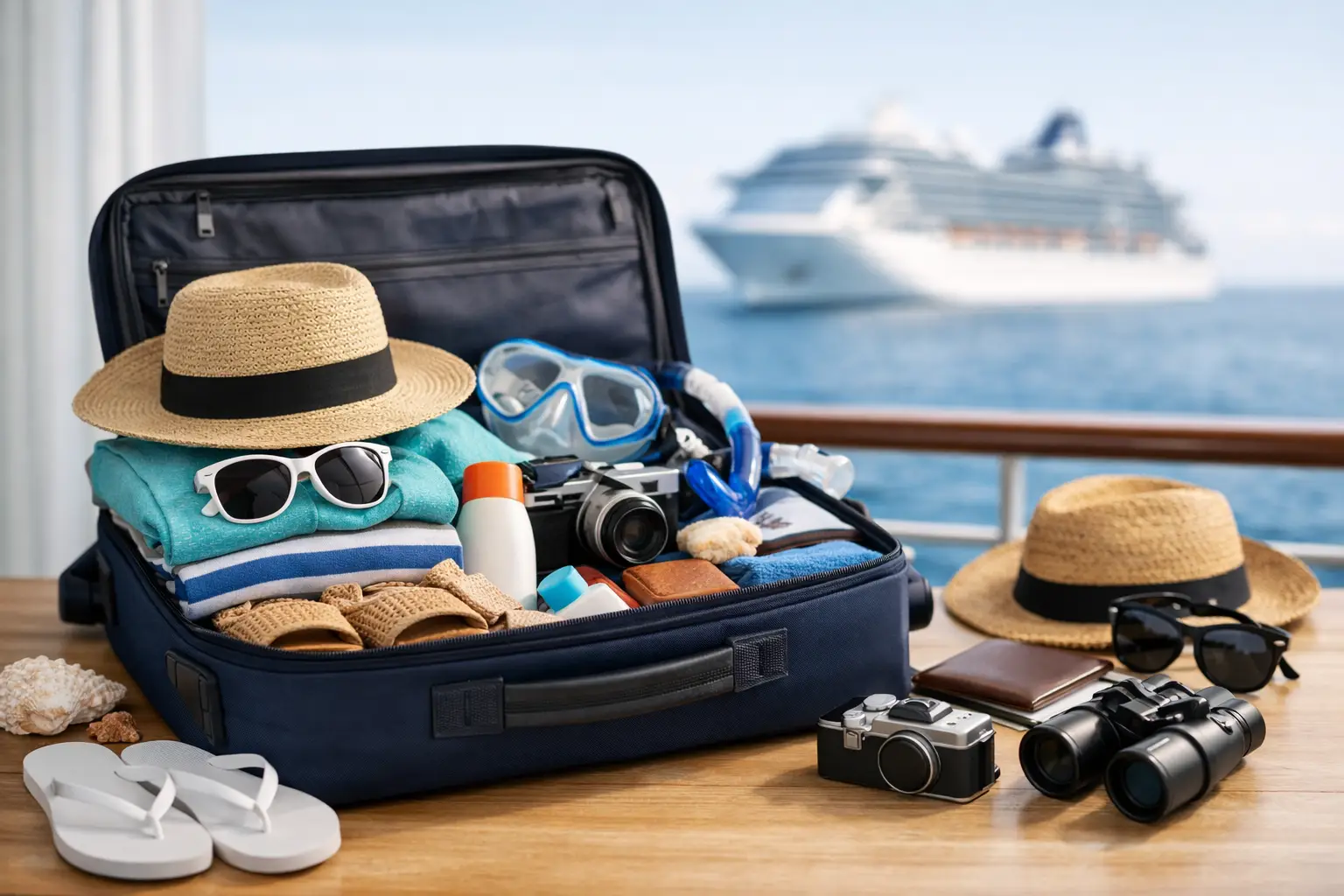
What to Pack for a Cruise
Affiliate disclosure: This article contains affiliate links. If you click through and make a purchase, Stafford Affiliates Travel may earn a commission at no extra cost to you.
The moment most cruise packing goes wrong is not the night before sailing. It is much earlier, when people pack for a generic holiday instead of a cruise. If you are wondering what to pack for a cruise, the key is to think beyond warm-weather clothes and include the practical details that make embarkation, sea days and port visits far easier.
Cruising has its own rhythm. You may need one outfit for travel, another for sailaway, comfortable shoes for excursions, something smarter for dinner, and a light layer for heavily air-conditioned lounges or breezy decks. Add in luggage labels, travel documents and any items you may not be able to buy easily onboard, and your packing list starts to look quite different from a standard beach break.
What to pack for a cruise starts with the essentials
Before clothing or toiletries, sort the items that can genuinely disrupt your trip if forgotten. Keep your passport, boarding documents, travel insurance details, payment cards, any printed luggage tags and transfer information together in your hand luggage. If your cruise line uses an app, make sure it is installed and working before you leave home.
Medication also belongs at the top of the list, not buried in a suitcase. Bring enough prescription medicine for the full trip, plus a little extra in case of delays. It is sensible to carry it in original packaging. If you are prone to motion sickness, do not assume you can buy a remedy once you feel unwell. Pack tablets, wristbands or patches in advance, especially for ocean cruises or itineraries that may involve rougher seas.
A few other basics are worth keeping close by on embarkation day: sunglasses, chargers, a reusable water bottle if you use one, and anything valuable or fragile. Your main suitcase may not arrive at your cabin until later in the afternoon, so think about what you will want access to during those first few hours.
Dress for the cruise you are actually taking
One of the most common packing mistakes is taking too many versions of the same thing. Instead of filling a case with extra tops and ‘just in case’ outfits, match your clothing to your itinerary, cruise line and likely onboard routine.
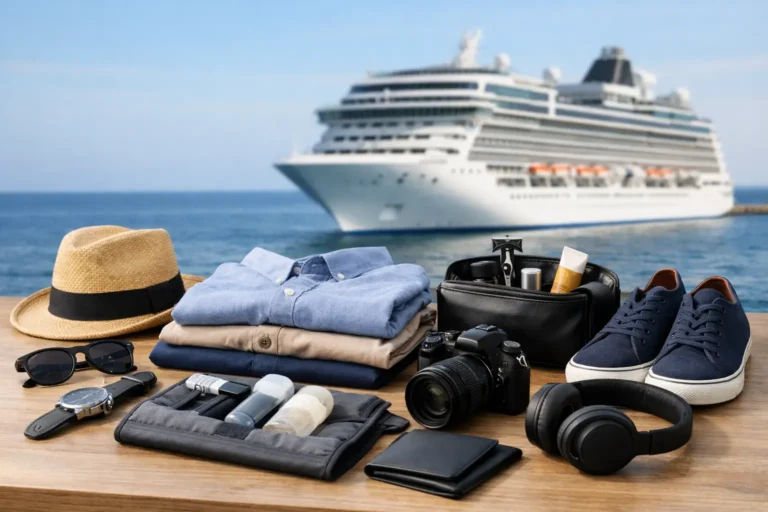
For daytime, most people need comfortable casualwear. On a warm-weather cruise, that usually means lightweight tops, shorts, skirts, casual dresses and swimwear. On cooler itineraries, swap some of that for knitwear, trousers and practical layers. Even in the Mediterranean in summer, mornings on deck and air-conditioned indoor spaces can feel cooler than expected.
Footwear needs a bit more thought than people often give it. Pool sandals are useful, but they are not enough on their own. Most passengers will also want comfortable walking shoes for excursions and at least one smarter pair for evenings. If your itinerary includes cobbled ports, steep streets or active touring, flimsy fashion sandals can quickly become a regret.
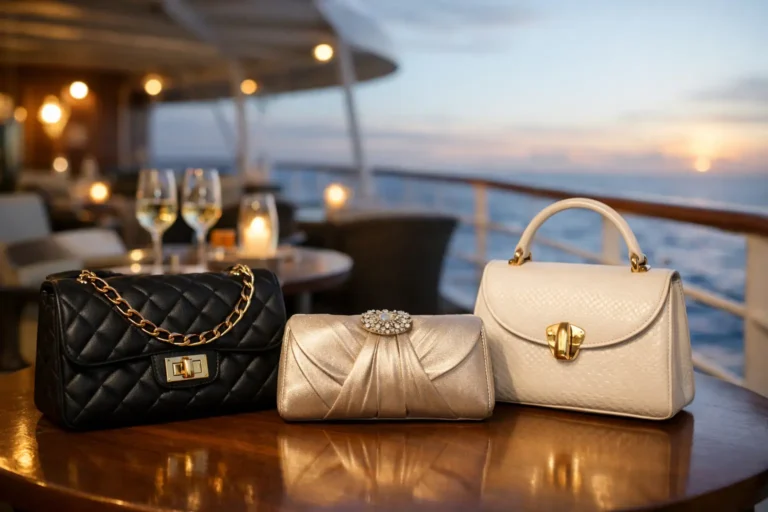
Evening wear depends heavily on the cruise line. Some ships have relaxed dining rooms where smart casual is perfectly acceptable most nights. Others still hold formal or gala evenings where many guests dress up. That does not always mean black tie, but it often means a jacket, cocktail dress or something noticeably smarter than daytime wear. If you are unsure, check the line’s usual dress guidance before you pack. It is much easier to add one planned smart outfit than overpack several options you never wear.
River cruises are often a little more understated than large ocean ships, but the same principle applies: practical by day, polished by night, with enough flexibility for weather changes.
Cabin comfort matters more than you think
Cruise cabins are compact, and smart packing helps more than packing more. Soft-sided luggage can be easier to store under the bed, and packing cubes can help keep outfits organised without turning the cabin upside down by day two.
There are also a few small items that make a real difference onboard. A foldable tote or small day bag is handy for excursions, pool decks and moving around the ship. A light jacket or cardigan is useful far more often than first-time cruisers expect. If you are sensitive to light or noise, an eye mask and earplugs can be surprisingly valuable, especially if your cabin is near a busy area.
Toiletries should be practical rather than excessive. Most ships provide basics, but brand quality varies and cabin hairdryers are often underwhelming. If your routine depends on specific products, take them with you in travel sizes. Sun cream is another item worth packing before you leave, as it is often more expensive onboard and in port shops close to the ship.
What to pack for a cruise in your hand luggage
This is the part many travellers overlook. Because checked luggage may take time to arrive, your hand luggage should cover the first part of the day without needing your suitcase.
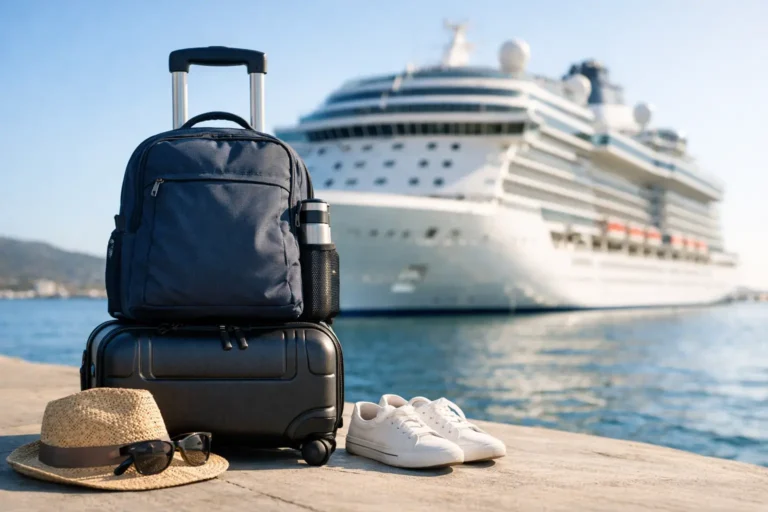
That usually means travel documents, medication, valuables, phone and charger, sunglasses, a swimsuit if you plan to use the pool early, and a change of clothes if you are flying in. If you board in warm weather, adding sun cream is sensible too. If the ship sails soon after boarding, you may also want whatever you plan to wear for lunch or sailaway close at hand.
For longer journeys to the port, include the items that make travel more comfortable rather than assuming the cruise begins the minute you reach the terminal. A spare top, basic toiletries and any overnight essentials are particularly useful if you are staying in a hotel before embarkation.
Plan for ports, not just the ship
Cruise packing works best when you think in terms of activities. A sea day needs different clothing from a city walking tour, and both differ from a beach stop or a scenic river excursion.
If you have active shore days planned, pack for them properly. That might mean breathable clothing, a hat, proper walking shoes and a small cross-body bag or backpack. If you are visiting churches, religious sites or conservative destinations, include modest layers that cover shoulders or knees where needed. For beach-heavy itineraries, a second swimsuit can be very useful, as damp swimwear rarely dries quickly in a cabin bathroom.
Weather is where a lot of assumptions fall apart. Northern Europe, Alaska-style itineraries and shoulder-season sailings often require waterproof layers and warmer clothing, even if your departure port is mild. Likewise, desert or tropical ports can mean strong sun by day and cooler breezes at sea in the evening. Packing for variation is usually smarter than packing for the brochure photo.
The items people forget most often
Most missed items are not dramatic, but they are inconvenient. Plasters for new shoes, a few painkillers, aftersun, lip balm, reading glasses, a pen for forms, and a laundry bag all come in handy more often than expected. A portable power bank can also be useful on excursion days or long travel connections.
Depending on your cruise line and cabin type, plug sockets may be limited or located awkwardly. Check what sockets are used on your ship and pack the right adaptors if needed. This matters even more for UK travellers sailing on lines that use a mix of UK, European and US outlets.
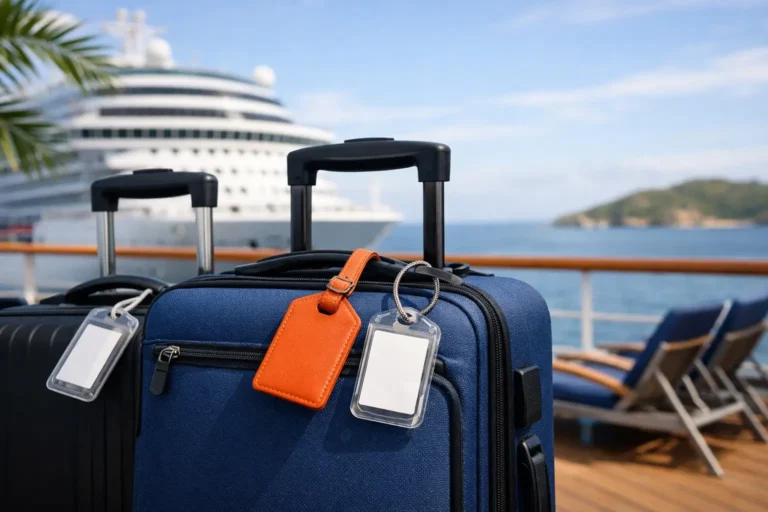
Do not forget luggage labels if your cruise line asks you to print them at home. It sounds obvious until embarkation morning becomes hurried.
What not to pack for a cruise
Overpacking is the most common issue, especially on longer voyages. Many passengers bring too many evening outfits, too many shoes and far too many toiletries. Unless your cruise is exceptionally formal, most items can work more than once if you plan your wardrobe around rewearing and mixing pieces.
It is also worth checking restricted items before you travel. Cruise lines often prohibit things such as clothes steamers, certain electrical appliances and, in some cases, alcoholic drinks brought onboard. Do not assume airline rules and cruise rules are identical.
If you are travelling with large beach towels, bulky dressing gowns or lots of books, pause before packing them. Ships usually provide towels, cabins usually provide basic comfort items, and e-readers save a surprising amount of space.
Pack for confidence, not for every possibility
The best answer to what to pack for a cruise is not the longest list. It is a well-judged one. Bring what suits your itinerary, your cruise line and your own comfort, then leave room for ease. You should be able to find what you need quickly, get dressed without fuss, and step off the ship feeling prepared rather than overloaded.
A good cruise wardrobe and a few carefully chosen essentials remove a lot of small stresses from the holiday. That is the kind of preparation that pays off from embarkation day onwards – and it is exactly where practical cruise planning makes the biggest difference.
Frequently Asked Questions
Disclaimer
The Essential Cruise Shop Blog provides this guide for informational purposes and is not a travel agency. The information contained in this guide is for general guidance only. While we do our best to ensure the information is up-to-date and correct, we make no representations or warranties of any kind about its completeness or accuracy.
Cruise line policies, itineraries, and loyalty programs are subject to change without notice. We strongly recommend that you verify all details directly with your cruise line or a certified travel agent before making any bookings or financial commitments.
We cannot be held liable for any financial loss due to the reader’s failure to follow the above advice.
Affiliate Disclosure
Many of the links are affiliate links, The Essential Cruise Shop Blog may receive a commission from qualifying clicks, orders or bookings. This income helps support our efforts to provide and improve our site and turn it into a one stop resource for travellers with a bias towards cruising.