Cruise Dining Etiquette Guide for First-Time Guests
Introduction
The dining room is often where first-time cruisers feel most unsure. Our cruise dining etiquette guide removes the guesswork, from arriving at the right time to handling shared tables, dress codes and gratuities. The reassuring news is that cruise dining is designed to feel relaxed, not formal for formality’s sake. A little preparation simply helps you enjoy it.
Cruise dining etiquette guide: the practical rules
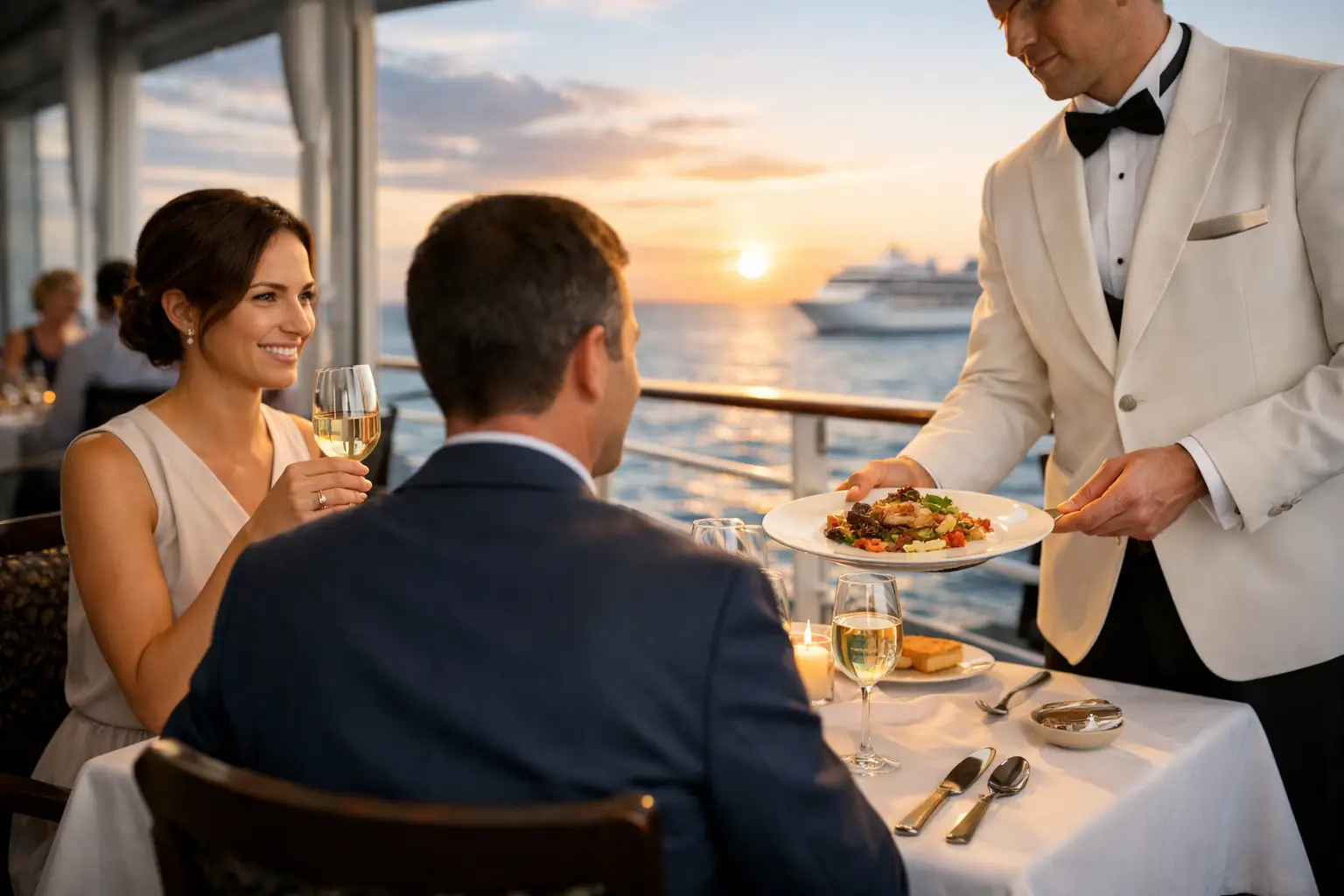
The most useful rule is to follow the tone of your cruise line and venue. A relaxed buffet at lunchtime has very different expectations from a speciality restaurant on formal night. Ocean cruises also tend to offer more choice and more varied dining settings than river cruises, where guests commonly eat together in one main restaurant.
Your daily programme, cruise line app or reservation confirmation will usually state the dress code, opening hours and whether a booking is needed. Check these before leaving your cabin, particularly on embarkation day and port days when dining times may change.
Good cruise dining etiquette is less about knowing complicated rules and more about being considerate. Be on time, be pleasant to the crew, respect the space of fellow guests and avoid treating a busy restaurant as an extension of your cabin or private dining room.
Arrive on time and honour your reservation
If you have traditional fixed dining, aim to arrive at your assigned sitting promptly. Turning up 20 minutes late can disrupt the service for your table and the guests due to dine after you. If you have flexible or anytime dining, you have more freedom, but it is still courteous to arrive for the time you reserved.
For speciality restaurants, treat a booking as you would ashore. Cancel as early as possible if your plans change. Popular venues can be fully booked, and a no-show may mean another guest misses out. Some lines also charge a late-cancellation fee.
If you are delayed by an excursion, contact the restaurant or guest services where possible. Crew members are usually very accommodating, but they can only help if they know what has happened.
Buffet timing and table choices
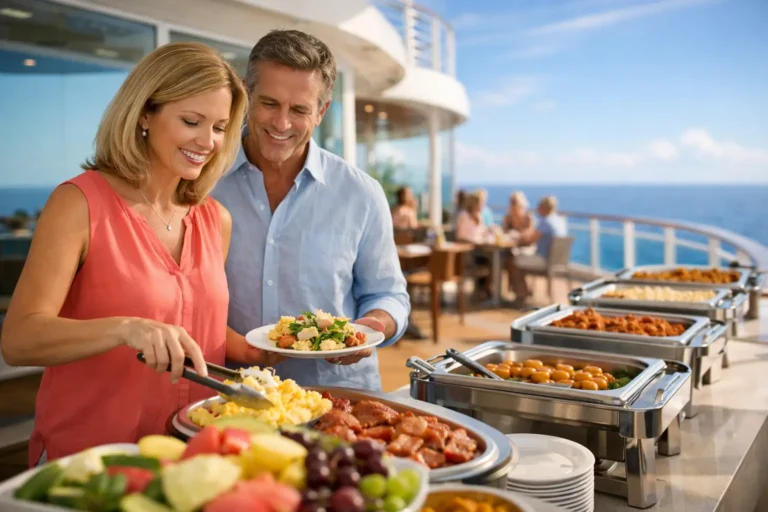
At the buffet, avoid claiming a table with a bag or jacket before collecting your food, especially at busy breakfast and lunch periods. Find your meal first, then look for a table, or have one person remain at the table while another collects food if the venue is crowded.
Do not linger over a finished meal when other guests are clearly searching for somewhere to sit. You do not need to rush off, but freeing a table once you are done is a small courtesy that makes a busy venue work better for everyone.
Dress for the restaurant, not just the weather
Dress codes vary considerably. Some cruise lines have gala evenings, elegant casual nights or themed occasions, while others take a consistently relaxed approach. River cruises are generally smart casual, although the standard can still be polished in the evening.
The key is to pack for the policy of your particular ship rather than relying on what you saw on another cruise line. Smart trousers, chinos, dresses, skirts, collared shirts, blouses and neat shoes work in most main dining rooms. A light jacket, smart cardigan or wrap is useful because restaurant air conditioning can feel cool.
Swimwear, bare feet and damp cover-ups are not appropriate in indoor dining rooms, even on the most informal ships. Sportswear, flip-flops, vest tops and baseball caps may also be refused in certain restaurants at dinner. This is not usually about being overly strict. It helps maintain the atmosphere guests have booked and protects the restaurant’s hygiene standards.
If you would rather not dress up on a formal or gala evening, many ships provide casual alternatives such as the buffet, room service or selected casual eateries. Check the daily programme so you can make a comfortable choice without feeling caught out.
Shared tables: friendly, not forced
Sharing a table can be one of the pleasures of a cruise, particularly on smaller ships and river voyages. You may meet people with fascinating travel stories, useful port tips and similar interests. It can also feel daunting if you expected a quiet meal for two.
Start with simple conversation: where guests have travelled from, whether they have visited the next port before, or what they enjoyed that day. Avoid assuming everyone wants to discuss politics, health issues, personal finances or contentious news. Cruise holidays bring together people of different backgrounds, and a light, inclusive approach goes a long way.
If you have a fixed table and the fit is not right after the first evening, speak discreetly to the maître d’ or dining host. Do not confront tablemates or make a public issue of it. Depending on availability, the team may be able to move you, offer a table for two on another night or suggest a different sitting.
Couples who strongly prefer dining alone should request a table for two when booking or as soon as they board. It cannot always be guaranteed, especially on smaller ships, but early requests give the dining team the best chance to help.
Be considerate of the crew and pace of service
Cruise restaurant teams work hard across long service periods, often looking after a large number of guests while accommodating allergies, preferences and changing schedules. A greeting, eye contact and a clear request make every interaction easier.
It is perfectly acceptable to ask about ingredients, portion sizes or recommendations. It is also fine to request another dish if something is not right. Raise the issue politely and promptly rather than waiting until the end of the meal. Most ships want you to enjoy your dining experience and will do their best to resolve a genuine problem.
Try not to order several dishes simply because they are included, then leave most of them untouched. Many cruise lines are actively reducing food waste, and sensible ordering supports that effort. You can often order an additional starter or try a second dessert if you genuinely want it, but use the same judgement you would in a good restaurant ashore.
Keep mobile phones on silent and step away from the table for a lengthy call. Photos of a particularly attractive dish are common, but avoid using flash or holding up service while you arrange repeated shots. The same applies to filming crew members or fellow guests without permission.
Dietary needs and special requests
Tell your cruise line about allergies, intolerances and medically necessary diets before sailing, ideally at the point of booking. Once onboard, confirm the arrangement with the dining team on the first day. This matters even if your booking notes appear correct, as procedures differ between ships.
At each meal, remind your server of a serious allergy. Do not assume a familiar-looking dish is safe, as recipes, garnishes and preparation areas can change. If you are coeliac, vegan, diabetic or following another specific diet, ask what can be prepared rather than relying only on menu labels.
For preferences rather than medical requirements, flexibility helps. Most ships can accommodate many requests, but a small galley may need advance notice for a particular meal. On a river cruise, where the dining room and kitchen are smaller, this is especially true.
Drinks, children and dining-room atmosphere
If you have a drinks package, check what is included before ordering premium wines, special coffees or bottled water. It avoids an unexpected charge at the end of the voyage. When buying wine for the table, offer it without pressure. Not everyone drinks alcohol, and nobody should need to explain why.
Families are welcome on many ocean cruises, but adults travelling without children also value a peaceful evening meal. Parents can make dining easier for everyone by choosing an earlier sitting where available, bringing quiet activities and stepping out briefly if a child becomes very distressed. Conversely, other guests should remember that a normal level of family noise is part of a shared holiday environment.
Understand gratuities before you sail
Gratuity policies are one of the areas where cruise dining etiquette can become confusing. Some cruise lines add a daily service charge to your onboard account. Others include gratuities in the fare, while some leave tipping more discretionary. Drinks may also carry an automatic service charge even where dining gratuities are already covered.
Read your booking terms before departure so you know what has been paid and what remains optional. There is no need to tip individual crew members repeatedly if the ship’s standard service charge already covers dining, unless you genuinely wish to offer additional recognition. If you do choose to give extra, do it quietly and directly.
A good meal at sea should feel like part of the holiday, not another rulebook to manage. Pack for your ship’s dress code, communicate any needs early and show the same consideration you would in a well-run restaurant at home. With those details organised, you can settle into your table, enjoy the view and make the most of one of cruising’s simplest pleasures.
Frequently Asked Questions
Additional Resources

The Essential Cruise & Travel Shop

Disclaimer
The Essential Cruise Shop Blog provides this guide for informational purposes and is not a travel agency. The information contained in this guide is for general guidance only. While we do our best to ensure the information is up-to-date and correct, we make no representations or warranties of any kind about its completeness or accuracy.
Cruise line policies, itineraries, and loyalty programs are subject to change without notice. We strongly recommend that you verify all details directly with your cruise line or a certified travel agent before making any bookings or financial commitments.
We cannot be held liable for any financial loss due to the reader’s failure to follow the above advice.
Affiliate Disclosure
Many of the links are affiliate links, The Essential Cruise Shop Blog may receive a commission from qualifying clicks, orders or bookings. This income helps support our efforts to provide and improve our site and turn it into a one stop resource for travellers with a bias towards cruising.