How to Avoid Buffet Queues on a Cruise Ship
Introduction
The buffet is one of cruising’s great conveniences, but it can feel less relaxing when half the ship appears to arrive at once. Knowing how to avoid buffet queues is not about missing out on choice or eating at odd hours. It is about understanding the daily rhythm of your ship, using the alternatives already included in your fare, and making a few small timing decisions that leave more of the day for the holiday itself.
On most ocean cruises, buffet congestion is predictable. It tends to build around popular breakfast times, immediately after guests return from shore excursions, and during sea days when everyone is onboard. A little planning goes a long way.
Learn the ship’s busiest dining times
The most reliable way to find a quieter buffet is to avoid the obvious rush. Breakfast is usually busiest between 8.00am and 9.30am, particularly on port days when guests are trying to eat before tours. Lunch often peaks from 12.30pm to 1.30pm, while the first half-hour after the buffet opens can also be busy as passengers arrive together.
If your plans allow, aim for breakfast before 7.45am or after 9.45am. For lunch, eating shortly before noon or after 1.45pm can make a marked difference. Dinner in the buffet is often calmer than breakfast and lunch, especially when the main dining room’s early seating has begun.
There is a trade-off. Dining later can mean some popular items are replaced less quickly, and on a port day you may prefer an early start. But most modern ships keep food stations well supplied during service, so a 20-minute adjustment is usually worthwhile.
Think differently on sea days
Sea days are when buffet queues are most noticeable. Guests have no fixed return time from shore and often settle into a leisurely morning, so the buffet can remain busy for longer than usual.
On these days, have an early breakfast, choose a late lunch, or use another dining venue altogether. If you enjoy a slower morning, a light coffee and pastry first can tide you over until the lunchtime rush has passed. Check the daily programme as well: a major deck party, quiz, talk or poolside event may shift crowds away from the buffet for an hour or two.
Use every included dining option
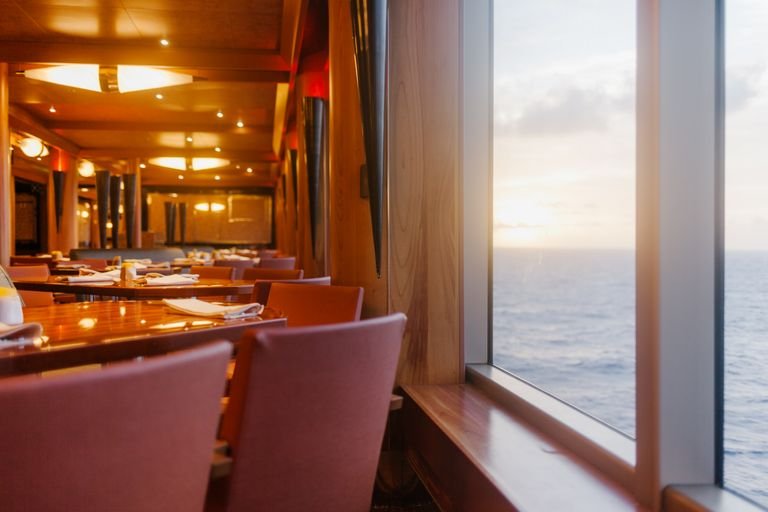
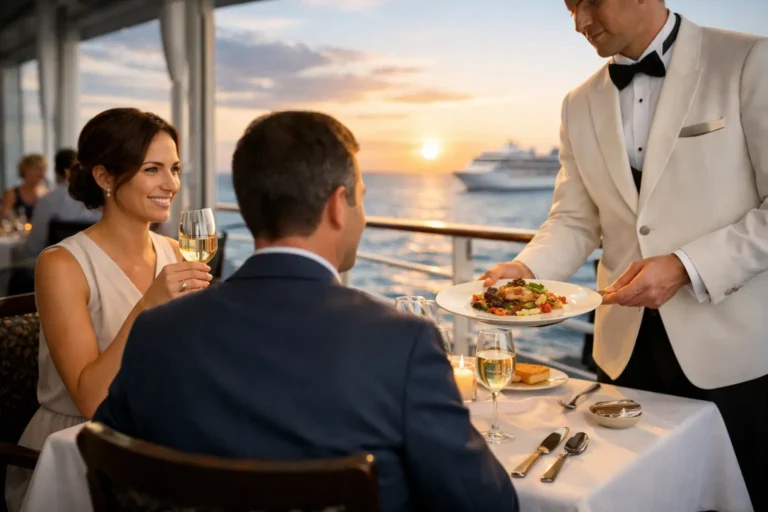
The buffet is not the only place to eat, even though it is often the most visible choice. Most cruise ships offer a main dining room for breakfast, lunch or both, with table service and a quieter pace. Some lines also have a complimentary grill, pizzeria, café, deli, promenade venue or afternoon tea.
The daily planner or cruise line app will show what is open and when. It is worth checking this on embarkation day rather than assuming the buffet is your only practical option. A sit-down breakfast can be particularly pleasant on a sea day, while a café or grill may be ideal for a quick port-day lunch.
Room service can be another useful option, although policies vary considerably. Some cruise lines include a continental breakfast delivery, while others charge a service fee or only offer selected items. If you have an early excursion, ordering breakfast the evening before may save time and give you a calmer start to the day.
Do not overlook the main dining room on embarkation day either. Many guests head straight to the buffet after boarding, creating one of the week’s most concentrated crowds. If the main dining room is open, it can be a far more comfortable first lunch.
Choose the right entrance and food station
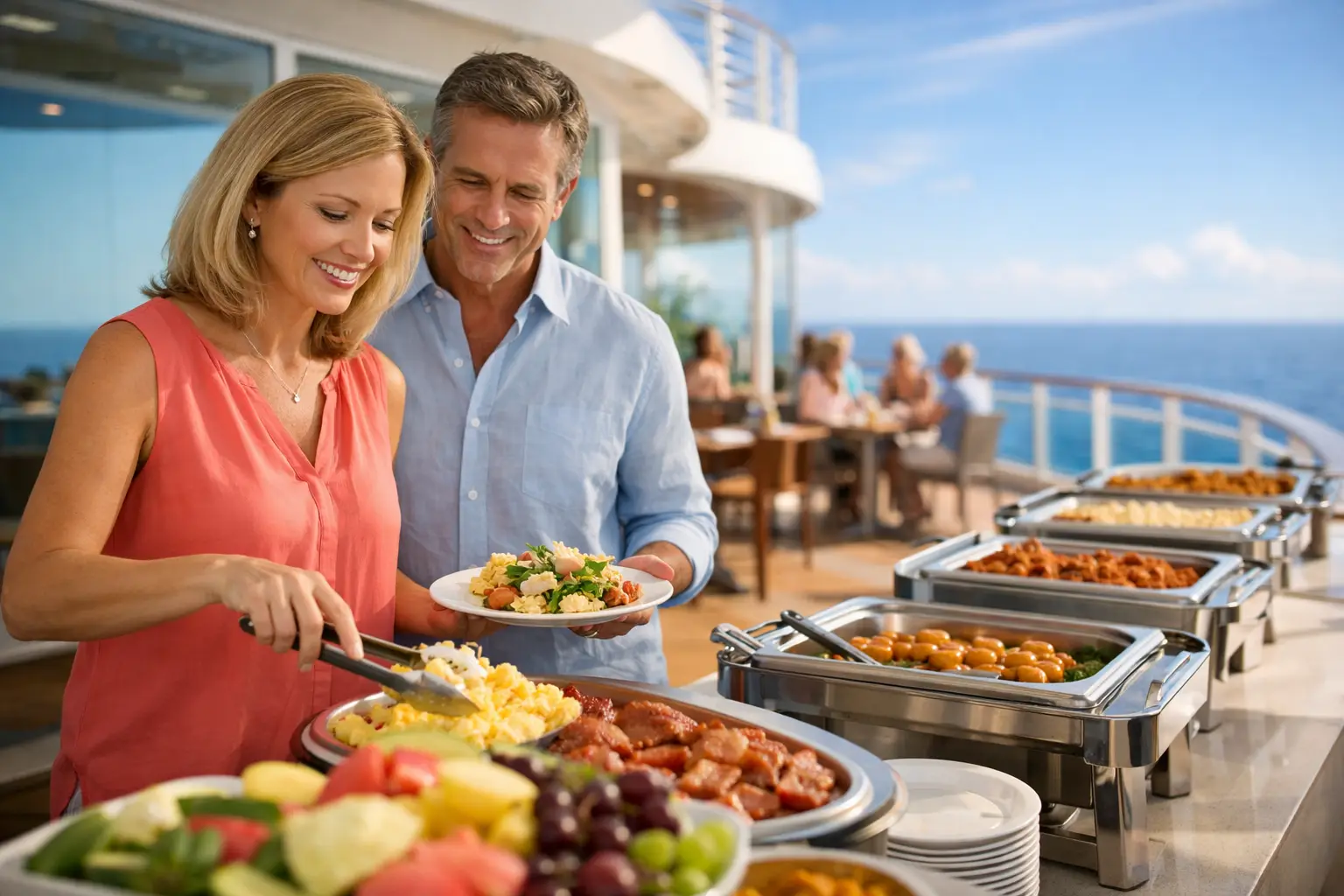
Large cruise ship buffets are designed with several entrances and multiple serving areas, but many passengers naturally use the first one they see. This creates an unnecessary bottleneck near the main doors, the most prominent hot-food counter and the drinks stations.
Take a brief walk through the buffet before joining a queue. You may find the same dishes available at a quieter station further inside or on the opposite side of the venue. On ships with a central buffet layout, one side can be noticeably busier simply because it is closer to the pool deck, lifts or theatre stairs.
It also helps to collect food in a sensible order. Find a table first during busy periods, then gather your meal one course at a time if needed. Carrying a full plate while searching for a seat is frustrating, and it encourages people to hover around tables rather than allowing them to clear naturally.
Avoid the drinks-station hold-up
Tea, coffee, water and juice points often cause more delay than the food itself, especially at breakfast. Pick up your drink before the main rush, use a quieter drinks point if there is one, or return for it once you are seated. If you are travelling as a couple, one person can find a table while the other collects drinks and a first course – provided you remain considerate and do not reserve tables for long periods.
A refillable water bottle can also reduce repeat trips to the drinks station. Check your cruise line’s hygiene rules first, as you may be asked to fill a clean glass rather than placing your bottle directly under a dispenser.
Plan around port days and excursions
The buffet’s busiest moments often follow the ship’s schedule. When a large number of guests have booked similar excursions, they may all return within a narrow window and head directly for lunch. If you are coming back independently, consider eating ashore if that suits your plans, or wait 30 to 45 minutes after returning to the ship.
For an early excursion, do not leave breakfast until the final few minutes. The queue for coffee, toast and fruit can be surprisingly slow when several coaches are departing at once. A room-service breakfast, a quiet early visit to the buffet, or a packed snack from an authorised onboard venue can make the morning easier. Always follow the line’s guidance on taking food ashore, as local biosecurity rules can be strict.
On turnaround days in busy ports, embarkation and disembarkation activity may also affect opening times. Check the app or printed programme rather than relying on the previous day’s pattern.
Make the buffet work better for you
A few practical habits make busy dining areas easier to manage. Keep your cruise card, glasses and any hand sanitiser easy to reach before entering, so you are not stopping mid-queue. Wash or sanitise your hands as requested, and use the serving utensils carefully. Small courtesies keep the line moving for everyone.
If mobility is a consideration, choose quieter times whenever possible and ask a member of the dining team for assistance if carrying plates is difficult. Crew are often happy to help, particularly when the venue is busy, but asking early is kinder than struggling with hot food and a crowded walkway.
Families and groups may need a different approach. A large party will find it harder to locate a table at peak time, so splitting into two smaller tables nearby can be more realistic. Couples have greater flexibility and can often take advantage of quieter two-person tables at the edge of the buffet or on an outdoor terrace.
How to avoid buffet queues without losing the relaxed holiday feel
It is easy to become overly focused on timing every meal, but a cruise should not feel like a military operation. If you arrive at the buffet during a busy spell, pause for a moment before joining the longest line. Walk through the full venue, look for duplicate counters, and decide whether a different meal option would suit you better that day.
The best approach depends on your ship, itinerary and routine. A small ship may have fewer venues but shorter walking distances. A larger ship may have more alternatives, yet more passengers moving at once. River cruises are different again: buffet-style meals are less common, and dining tends to be more structured. Once you have observed the pattern for the first day or two, the right choices become much clearer.
Give yourself permission to eat a little earlier, a little later, or somewhere unexpected. A quieter table, a hot cup of tea and ten unhurried minutes can be one of the simplest ways to make your time at sea feel properly restful.
Frequently Asked Questions
Additional Resources

The Essential Cruise & Travel Shop

Disclaimer
This guide is provided for informational purposes only and does not constitute advice from a travel agency or professional travel consultant. The content is intended solely as general guidance. Although efforts are made to ensure details remain accurate and up to date, no representations or warranties of any kind are made regarding its completeness or accuracy. Cruise line dining policies, venue opening times, room service charges, venue inclusions, and port biosecurity regulations are subject to change without notice. You must verify all details directly with your cruise line or official port authorities before making any travel decisions, bookings, or financial commitments. No liability is accepted for any financial loss incurred as a result of failing to follow this advice.
Affiliate Disclosure
Many of the links are affiliate links, The Essential Cruise Shop Blog may receive a commission from qualifying clicks, orders or bookings. This income helps support our efforts to provide and improve our site and turn it into a one stop resource for travellers with a bias towards cruising.