Which Cruise Cabin Is Quietest?
Introduction
If you have ever been woken by scraping deck chairs at dawn or late-night footsteps from the corridor, you will know that choosing the right cabin matters as much as choosing the right itinerary. When travellers ask which cruise cabin is quietest, the honest answer is not simply “midship” or “lower deck”. It depends on what is above you, below you, beside you, and how you personally sleep.
For most cruise holidays, the quietest cabin is usually one sandwiched between passenger decks, away from lifts, stairwells, crew service areas and public venues. That principle works on many ocean ships and, with a few adjustments, on river cruises too. The detail is where the difference lies.
Which cruise cabin is quietest on most ships?
If your main goal is sleep, look for a cabin with other cabins directly above and below it. This is often the safest choice because passenger accommodation tends to generate less disruptive noise than theatres, restaurants, pool decks, gyms or service corridors.
A cabin in the middle section of the ship can also help, though not always for the reason people assume. Midship cabins are often recommended because they may feel more stable in rougher seas, which can help light sleepers. But quietness is more about surrounding spaces than ship motion. A midship cabin directly under the pool deck can be far noisier than a forward or aft cabin surrounded by other staterooms.
In practical terms, the quietest cabin is often one that sits on a residential deck, roughly midship, and not immediately next to connecting doors, housekeeping cupboards or crew access points. That combination usually reduces both structural noise and foot traffic.
Where cabin noise usually comes from
Noise on a cruise ship rarely comes from just one source. It is usually a mix of overhead scraping, corridor chatter, mechanical hum and occasional door slamming.
The biggest issue on many ships is noise from public areas. A cabin below the buffet may sound convenient during the day, but early-morning trolley movement and chair dragging can travel surprisingly well. Likewise, cabins near theatres, lounges and late-night bars may pick up music, bass or crowds dispersing after shows.
Corridor noise is another common problem. Cabins near lifts and staircases often get more passing traffic, more voices and more doors opening and closing. Some travellers like these locations for convenience, especially if mobility is a concern, but quieter they are not.
Then there is ship machinery. On modern vessels, engine noise is generally well managed, but some aft cabins can still pick up vibration or a low rumble, particularly on lower decks. On certain ships, bow thrusters used during docking can also disturb forward cabins early in the morning when the ship arrives in port.
The best decks to choose for a quiet cabin
The best deck is usually not the highest or the lowest. It is the one that sits between two cabin-only decks.
Cruise ship deck plans are your best tool here. Before booking, check whether the cabin you like has accommodation above and below. If yes, that is already a strong sign. If one side of the cabin backs onto a service area, laundry, pantry or crew door, treat it with caution.
Mid-level decks often work well because they avoid the direct noise from entertainment spaces lower down and open deck activity higher up. On many ships, decks dedicated mainly to cabins sit in this middle band. That said, every ship is different. Some place restaurants high up, some put lounges lower down, and some have hidden service spaces that do not stand out unless you study the plan carefully.
A quiet cabin is less about deck number and more about deck context.
Why cabins under the pool deck are risky
This is one of the most common booking mistakes. A cabin under the lido or pool deck may seem harmless, especially if the deck above looks open rather than enclosed. In reality, sun loungers get moved, tables are reset, and cleaning starts early.
If you like sleeping past 7am on sea days, this location is often a poor fit. Even when there is no loud music, the repeated scraping and rolling sounds can be enough to disturb lighter sleepers.
Why cabins above entertainment venues can be tricky
A cabin above a theatre or lounge can sometimes be quieter than one below it, but only if sound insulation is strong and the venue closes early. That is a gamble many travellers would rather avoid.
Bass frequencies travel through floors and walls more than people expect. If your ship has late-night music venues, karaoke bars or a nightclub, it is sensible to keep a few decks away rather than just one.
Quietest cabin types: inside, outside or balcony?
Cabin type affects noise less than location, but there are still some differences.
Inside cabins can be very quiet if they are well placed. Because they have no balcony door, they often avoid some of the wind noise and exterior sounds that can affect balcony cabins in certain weather. For travellers who mainly want darkness and quiet for sleeping, a well-positioned inside cabin can be an excellent choice.
Ocean view cabins are much the same in noise terms, although some lower-deck ocean views may be closer to machinery or tender operations depending on the ship layout.
Balcony cabins are popular for good reason, but they are not automatically quieter. They can sometimes pick up wind whistling, noise from neighbouring balconies, or sounds from people letting their balcony doors slam. If the balcony cabin sits beneath an overhanging public deck, you may also hear furniture movement from above.
Suites are often in prime areas, but not always. Some are close to exclusive lounges, concierge spaces or busy upper decks. Price does not guarantee peace.
Which cruise cabin is quietest for light sleepers?
For light sleepers, the quietest option is usually a non-connecting cabin on a passenger-only deck, with cabins above and below, positioned away from lifts and service rooms. If seasickness is also a concern, choosing a midship location can make the cabin feel calmer overall.
It is also worth thinking about your own routine. If you go to bed early, avoid cabins near late-night venues. If you enjoy sleeping in, avoid the pool deck and buffet areas above. If you are sensitive to vibration, be cautious with lower aft cabins. The best answer is personal, not just technical.
Connecting cabins deserve a special mention. They are useful for families and groups, but the internal door can let through more neighbour noise than a standard wall. If peace and privacy are your priority, a non-connecting cabin is usually the safer choice.
River cruises: a slightly different answer
On river ships, cabin choice works differently because the vessels are smaller and layouts are more compact. You are never very far from public spaces, and mechanical noise can be more noticeable depending on where your cabin sits.
In many cases, a midship cabin is still a sensible choice, especially for limiting motion and general disturbance. However, lower-deck cabins on river ships may be closer to engines or waterline noise, while upper-deck cabins can be nearer the lounge or sundeck activity.
One factor unique to river cruising is docking. Ships often moor side by side, which can affect privacy and noise, especially if you need to keep curtains closed or if there is activity directly outside. A quieter river cabin often comes down to avoiding the main lounge and being realistic about how compact the ship is.
How to spot a potentially noisy cabin before you book
A deck plan tells you a great deal if you read it slowly. Look beyond the cabin symbol itself and study the spaces around it. If you see shaded areas, blank zones or odd utility-looking spaces, they may be service rooms rather than guest areas.
It also helps to check what sits directly above and below your cabin, not just next door. Many cruise lines let you view deck plans by level, and this is where small details become useful. A cabin that looks ideal on one deck may sit under a jogging track or above a galley.
If you are booking through a travel agent, ask specifically whether the cabin is near any crew areas, laundries or public venues. Do not just ask for a “quiet cabin”. Ask what is above, below and beside it.
At The Essential Cruise Shop, we would always treat cabin location as part of the holiday planning process, not an afterthought. A good cabin can make the whole trip feel more restful.
When the quietest cabin is not the best cabin
There are trade-offs. A very quiet cabin may be further from the lifts, dining rooms or medical centre. For some travellers, especially those with mobility concerns, convenience matters more than complete silence.
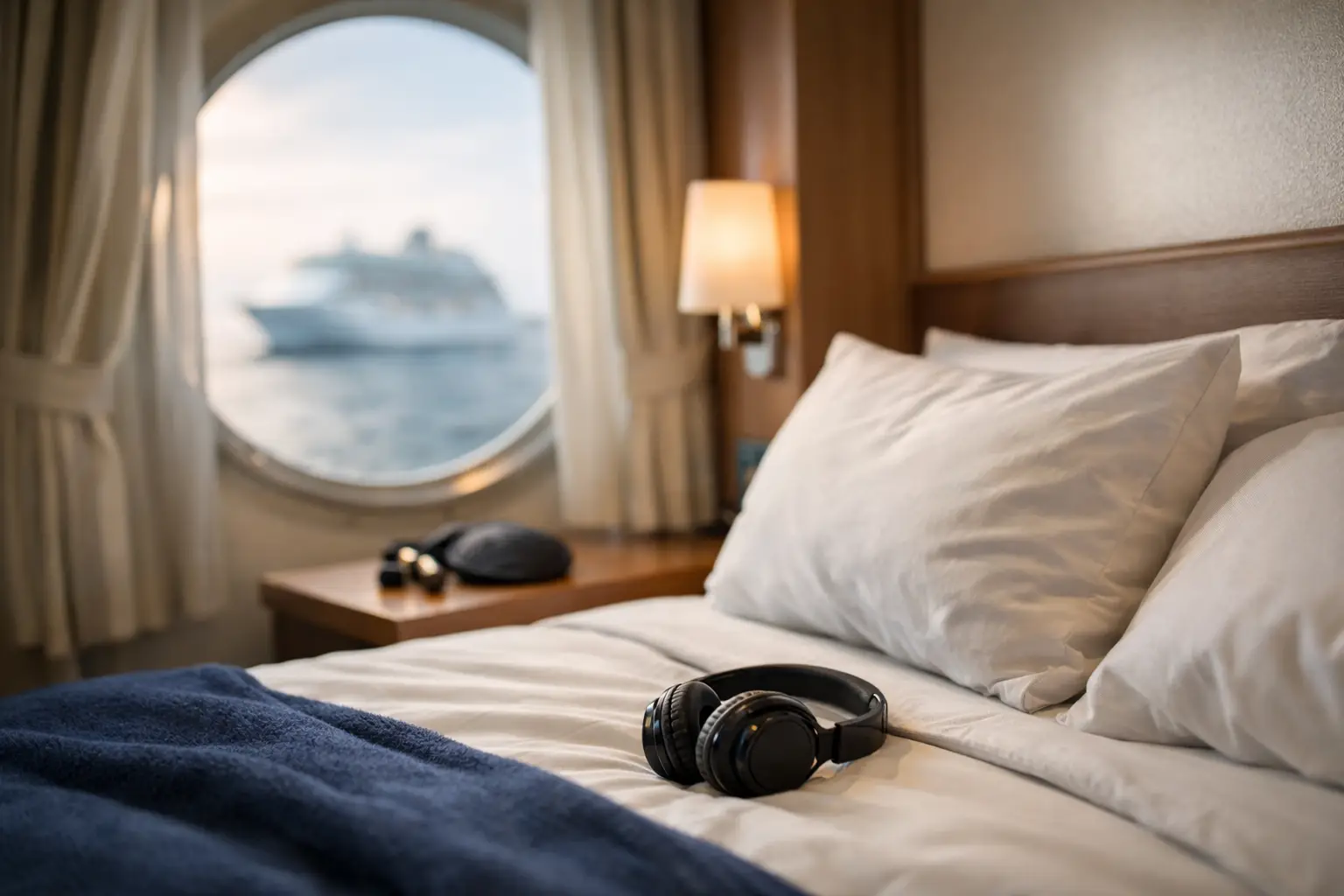
Similarly, a midship cabin on a cabin-only deck may be highly sought after and more expensive in some fare categories. If your budget is tight, it can be worth accepting a slightly busier location and packing earplugs rather than stretching too far.
Some travellers also prefer aft views, easy buffet access or quick routes to the theatre. Those are valid priorities. The right cabin is the one that matches how you use the ship, not just a rule on a forum.
If you want the best chance of a peaceful night, think like a planner rather than a bargain hunter. Study the deck plan, avoid public spaces and service zones, and favour cabins surrounded by other cabins. That one decision can make your cruise feel calmer from the first night onward.
Frequently Asked Questions
Disclaimer
The Essential Cruise Shop Blog provides this guide for informational purposes and is not a travel agency. The information contained in this guide is for general guidance only. While we do our best to ensure the information is up-to-date and correct, we make no representations or warranties of any kind about its completeness or accuracy.
Cruise line policies, itineraries, and loyalty programs are subject to change without notice. We strongly recommend that you verify all details directly with your cruise line or a certified travel agent before making any bookings or financial commitments.
We cannot be held liable for any financial loss due to the reader’s failure to follow the above advice.
Affiliate Disclosure
Many of the links are affiliate links, The Essential Cruise Shop Blog may receive a commission from qualifying clicks, orders or bookings. This income helps support our efforts to provide and improve our site and turn it into a one stop resource for travellers with a bias towards cruising.