
12 First Time Cruiser Mistakes Worth Avoiding
Introduction
Your cruise fare may cover accommodation, meals and entertainment, but it does not automatically cover every practical detail that makes a holiday feel easy. Most first time cruiser mistakes happen before embarkation: choosing a cabin in a poor location, overlooking a dress code, or arriving at the port with little room for delays. A little preparation can make the difference between a rushed first day and a genuinely relaxing start.
Cruising is wonderfully straightforward once you understand the routine. The key is to treat it as both a hotel stay and a moving holiday, with its own timings, policies and useful habits.
1. Booking a cabin based on price alone
The least expensive cabin is not always poor value. An inside cabin can be an excellent choice for guests who expect to spend most of their time ashore or around the ship, and it is often very dark and quiet for sleeping. However, first-time guests sometimes book one without considering whether natural daylight, a view or a little extra space will matter to them on sea days.
Location is equally important. Cabins close to lifts, stairwells, theatres, late-night venues or busy crew areas can experience more passing noise. If you are prone to seasickness, a midship cabin on a lower deck generally feels steadier than one high up at either end of the ship. Study the deck plan before confirming your booking, rather than relying on the cabin category name alone.
2. Assuming every cruise line works the same way
A cruise ship is not a standard hotel, and one line’s routine may be very different from another’s. Dining arrangements might be fixed sittings, flexible timings or a mixture of both. Drinks, room service, speciality restaurants, fitness classes, Wi-Fi and gratuities may be included, chargeable or available through a package.
River cruises can be particularly different from large ocean ships. They tend to have fewer venues, a more relaxed dress code and port calls that are often close to town centres. Ocean cruises offer greater choice onboard, but may require more planning around tender ports, reservations and boarding times. Read your cruise line’s pre-departure information carefully and check exactly what your fare includes.
3. Leaving passport, visa and insurance checks too late
This is one of the most expensive first time cruiser mistakes because a paperwork problem can stop you boarding altogether. Your passport may need a set period of validity after the end of the cruise, and requirements can change according to every country and transit point on the itinerary. A Mediterranean sailing that begins in one country and ends in another can have different rules from a round-trip UK itinerary.
Check entry requirements as soon as you book, including any electronic travel authorisations. Make sure your travel insurance specifically covers cruise travel, medical treatment abroad and, where relevant, evacuation at sea. Keep copies of essential documents in your hand luggage as well as securely stored electronically.
4. Flying in on the day the ship sails
It can be tempting to choose an early flight to save on a hotel, particularly when the port is only a short journey from the airport. But flights can be delayed, luggage can go astray and transfers can take longer than expected. Ships operate to a strict departure time and will not normally wait for independently booked travellers.
For a fly-cruise, arriving at least one day early is usually the calmer option. It gives you a buffer and starts the holiday at a more enjoyable pace. If you have booked flights through the cruise line, ask what support is provided if there is disruption, but still allow plenty of time at the airport and port.
5. Packing for the brochure rather than the itinerary
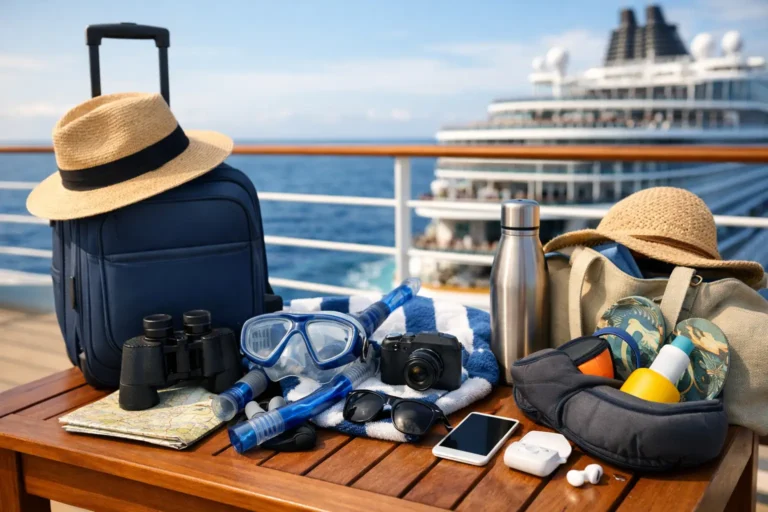
Cruise packing is less about having more outfits and more about having the right ones. The weather forecast for your embarkation port may be very different from conditions at sea or at the next destination. Air-conditioned lounges can feel cool, even when the deck is warm, while northern itineraries often need a waterproof layer and comfortable shoes with grip.
Check your line’s current evening dress guidance before you pack. “Smart casual” can mean different things across cruise brands, and formal or themed evenings may be optional on some ships but popular on others. You do not need a new wardrobe, but you will feel more comfortable if you have planned a few suitable combinations.
For your embarkation-day bag, keep the essentials with you. Checked luggage may take several hours to arrive outside your cabin. Include medication, travel documents, valuables, a mobile phone charger, swimwear if you hope to use the pool, and anything you need for the first evening.
6. Forgetting comfortable footwear
Many guests focus on dinner outfits and underestimate how much walking a cruise involves. Ships are large, ports can involve uneven streets, and shore excursions may include hills, cobbles or long periods standing. A pair of worn-in walking shoes or supportive trainers is usually more valuable than an extra pair of dress shoes.
Bring footwear that suits your actual plans. Sandals may be ideal for a warm-weather ship day, but they are not always suitable for a guided walk, wet tender dock or historic town centre. Avoid taking brand-new shoes for excursions unless you enjoy the risk of blisters before lunch.
7. Not budgeting for the extras
A cruise can represent excellent value, but “included” has limits. Your final bill may include drinks, speciality dining, spa treatments, photographs, casino spending, premium desserts, Wi-Fi, excursions and service charges, depending on the line and fare type. Even a few small purchases each day can add up over a week or two.
Before sailing, decide what matters most to you. A drinks package can work well for guests who regularly order eligible drinks, but it is not automatically a saving for everyone. Likewise, cruise-line excursions offer convenience and reassurance, while independent arrangements can be better value or more flexible in some ports. Compare the timing, cancellation terms and what is included, rather than simply choosing the cheapest option.
8. Waiting until onboard to book popular activities
On larger ships, the most popular dining times, shows, spa appointments and activities may be reservable before departure. Guests who wait until they board can find that the choices they wanted are already limited, especially during school holidays or on shorter sailings.
Look at the cruise planner a few weeks before travelling. Reserve only the things you genuinely want, leaving space for relaxed meals and spontaneous plans. Overbooking every evening can make a ship feel surprisingly busy, even when you are meant to be on holiday.
9. Missing the daily programme
The daily programme is the practical heartbeat of the ship. It tells you when you need to be back onboard, where to meet for excursions, which restaurants have altered hours and what is happening that evening. It may be delivered to your cabin, shown in an app or both.
Check it each evening and again before leaving the ship. Port times are ship times, which may not always match local time. Also pay attention to the all-aboard time, not just the advertised departure time. Returning late can be stressful, expensive and, in the worst case, leave you watching the ship depart from the quayside.
10. Treating embarkation day as a normal day out
Embarkation involves security, check-in, luggage handling and a mandatory safety drill. Arriving excessively early may mean waiting outside the terminal, while arriving late introduces unnecessary risk. Follow the arrival window provided by the cruise line and complete online check-in in advance if it is available.
Once onboard, take a few minutes to get your bearings. Find your muster station, check the dining arrangements, confirm any reservations and locate a quiet place for lunch. This is also a useful time to put your mobile phone into the appropriate roaming or flight settings before the ship leaves port, as maritime mobile charges can be unexpectedly high.
11. Ignoring health and motion-sickness planning
Even travellers who have never felt unwell on a ferry can react differently on a multi-day sailing. Modern ships have stabilisers and most voyages are smooth, but rough weather is still possible. If you are concerned, speak to a pharmacist before travelling about suitable remedies and pack them in your hand luggage.
Wash your hands regularly, use the hand sanitiser provided at dining venues and do not dismiss symptoms of illness. Reporting a problem early helps the medical team advise you properly and protects fellow guests. It is a sensible part of cruise etiquette, not a reason for embarrassment.
12. Trying to do every port at full speed
A port-intensive itinerary can create the feeling that every hour must be filled. Yet rushing through every museum, market and viewpoint often leaves guests more tired than refreshed. Choose the experiences that matter most, and allow time for a coffee, a waterfront walk or simply returning to the ship before the crowds.
Some ports are easy to explore independently; others are better suited to a guided excursion because distances, transport or timing are less forgiving. The right choice depends on your confidence, mobility, interests and the length of the call. A well-planned quieter day can be as memorable as a packed schedule.
Your first cruise does not need to be perfectly planned to be a success. Leave a little margin in your itinerary, ask the crew when you are unsure, and give yourself permission to settle into the ship’s rhythm. The best preparation is the kind that lets you stop thinking about the details once you step aboard.
Frequently Asked Questions
Additional Resources

The Essential Cruise & Travel Shop

Disclaimer
The Essential Cruise Shop Blog provides this guide for informational purposes only and does not act as a travel agency or professional travel adviser. The information contained in this guide is provided for general guidance only. Whilst we endeavour to keep information up to date and correct, we make no representations or warranties of any kind regarding its completeness or accuracy. Cruise line policies, itinerary schedules, dress codes, fare inclusions, passport and visa entry requirements, and travel insurance conditions are subject to change without notice. You must verify all critical details directly with your cruise line, relevant government border authorities, or a certified travel agent before making any bookings, travel decisions, or financial commitments. We cannot accept liability for any financial loss incurred due to a failure to follow this advice.
Affiliate Disclosure
Many of the links are affiliate links, The Essential Cruise Shop Blog may receive a commission from qualifying clicks, orders or bookings. This income helps support our efforts to provide and improve our site and turn it into a one stop resource for travellers with a bias towards cruising.