Can Cruise Ships Accommodate Allergies Safely?
Introduction
A cruise buffet can look wonderfully carefree until you need to know exactly what is in the sauce, whether the bread shares a toaster, or how a meal has been prepared. So, can cruise ships accommodate allergies? Usually, yes – particularly food allergies and intolerances – but a safe holiday depends on early disclosure, clear conversations and realistic expectations about what a ship can guarantee.
Cruise lines cater for thousands of guests each week, often across several restaurants, galleys and shore excursions. They are used to dietary requests, but an allergy plan should never rely on a note against your booking alone. The more serious the allergy, the more carefully you should assess the line, ship and itinerary before committing.
Can cruise ships accommodate allergies on board?
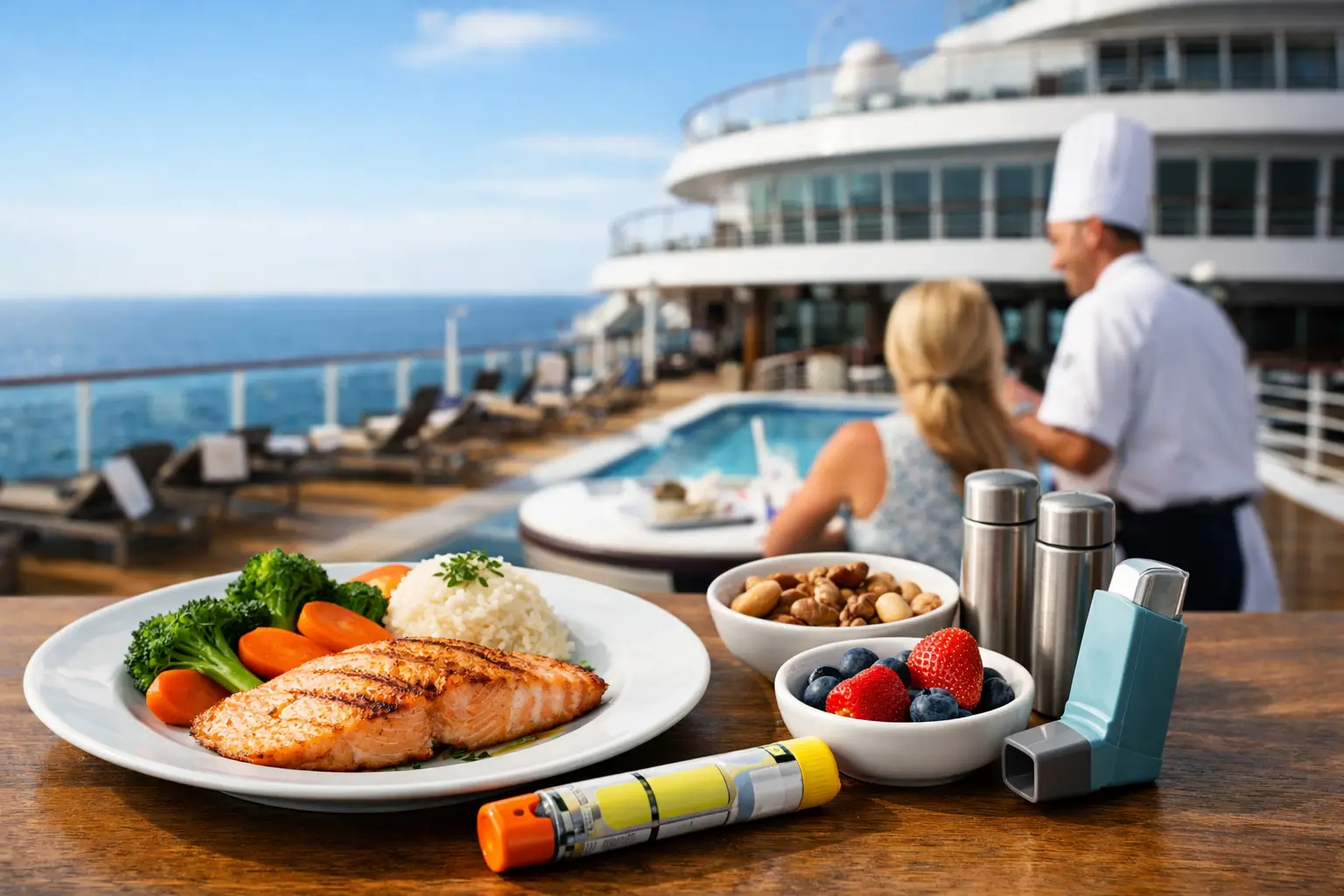
Most mainstream ocean cruise lines can provide meals suited to common allergens and dietary needs, including gluten, dairy, egg, nuts, soya, fish and shellfish. Many also cater for coeliac disease, vegetarian and vegan diets, and religious requirements. River ships can often help too, although their smaller galleys, fewer dining venues and limited ability to source alternatives in port can mean less flexibility.
That said, accommodation is not the same as an allergen-free environment. Cruise ship kitchens prepare a high volume of food in shared spaces. Cross-contact can occur through utensils, preparation surfaces, fryers, serving spoons and buffet areas. A line may be able to avoid an ingredient in a particular dish, but may not be able to promise that every item has never come into contact with it.
This distinction matters most for passengers with anaphylaxis, severe airborne reactions or multiple complex allergies. Before booking, ask the cruise line directly what procedures apply to your specific allergy, rather than accepting a general statement that dietary needs can be accommodated. If the response is vague, or the practical arrangements do not feel safe enough, it is sensible to choose a different ship or holiday style.
Tell the cruise line well before you sail
Declare allergies during booking where possible, then follow the cruise line’s stated process for special dietary or medical requirements. This may involve an online form, an email to the special services team or a request via your travel agent. Do this as early as you can – several weeks before departure is a sensible minimum, while some lines have firmer cut-off dates.
Be precise. “Nut allergy” can mean different things clinically and operationally. Explain the allergen, the severity of the reaction, whether cross-contact is a concern, whether you carry emergency medication and whether you need food prepared separately. Include any relevant coeliac requirements rather than simply requesting a gluten-free preference.
Keep a copy of the confirmation and take it with you. Details can be passed between reservations, shoreside teams and the ship, but it is helpful to have the information available if there is any uncertainty at embarkation.
Travel insurance deserves the same attention. Declare diagnosed allergies and any related medical history accurately, including previous severe reactions where requested. Check the policy’s medical cover, excess and emergency assistance process before you travel, particularly for itineraries with days at sea or remote ports.
Speak to the dining team on the first day
Once on board, introduce yourself to the restaurant manager, maître d’ or dining host as soon as practical. On many ships, the dining team will review the next day’s menu with you and arrange suitable choices in advance. This is often the safest and smoothest way to dine, especially in the main dining room.
Pre-ordering can feel less spontaneous, but it gives the galley time to prepare a suitable meal and lets you ask informed questions without holding up service. If a menu has no obvious safe choice, the team may be able to adapt a dish or offer a simple alternative. Do not assume that a familiar dish is prepared the same way every night or in every venue.
Speciality restaurants should be discussed separately. Your allergy information may appear on your shipboard account, but each restaurant has its own kitchen and team. Let staff know again when making the reservation and when you arrive. The same applies to room service, cafés, pool grills and late-night counters.
Buffets need a more cautious approach
Buffets offer choice, but they are the setting where cross-contact is hardest to control. Guests may use the wrong serving utensil, return it to another dish or handle food near uncovered trays. Labels can be useful, yet they may not list every ingredient or account for preparation methods.
For a mild intolerance, a buffet may still be manageable after speaking with the chef or supervisor. For a severe food allergy or coeliac disease, it is generally wiser to ask for a freshly prepared portion from the galley or eat in the main dining room where the order can be handled more closely. Some ships offer assisted service or can bring selected buffet items directly to your table, but this varies.
Take extra care with foods that are often hidden sources of allergens: dressings, marinades, desserts, soups, breads, fried items and Asian-style sauces. Gluten-free does not automatically mean safe for a wheat allergy, and dairy-free does not necessarily mean a product is free from all milk cross-contact. Ask the question that matters to you, in plain language.
Medication and practical packing
Keep prescribed medication in your hand luggage, not in checked baggage handed over at the terminal. Pack more than you expect to need, split supplies between your day bag and cabin luggage, and retain medicines in their original labelled packaging. If you use adrenaline auto-injectors, carry the recommended number for your circumstances and check their expiry dates well before departure.
A short letter from your GP or allergy specialist can be useful, particularly if you travel with injectable medication, liquid medicines or a substantial supply. It should state the condition, medication and why it is required. A translated allergy card is also worthwhile for ports where English is not widely spoken.
The onboard medical centre can treat many urgent problems, but it is not a substitute for carrying your own medication or for specialist allergy care. Medical facilities, staffing and equipment vary by ship, and a serious incident may require evacuation or treatment ashore. Know where the medical centre is when you board and make sure your travelling companion understands your emergency plan.
Plan for shore days as carefully as shipboard dining
The ship may be the most controlled part of the holiday. Independent meals in port, local ingredients and language barriers can introduce more uncertainty. Researching every restaurant is not necessary, but have a practical plan for long excursions and days away from the ship.
Carry safe snacks where permitted, especially for coach tours or full-day visits. Check local rules before taking fresh food ashore, as many destinations restrict meat, fruit and other produce. Sealed snacks are often the simplest option, but should still be checked against the relevant entry requirements.
Tell an organised excursion guide about a serious allergy if food is included. Do not rely on the excursion description alone to cover it. For a destination with limited medical facilities, consider whether a shorter independent outing or returning to the ship for lunch would make the day more comfortable.
Questions worth asking before you book
For a significant allergy, ask the cruise line whether it can accommodate your named allergens across the main dining room, buffet, speciality venues and room service. Find out whether meals can be pre-ordered, whether a chef or dining manager will meet you on board, and how the line manages cross-contact.
Also ask about your particular ship, not only the cruise brand. Ships in the same fleet can differ in layout, buffet service and dining options. If you are considering a fly-cruise, include the airline, airport meal and pre-cruise hotel in your planning. An otherwise well-organised allergy plan can unravel before embarkation if these parts are overlooked.
For families and couples, agree one simple routine: check in with dining staff, confirm each meal, carry medication and avoid sharing food unless its ingredients are known. It is a small amount of organisation that can remove a great deal of uncertainty.
A well-run cruise should still feel like a holiday, not a daily negotiation. Choose a line that answers your questions clearly, give its team the information they need, and build a little margin into your plans. That preparation leaves more room to enjoy the sea days, shore visits and dinners you booked the cruise for.
Frequently Asked Questions
Additional Resources

The Essential Cruise & Travel Shop

Disclaimer
The Essential Cruise Shop Blog provides this guide for informational purposes and does not act as a travel agency, medical practitioner or professional health adviser. The information contained in this guide is for general guidance only. While we do our best to ensure the information is up-to-date and correct, we make no representations or warranties of any kind about its completeness or accuracy. Cruise line dietary policies, galley cross-contact procedures, onboard medical capabilities and port food regulations are subject to change without notice. We strongly recommend that you verify all details directly with your cruise line, medical specialist, travel insurer or appropriate authoritative provider before making any travel bookings, health decisions or financial commitments. We cannot be held liable for any financial loss due to the reader's failure to follow the above advice.
Affiliate Disclosure
Many of the links are affiliate links, The Essential Cruise Shop Blog may receive a commission from qualifying clicks, orders or bookings. This income helps support our efforts to provide and improve our site and turn it into a one stop resource for travellers with a bias towards cruising.