Cruise Dining Times Explained: Fixed vs Flexible
Introduction
You are standing in front of a cruise booking screen, and suddenly dinner feels oddly complicated. Early sitting, late sitting, My Time, open seating, speciality reservations, buffet hours – if you are wondering how do cruise dining times work, you are not overthinking it. Dining schedules can shape the whole rhythm of your holiday, especially on sea days, port days and formal evenings.
The good news is that cruise dining is usually far easier in practice than it first appears. Most cruise lines offer a mix of structured and flexible options, and once you understand the basic system, it becomes much simpler to choose what suits your routine.
How do cruise dining times work on a cruise?
On most ocean cruises, dinner falls into one of two main formats: fixed dining or flexible dining. Fixed dining means you are assigned the same restaurant, table and time each evening, usually either an early sitting or a late sitting. Flexible dining means you can turn up within a wider time window, or book different times from night to night, depending on the cruise line.
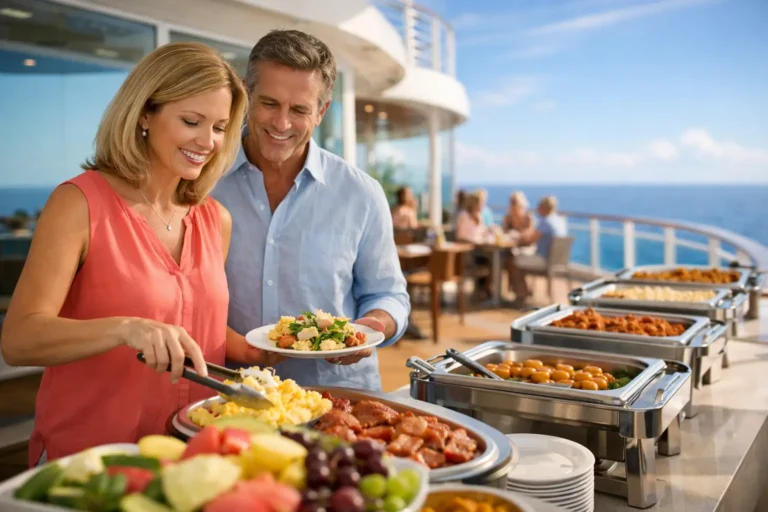
Breakfast and lunch are generally less rigid. The main dining room may open for a set period, but buffet venues, pool grills, cafés and casual counters often give you more freedom. River cruises are a little different, as dining is often more centralised and less varied than on a large ocean ship, but meal times are still clearly scheduled.
What catches many first-time cruisers out is that dining is not only about food. It affects when you see the evening show, when you return from excursions, how dressed up you need to be at certain times, and how relaxed or structured your evening feels.
Fixed dining times: the traditional setup
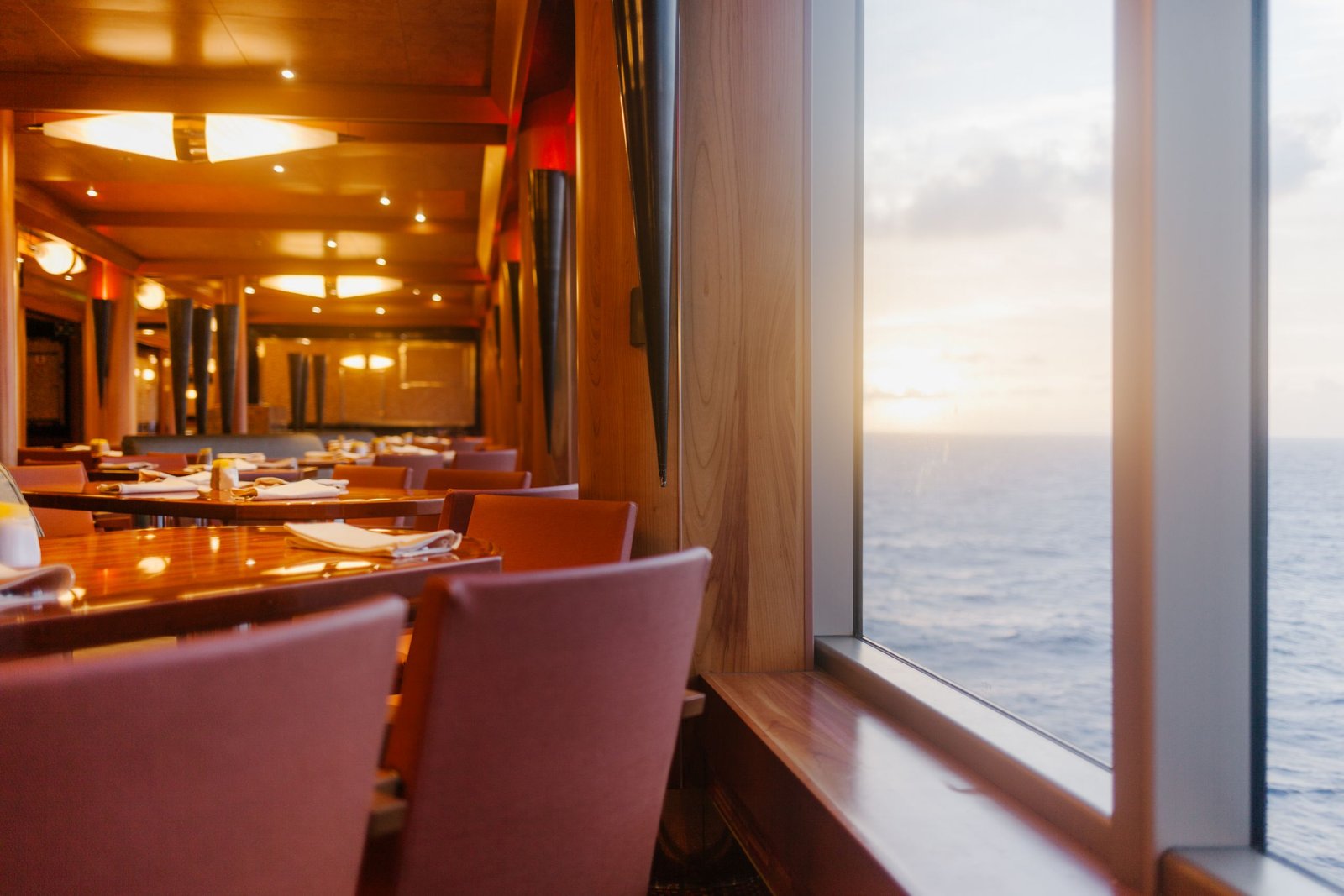
If you choose fixed dining, your cruise line will usually assign you an early or late dinner sitting. Early dining often falls somewhere around 5.30 pm to 6.15 pm, while late dining is commonly around 7.45 pm to 8.30 pm. Exact times vary by ship and cruise line.
This option suits travellers who like routine. You know where you are going, when you are eating, and often who you are sitting with if sharing a table. For couples who enjoy getting to know the same waiting team and fellow guests, it can feel comfortable very quickly.
There are trade-offs. Early dining can feel rushed if you return late from a port day or prefer a slower afternoon. Late dining works well for night owls, but it can feel too late if you usually eat earlier at home. UK travellers, in particular, sometimes find the late sitting later than expected, especially on longer itineraries when they are up early for excursions.
If fixed dining appeals to you, it is worth requesting your preferred sitting as early as possible. Popular times can fill up before sailing.
Flexible dining: more freedom, but less certainty
Flexible dining goes by different names depending on the cruise line, but the principle is similar. Instead of eating at the same set time every evening, you dine within an available window, often in the main dining room or a designated flexible dining restaurant.
For some travellers, this is the easiest answer to how do cruise dining times work because it mirrors life ashore more closely. You can eat at 6.30 pm one night, 8.00 pm the next, and fit dinner around excursions, sailaway drinks or theatre plans.
The compromise is that flexibility sometimes comes with waiting. If lots of guests arrive at the same popular time, there may be a queue. Some cruise lines let you reserve flexible dining in advance through the app, while others operate more on a first-come, first-served basis. On busy ships, turning up at peak time without a reservation can mean a delay.
This option tends to suit independent travellers, couples who like to keep evenings open, and anyone who does not want to commit to the same routine every night.
Breakfast and lunch are usually much simpler
Dinner gets most of the attention, but breakfast and lunch are normally straightforward. The buffet will usually have the broadest opening hours, while the main dining room may offer a more traditional seated meal for a shorter period.
On port-intensive itineraries, breakfast may start early to accommodate shore excursions. On sea days, brunch-style hours may stretch a little longer. Lunch in the main dining room is not always available every day, so many guests alternate between the buffet, casual venues and lighter grab-and-go options.
If you like a leisurely sit-down breakfast, check the daily programme the night before. If you simply want coffee and something quick before an excursion, casual venues are often the more practical choice.
Speciality restaurants run on their own timetable
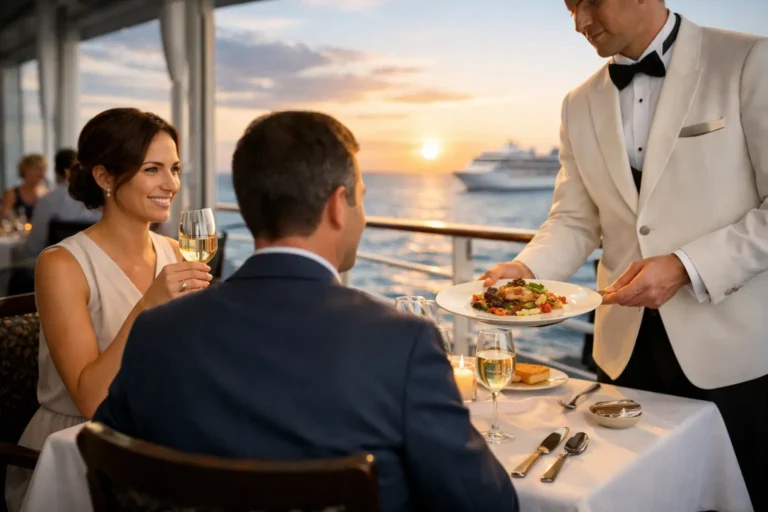
Speciality dining adds another layer. These restaurants usually require a reservation, whether included in your fare package or paid for separately. Their dining times often run more like land-based restaurants, with bookable slots through the evening.
This matters because speciality bookings can override your normal dinner routine. If you have fixed dining at 6.00 pm but book a steakhouse for 8.00 pm, you will simply skip the main dining room that evening. The same applies to flexible dining.
On some ships, the most popular speciality times fill up before embarkation day. If having a particular date night or celebration meal matters to you, it is sensible to book early.
What affects your assigned or available dining time?
Several factors can influence what dining time you get. Your fare type, cabin category, loyalty status and the date you booked can all play a part. Families and larger groups may find fewer time slots available because the ship must place everyone together. Couples usually have slightly more flexibility.
Port timings also matter. If a ship sails late or has long days ashore, dinner service may be adjusted slightly to reflect that. Formal nights, production shows and other entertainment schedules can also shape when restaurants are busiest.
This is why dining times are never completely universal. Two cruise lines can offer what sounds like the same arrangement, but the experience may feel quite different in practice.
River cruises work a little differently
On river cruises, dining times are usually more fixed and more communal, simply because the ships are smaller and the restaurant setup is less varied. Breakfast may be buffet-style with cooked options, lunch may be lighter, and dinner is often served at a fairly standard time for most guests.
There is usually less pressure to choose between multiple restaurants or timings. That can feel refreshingly simple, though it also means less evening flexibility than on a large ocean ship.
For travellers who prefer a more predictable routine, river cruising can feel easier from a dining perspective.
How to choose the best cruise dining time for you
The best option depends on your normal habits and how you like your evenings to work. If you eat early at home, enjoy structure and want the same table each night, fixed early dining is often the safest choice. If you linger over pre-dinner drinks, prefer late shows or do not want to feel tied to a timetable, flexible dining or a later sitting may suit you better.
Think about your itinerary as well. On a port-heavy cruise, flexible dining can be useful because excursion returns are not always perfectly predictable. On a sea-day-heavy sailing, fixed dining can feel easy and relaxing because your evenings are less dictated by shore plans.
It also helps to be realistic about energy levels. A late dining slot can sound glamorous at booking stage, but after a full day ashore, some travellers would rather eat earlier and be in bed at a sensible hour.
Practical tips before you sail
Check your dining selection as soon as your booking appears in the cruise line’s system. If your preferred option is not available, request to be waitlisted rather than assuming nothing will change. Spaces often open up before sailing.
Once onboard, review your dining arrangements on day one. If something does not suit you, speak to the restaurant team early. Changes are never guaranteed, but the first day is usually your best chance.
It is also worth checking the ship’s app or daily programme every evening. Opening times can vary, and relying on assumptions is how people end up arriving at a closed venue or missing a preferred slot.
For travellers who like practical cruise clarity, this is one of those small details that pays off quickly. Get your dining setup right, and the rest of the evening tends to fall into place more easily.
Cruise dining times are not there to make your holiday complicated. They are simply part of how the ship keeps thousands of meals running smoothly, and once you know your options, you can choose the rhythm that feels most like a proper break.
Frequently Asked Questions
Disclaimer
The Essential Cruise Shop Blog provides this guide for informational purposes and is not a travel agency. The information contained in this guide is for general guidance only. While we do our best to ensure the information is up-to-date and correct, we make no representations or warranties of any kind about its completeness or accuracy.
Cruise line policies, itineraries, and loyalty programs are subject to change without notice. We strongly recommend that you verify all details directly with your cruise line or a certified travel agent before making any bookings or financial commitments.
We cannot be held liable for any financial loss due to the reader’s failure to follow the above advice.
Affiliate Disclosure
Many of the links are affiliate links, The Essential Cruise Shop Blog may receive a commission from qualifying clicks, orders or bookings. This income helps support our efforts to provide and improve our site and turn it into a one stop resource for travellers with a bias towards cruising.