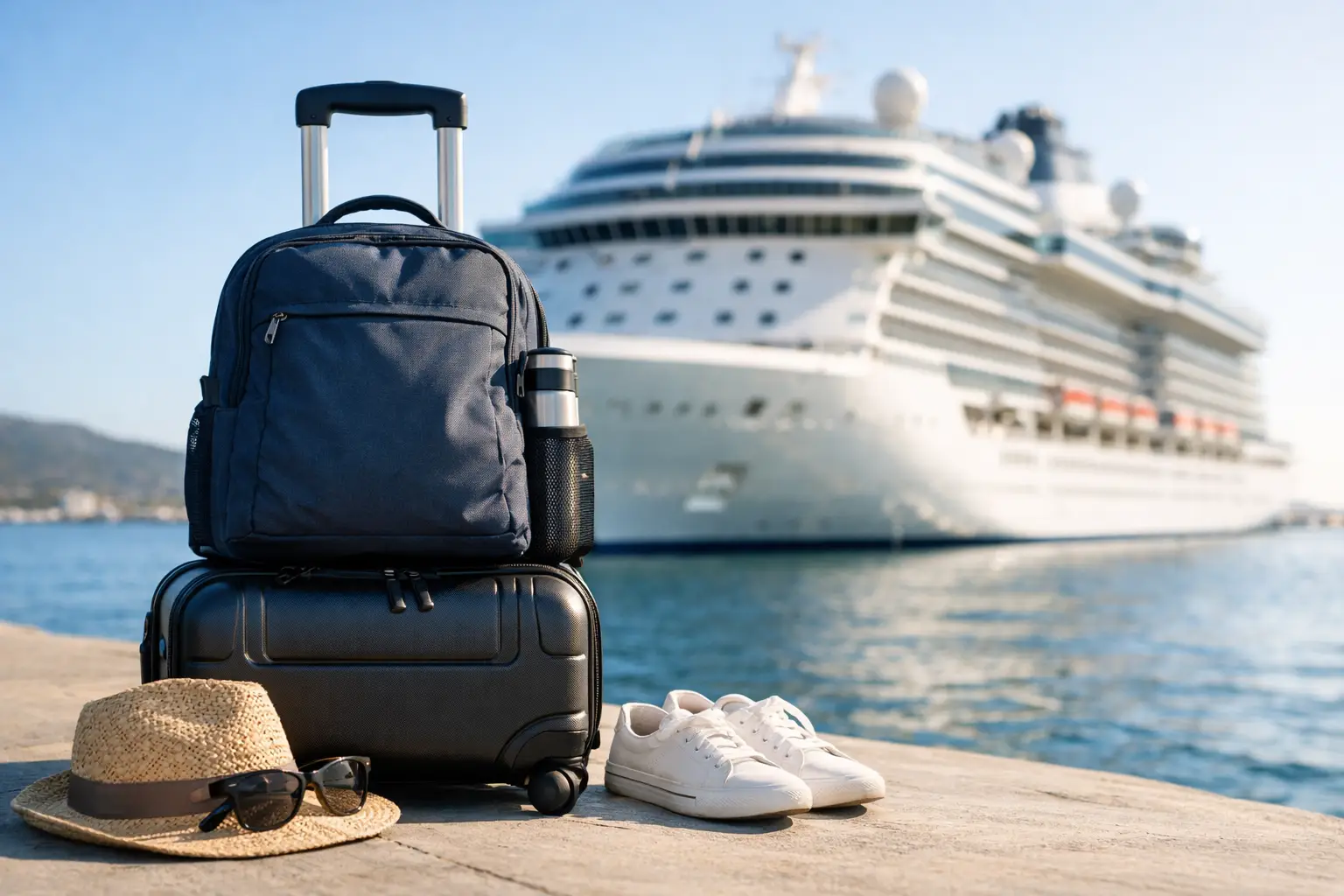
Best Carry On Bag for Cruise Embarkation
Introduction
Embarkation day often looks straightforward on paper, then turns awkward the moment your checked suitcase disappears with the porters and your cabin is not quite ready. That gap of a few hours is exactly why choosing the right carry on bag for cruise embarkation matters. Get it right, and you can board feeling settled, comfortable and ready to start your holiday rather than hunting for medication, paperwork or a change of clothes.
For many cruisers, this is less about finding the most stylish bag and more about picking one that works with the realities of boarding. You may be moving through a terminal, waiting in queues, carrying documents, passing security and then spending part of the afternoon on the ship without access to your main luggage. A good embarkation bag should make those first few hours easier, not heavier or more complicated.
What makes a good carry on bag for cruise embarkation?
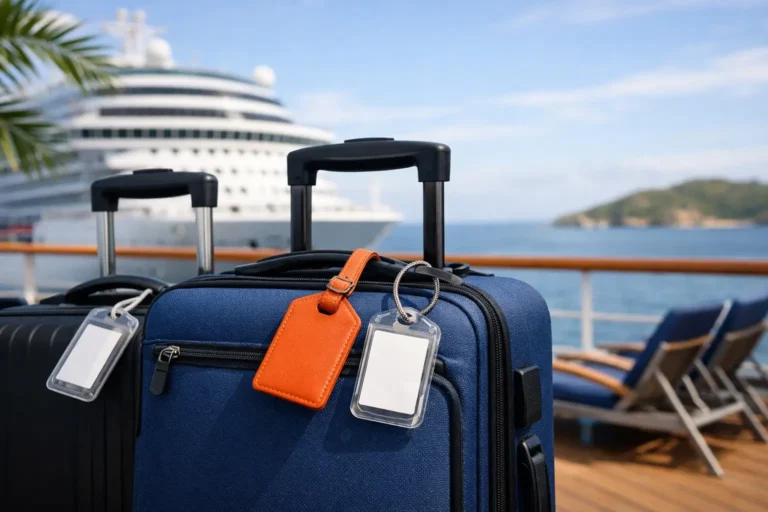
The best option is usually a medium-sized, easy-to-carry bag with enough structure to keep essentials organised, but not so much bulk that it becomes irritating once you are on board. In practice, that often means a lightweight backpack, a holdall with a shoulder strap, or a compact wheeled cabin bag if you prefer not to carry weight.
Each has trade-offs. A backpack keeps your hands free, which is useful when managing passports, boarding documents and a phone. It is often the easiest choice for couples travelling independently through the terminal. A soft holdall can work well if you want quick access to items and something that fits neatly in a corner once you board. A small spinner case is helpful if you are carrying more, but it can be cumbersome in busy terminals, lifts and buffet areas, especially if the ship is crowded with new arrivals.
The right size also depends on your wider journey. If you are flying in on the same day or staying in a hotel beforehand, your cruise embarkation bag may also need to double as your flight cabin bag or overnight case. That can be efficient, but only if you avoid overpacking it. If the bag becomes too heavy or too full, it stops being useful very quickly.
What to pack in your cruise embarkation bag
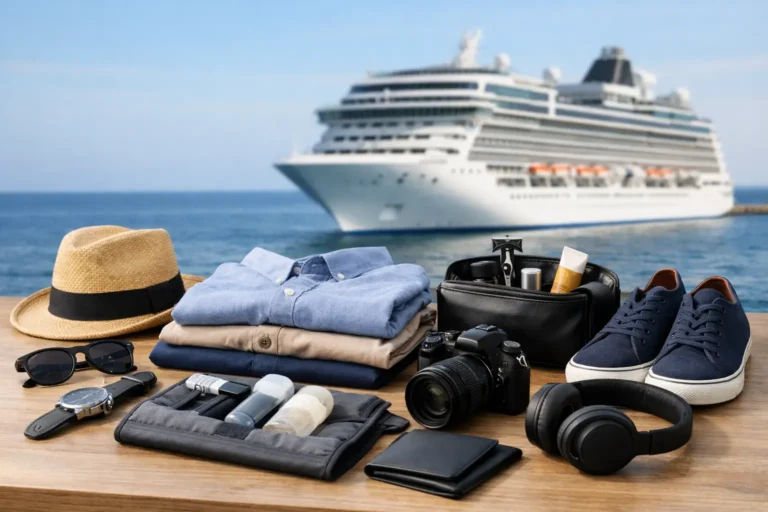
Your carry on bag for cruise embarkation should cover the hours between handing over your cases and having full access to your cabin and wardrobe. Think of it as your first-day essentials bag rather than a miniature version of your full luggage.
Start with the non-negotiables. Travel documents, passport, cruise paperwork, payment cards, phone, charger and any medication should always stay with you. These are the items you cannot afford to lose sight of. If you have printed documents as well as digital copies, keep them in a slim folder or organiser so they do not end up crumpled at the bottom of the bag.
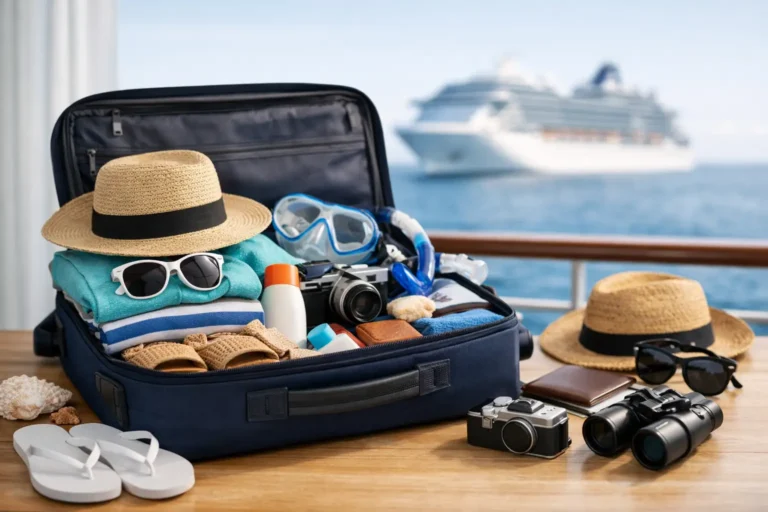
Then think practically about comfort. A refillable water bottle, sunglasses, sun cream, tissues and a light layer are all sensible additions. Terminal buildings and onboard public spaces can vary in temperature, and British travellers setting off from Southampton or flying to a warmer embarkation port may need to be prepared for both cool air conditioning and hot sunshine on deck.
A swimsuit is one of the smartest items to include, especially on warmer-weather cruises. One common frustration on embarkation day is wanting to use the pool or spa facilities, only to realise your swimwear is in a suitcase that has not yet arrived. The same logic applies to gym kit if you know you like to settle in with a walk or workout.
It is also worth packing a change of clothes, or at least a fresh top and basic toiletries, if you are travelling a long distance to the ship. Delayed luggage is not common enough to panic about, but it happens often enough to justify some basic preparation. If your checked bags turn up later than expected, you will be glad to have the essentials with you.
How much should you carry?
This is where many travellers go wrong. In trying to prepare for every possibility, they end up bringing too much. A carry on bag for cruise embarkation should feel manageable from the moment you leave the car, taxi or transfer coach. If it is pulling at your shoulder, constantly toppling over or impossible to fit beside you at lunch, it is too much.
A good rule is to pack only what you expect to need before dinner on day one, plus anything that would be genuinely difficult to replace. That usually covers your documents, valuables, medication, one or two comfort items, and a couple of practical extras. You do not need to carry half your wardrobe onto the ship.
This matters even more for older travellers or anyone with mobility concerns. Cruise terminals can involve more walking and standing than people expect, and while assistance may be available, relying on it is not always the smoothest approach. A lighter, better-organised bag usually creates a calmer start to the holiday.
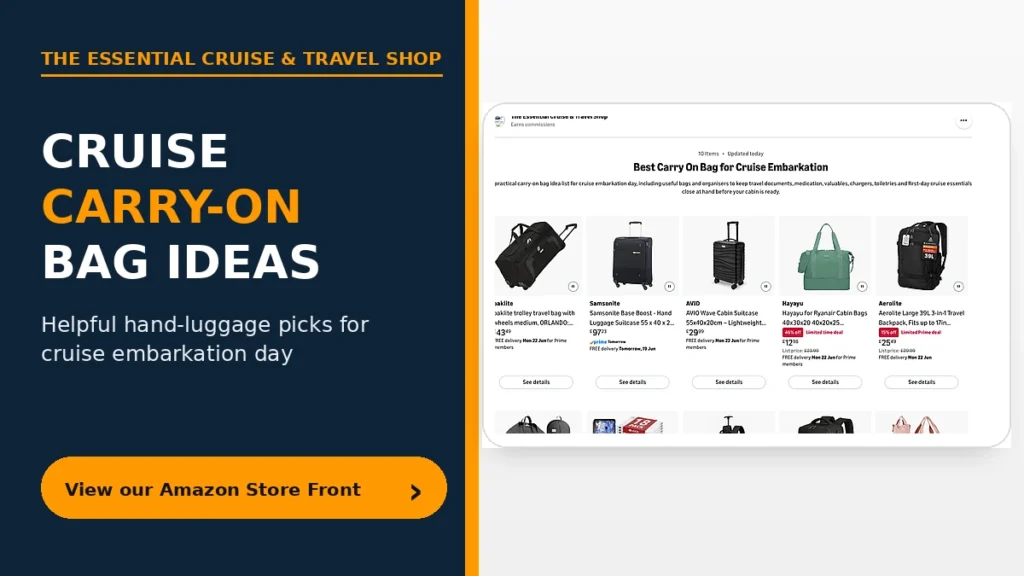
Choosing a carry on bag for cruise embarkation
If you want the simplest all-round answer, a well-organised backpack is often the strongest choice. It leaves both hands free, spreads weight more evenly and tends to be easier in crowded terminals. Look for padded straps, a luggage sleeve if you are travelling with a suitcase, and separate compartments for travel documents and liquids.
A large tote bag is appealing because it is easy to dip into, but it is rarely the most comfortable option if it becomes heavy. Open-top styles can also feel less secure when you are juggling phones, boarding passes and outerwear. If you prefer a tote, choose one with a zip and sturdy shoulder straps.
A small cabin suitcase can work very well for longer pre-cruise journeys, particularly if you are flying and want one bag to handle both parts of the trip. The downside is that it can feel bulky once you are on board waiting for cabins to open. It is practical, but not always the most convenient for the first few hours.
For river cruises, the calculation can be slightly different. Embarkation is often less hectic than on large ocean ships, and distances within the ship are shorter, so a compact holdall or backpack usually makes more sense than a wheeled case. For big ocean liners with thousands of passengers, organisation and ease of movement become more important.
Features worth looking for
The best bag is not necessarily the most expensive. It is the one that helps you stay organised under mildly chaotic conditions.
Multiple compartments are useful, but too many can become fussy. Ideally, you want one main section, a quick-access pocket for documents and phone, and perhaps a separate area for wet swimwear or toiletries. Water-resistant fabric is helpful, especially if you are travelling through changeable weather. A secure zip closure is better than magnetic or open-top designs.
Weight matters more than people think. An empty bag that is already heavy is a poor start. So does comfort. If you are carrying it from hotel to taxi to terminal to ship, even a short period of discomfort becomes noticeable.
It is also worth considering where the bag will go once you are on board. You may carry it to lunch, keep it by the pool, or take it into a lounge while waiting for announcements. Something that sits neatly beside a chair is more practical than a bag that constantly needs rearranging.
Mistakes to avoid on embarkation day
The most common mistake is packing your essentials into checked luggage. Medication, passports, cruise documents, valuables and anything you need urgently should stay with you at all times.
The second is treating embarkation like airport boarding. A cruise ship is different. You are not usually heading straight to your room with all your belongings. There is a transition period, and your bag needs to support that.
The third is bringing a bag that suits the flight but not the cruise. A hard-shell cabin case may be ideal at the airport but less useful once you are trying to relax on board for several hours. If your trip includes flights, trains and a cruise, think about the full journey, not just one stage.
At The Essential Cruise Shop blog, this is exactly the kind of small planning detail that can make a holiday feel noticeably smoother. It is not glamorous, but it is useful.
The best approach for most cruise travellers
For most UK cruise passengers, the sweet spot is a lightweight backpack or soft structured holdall that holds first-day essentials without tempting you to overpack. It should be comfortable enough to carry, smart enough to keep important items organised, and compact enough to stay out of your way once you are on board.
If you are travelling as a couple, it often works better for each person to carry their own small bag rather than loading everything into one large one. That spreads the weight and reduces the chances of constantly passing one bag back and forth while queuing or boarding.
The goal is simple. You want to board the ship with everything you are likely to need before your suitcase arrives, while still feeling mobile and unencumbered. If your bag lets you check in, explore the ship, enjoy lunch and settle into the afternoon without once thinking, where did I put that, then you have chosen well.
A cruise holiday begins long before sailaway. A sensible embarkation bag will not make headlines in your trip planning, but it does make the first day feel calmer, easier and far more like the start of a proper break.
Frequently Asked Questions
Disclaimer
The Essential Cruise Shop Blog provides this guide for informational purposes and is not a travel agency. The information contained in this guide is for general guidance only. While we do our best to ensure the information is up-to-date and correct, we make no representations or warranties of any kind about its completeness or accuracy.
Cruise line policies, itineraries, and loyalty programs are subject to change without notice. We strongly recommend that you verify all details directly with your cruise line or a certified travel agent before making any bookings or financial commitments.
We cannot be held liable for any financial loss due to the reader’s failure to follow the above advice.
Affiliate Disclosure
Many of the links are affiliate links, The Essential Cruise Shop Blog may receive a commission from qualifying clicks, orders or bookings. This income helps support our efforts to provide and improve our site and turn it into a one stop resource for travellers with a bias towards cruising.