Djibouti Cruise Port Guide: Essential Visitor Advice
Introduction
Arriving at the Port of Djibouti puts you at a unique maritime crossroads where the Red Sea meets the Horn of Africa. For many cruise travellers on repositioning voyages or specialist itineraries, calling at this unique harbour presents both extraordinary sights and distinct logistical questions. Knowing what to expect before stepping off your ship ensures a smooth, reassuring, and enjoyable day ashore.
Whether you intend to explore historic city quarters or venture further into dramatic landscapes, practical planning is key. This guide breaks down essential arrival details, transport options, local customs, and excursion choices to help you navigate your time in port with confidence.
Quick Overview for Cruise Passengers
This strategic harbour sits at the southern entrance to the Red Sea on the west coast, positioned at the intersection of international shipping routes connecting Europe, Asia, Africa, and the Persian Gulf. Bordering Somalia, Ethiopia, Eritrea, and Yemen, it operates with minimal deviation from the main East-West trade route. It functions as a regional transhipment hub and serves the COMESA market, which links 19 countries and 380 million people.
The harbour is a vital international logistics station handling refuelling, food, and water replenishment, with around 2,500 vessels calling annually. It handles over 95 per cent of landlocked Ethiopia’s foreign trade, representing 70 per cent of total cargo movement. Recognised by the World Bank among the most efficient in Africa, cargo and transit vessels spend a median time of under one day in port. Additionally, naval and military missions from the EU, NATO, the USA, Japan, China, India, Russia, and Saudi Arabia utilise these strategic maritime facilities.
When planning your day ashore, keep seasonal climate conditions in mind. The ideal visiting window runs from November to January when conditions are cooler and seasonal marine life arrives. While intense rainfall is rare, sudden downpours can occasionally cause flash floods that disrupt local travel and infrastructure. Official travel advice also provides current updates regarding regional military activity in the Red Sea area.
Docking Location and Terminal Facilities
The main commercial port facilities are overseen by the Djibouti Ports & Free Zones Authority (DPFZA). Port de Djibouti SA holds ISO 9001:2008 quality management certification for port operations, alongside ISO 28000 certification for security and environmental standards, supported by NAVIS, Maximo, and Sage management systems. Dedicated tugs and marine craft assist arriving vessels to ensure prompt and safe berthing.
Maritime operations are spread across multi-purpose sites, allowing up to six vessels to berth simultaneously between the main port, the Doraleh Oil Terminal, and the Doraleh Container Terminal. The container facility is a fully enclosed 22-hectare site linked by rail and road, supplemented by an additional 20 hectares of dry yard space dedicated to Ethiopian cargo. Nearby, the Port of Doraleh operates as a multipurpose facility built to reduce congestion at the older city harbour, directly connected to Ethiopia via the electrified Addis Ababa–Djibouti Railway.
Port development stretches back across several decades. Railway and port construction began simultaneously in 1897, driving rapid commercial expansion following its 1917 completion. Bunkering activity quadrupled in the decade after 1954, reaching 1.8 million tons in 1965, before the first modern container terminal opened in February 1985.
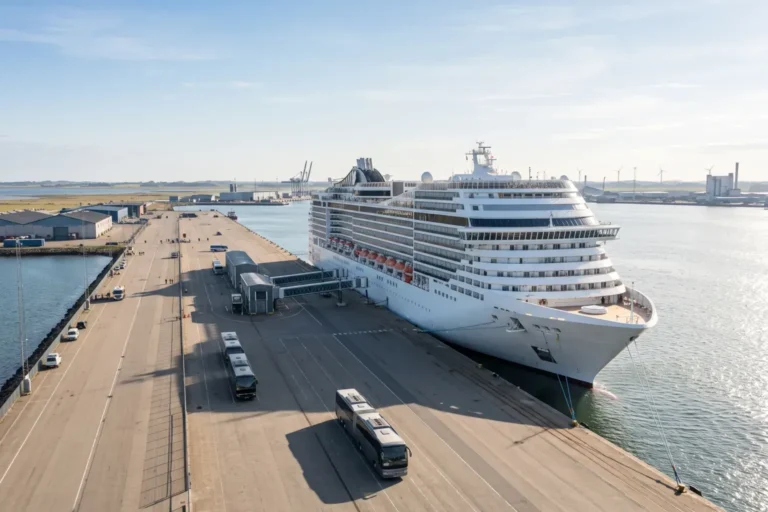
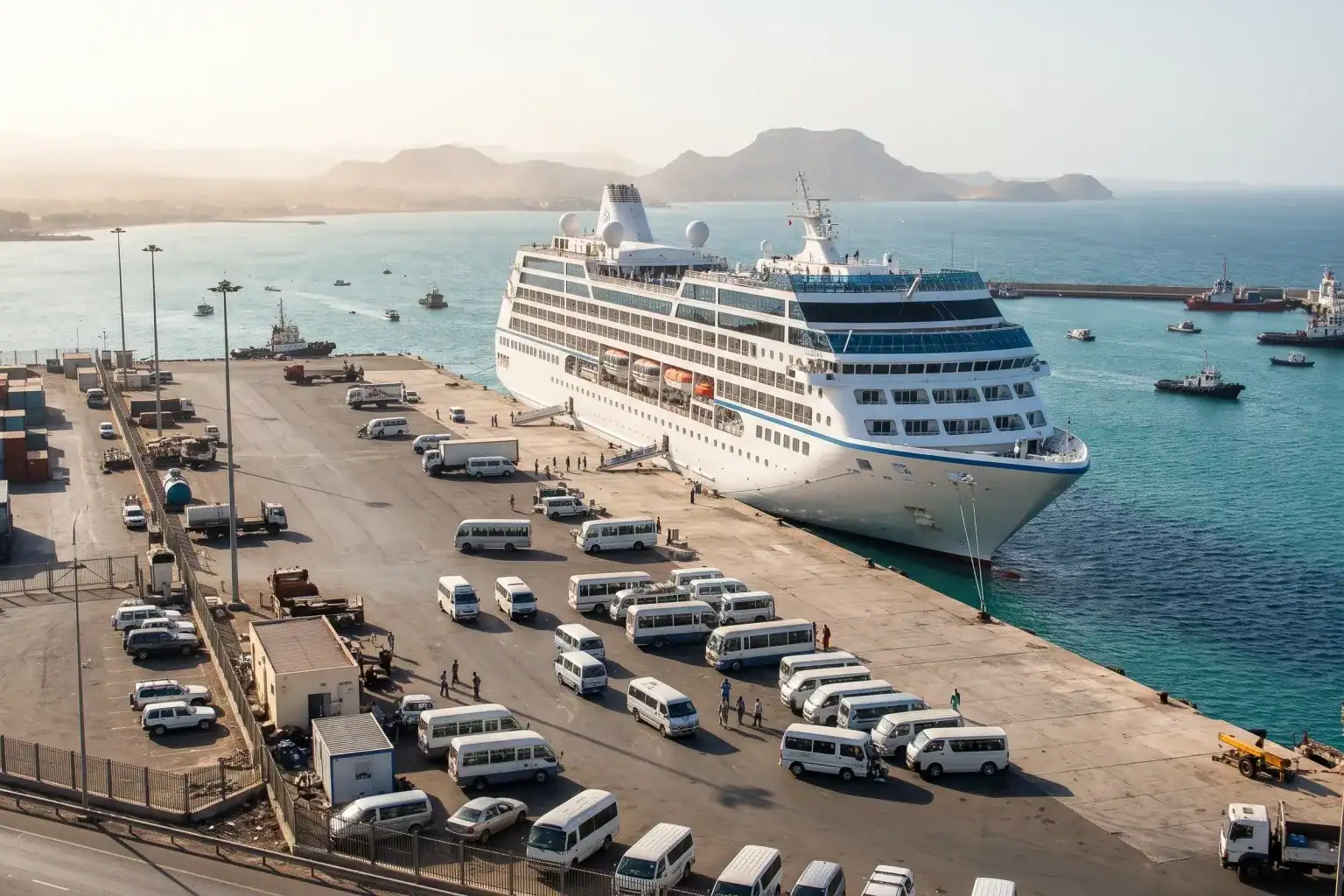
Cruise passengers should note that the dock is a working commercial environment without a dedicated passenger terminal building or complimentary harbour shuttles. Walking directly from the ship gangway into town is not advised.
Getting to the City Centre and Transport Options
Reaching the central commercial quarter requires motorized transport, as walking from an unconfirmed berth is not advised due to strict port security restrictions, high heat, and exposed access roads. When arranging travel into town, target Place du 27 Juin (also known as Place Menelik) as your primary drop-off point. Please note that local traffic, weather, and operational security checks can alter travel durations, so allowing extra buffer time is always wise.
Public transport options are generally unsuitable for cruise visitors on tight schedules. Arranging pre-booked private transport with a reputable driver through your cruise line or a registered local operator provides the safest and most reliable travel solution. Before leaving the ship, confirm whether your private driver holds authorisation to collect you directly at the berth or if you must meet at the main port gates.
For independent transfers around the capital, local taxis operate from starting fares of 500 FDj, depending on the distance travelled. Always negotiate and agree upon the exact fare with the driver before stepping inside the vehicle. Be aware that many local drivers chew khat, a legal natural stimulant, which can lead to aggressive driving styles or excessive speed; visitors are advised to avoid vehicles where drivers appear affected. Airport taxis operate differently, using fixed published rate boards outside the terminal that charge approximately 2,000 FDj ($11 USD) to downtown hotels. For rail connections, Nagad railway station lies 10 km south of the central district. Independent travellers should plan to return to the port entrance gate at least 60 minutes before all-aboard time to navigate security checkpoints.
Top Highlights in the Capital
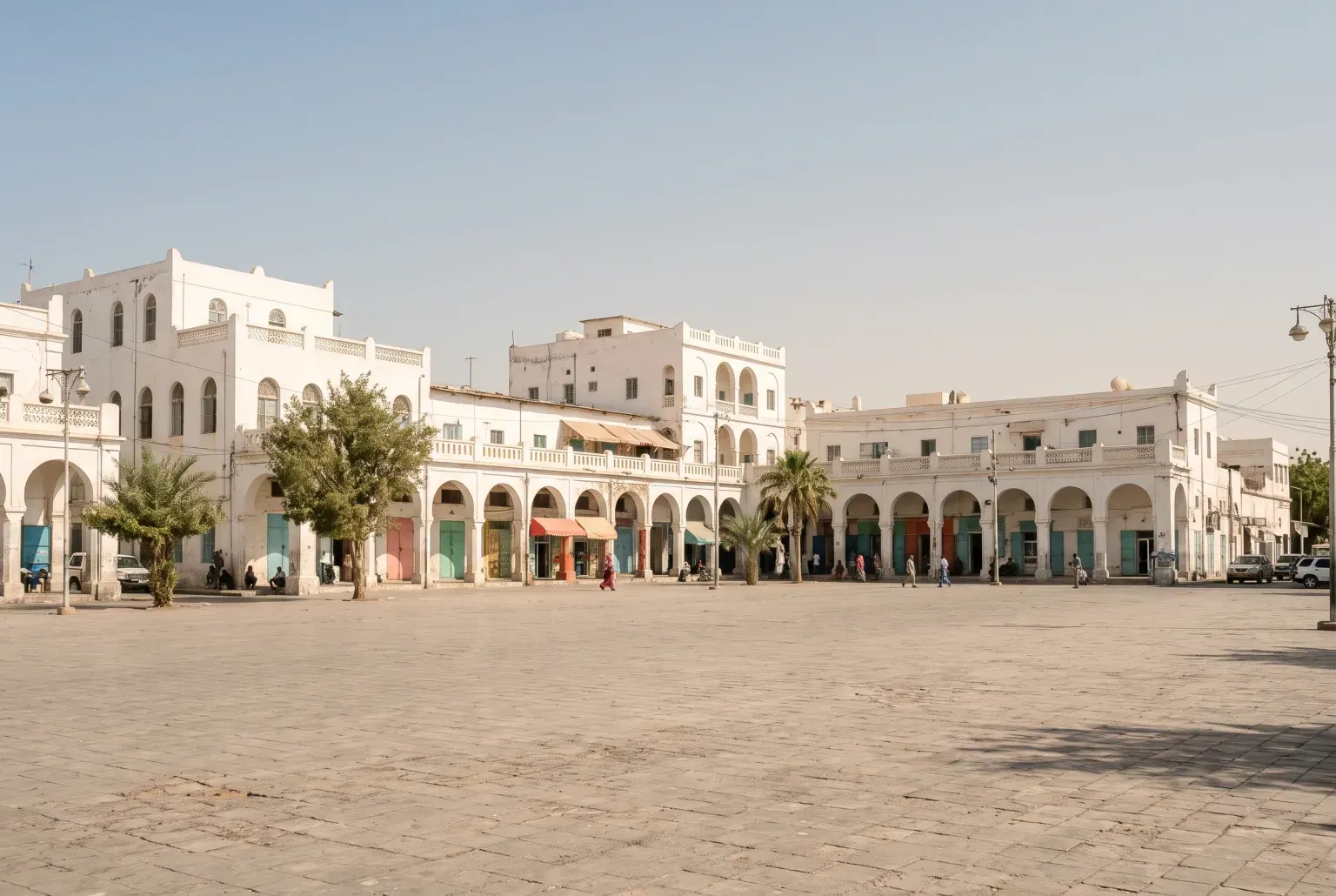
The capital offers a fascinating blend of cultures and architectural styles. The central hub at Place Menelik features distinctive Moorish arcades and whitewashed buildings combining Arabian and European aesthetics. The surrounding European Quarter houses administrative buildings like the Assemblée Nationale alongside practical services including banks, pharmacies, supermarkets, and shops. A short distance away in Quartier 1, Les Caisses Market serves as the main destination for traditional woodcarvings and regional attire.
Historic religious and waterfront landmarks showcase local heritage. Built in 1906 in the African Quarter, Hamoudi Mosque is one of the largest architectural structures in the city, capable of holding over 1,000 worshippers. Nearby stands the Cathédrale Notre-Dame du Bon-Pasteur, constructed in 1964 with concrete embedded with glittering seashells. For scenic coastal views, L’Escale causeway offers a picturesque promenade overlooking the waterfront, city skyline, and the restricted presidential palace, while public beaches stretch along the eastern shore.
Dining in the capital reflects diverse international influences, blending local traditions with Arab, French, Chinese, Vietnamese, and Portuguese styles such as roasting and marinating. While dining out can be expensive, eating at local establishments provides excellent value. Mukbasa – 7 Freres on Avenue 13 in the African Quarter serves Yemeni-style oven-baked fish accompanied by chapati bread and mokbasa, a purée of honey and banana or date. Chez Marco on Place du 27 Juin 1977 offers French-Mediterranean fusion dishes like beef filet with Roquefort sauce and lemon chicken escalope.
Additional dining choices cater to various tastes and schedules. Melting Pot on Bernard Street in the Heron area (located a few hundred metres from the port boundary) features indoor and outdoor fusion dining serving camel meat, steaks, seafood, and all-you-can-eat sushi. Restaurant Saba on Avenue Maréchal Lyautey offers quick dishes such as shark filets, shrimp, crab, salads, and fresh juices, while Jus de Fruits Chez Mahad near Hamoudi Mosque blends 45 varieties of fresh fruit smoothies. La Mer Rouge in Ambouli near the airport prepares fresh fish, crab, lobster, mussels, and clams, roasting fish in traditional Yemenite clay ovens over acacia wood. For all-day dining, Sings Indian restaurant near the old train station remains open continuously.
When planning your day, note that the city shuts down during the afternoon between midday and 3:00 pm, during which time most shops, cafes, and eateries close. Solo female travellers seeking evening drinks are advised to visit hotel lounges, as local bars cater mainly to men. Nightlife venues include Club Menelik inside the Menelik Hotel and the underground discotheque Club Hermes on Rue de Geneve.
Best Shore Excursions Into the Interior
Excursions beyond the urban area reveal remarkable geological formations. Day trips lead inland to Lac Assal, celebrated for its crystal-clear saline waters and recognised as the lowest point on the African continent. Excursion routes also provide views of the nearby dormant Ardoukoba volcano.
Coastal excursions offer memorable marine encounters. Coastal boat trips take visitors to the Bay of Ghoubbet for the opportunity to swim and snorkel alongside seasonal whale sharks. Alternatively, a speedboat trip to Moucha Island takes about 45 minutes from the capital (subject to sea conditions), where visitors can enjoy white sandy beaches, mangrove forests, swimming, and snorkeling.
Because of travel logistics and timing constraints during a standard port stop, visiting inland salt lakes and offshore islands must be undertaken as separate excursions; it is not possible to combine both on the same day.
Safety, Local Laws and Cultural Respect
Observing local laws and security guidelines is essential for a trouble-free visit. Strictly enforced regulations prohibit photographing port infrastructure, military sites, public administrative buildings, airports, and bridges. Taking photos of government buildings or police officers can result in immediate arrest or equipment confiscation. When visiting local markets, always ask permission from stallholders before photographing them or their goods. Furthermore, the People’s Palace monument complex is strictly off-limits to tourists and actively guarded by armed military personnel.
National security advisories should be checked prior to travel. The UK Foreign, Commonwealth & Development Office (FCDO) advises against all travel to the Eritrean border area.
Cultural sensitivity and legal compliance are strictly maintained. During the holy month of Ramadan, eating, drinking, smoking, chewing gum, playing loud music, dancing, or swearing in public outdoor areas during daylight hours is strictly forbidden. While alcohol is served in licensed venues, public drunkenness carries severe penalties, including potential prison sentences of up to two years.
Visas, Currency and Practical Essentials
Entry requirements must be completed prior to passing border controls. All visiting cruise passengers must possess a valid passport with at least six months validity remaining beyond your arrival date, alongside proof of onward travel. Visitors require an entry visa, which can be obtained as an e-Visa online prior to departure, issued by an embassy, or purchased upon arrival in cash using US dollars. Additionally, a yellow fever vaccination certificate is mandatory if arriving from a region with active yellow fever transmission risks. Strict customs rules require all travellers to declare any restricted goods or taxable items upon entry.
Financial transactions require careful cash preparation, as overall travel expenses for food and services are high. The official currency is the Djibouti Franc (FDj), which operates on a fixed exchange rate tied directly to the US Dollar. Credit and debit cards are rarely accepted across local establishments. While ATMs are present in the capital, many machines do not accept Mastercard, making carrying sufficient US Dollar cash essential.
Language landscape is varied. French and Arabic serve as the official languages, while Somali and Afar are widely spoken in daily life; English is generally spoken by hotel staff and market traders.

What to Pack for a Shore Day
Selecting appropriate clothing requires balancing local cultural modesty with intense heat. Public dress standards require lightweight, loose-fitting garments that cover both shoulders and knees when exploring urban streets or cultural landmarks. To stay comfortable in high temperatures, plan to complete walking tours early in the morning, carry plenty of bottled drinking water, and rely on air-conditioned transport for longer journeys.
Footwear choices should reflect the terrain. Town streets are relatively flat but frequently uneven, dusty, and busy with traffic, featuring limited shade. Sturdy, comfortable walking shoes or closed sandals are essential for negotiating broken pavements and unpaved paths.
If your planned excursion includes swimming in salt lakes or offshore snorkeling, pack appropriate swimwear, water shoes to protect against rough surfaces, a quick-drying towel, and high-factor sun protection.
Who Is This Stop Best For?
This unique destination is primarily featured on niche itineraries operated by smaller luxury vessels, tall-sail ships, superyachts, and ocean liners undergoing Suez Canal repositioning voyages. It appeals to adventurous travellers seeking authentic cultural encounters, distinctive colonial history, and extraordinary natural geology.
Passengers with limited mobility should evaluate shore options carefully. The lack of step-free gangway shuttles, uneven urban footpaths, and rugged terrain on wilderness excursions can present mobility challenges. Consulting your cruise line prior to departure ensures selected shore excursions align with your physical requirements.
By preparing essential entry documents, adhering to conservative dress norms, and booking organised excursions, you will experience a fascinating and memorable port call.
Frequently Asked Questions
Additional Resources

The Essential Cruise & Travel Shop

Disclaimer
The Essential Cruise Shop Blog provides this guide for informational purposes and is not a travel agency. The information contained in this guide is for general guidance only. While we do our best to ensure the information is up-to-date and correct, we make no representations or warranties of any kind about its completeness or accuracy.
Cruise line policies, itineraries, and loyalty programs are subject to change without notice. We strongly recommend that you verify all details directly with your cruise line or a certified travel agent before making any bookings or financial commitments.
We cannot be held liable for any financial loss due to the reader’s failure to follow the above advice.
Affiliate Disclosure
Many of the links are affiliate links, The Essential Cruise Shop Blog may receive a commission from qualifying clicks, orders or bookings. This income helps support our efforts to provide and improve our site and turn it into a one stop resource for travellers with a bias towards cruising.