Esbjerg Cruise Port Guide: Denmark Coast Sights
Introduction
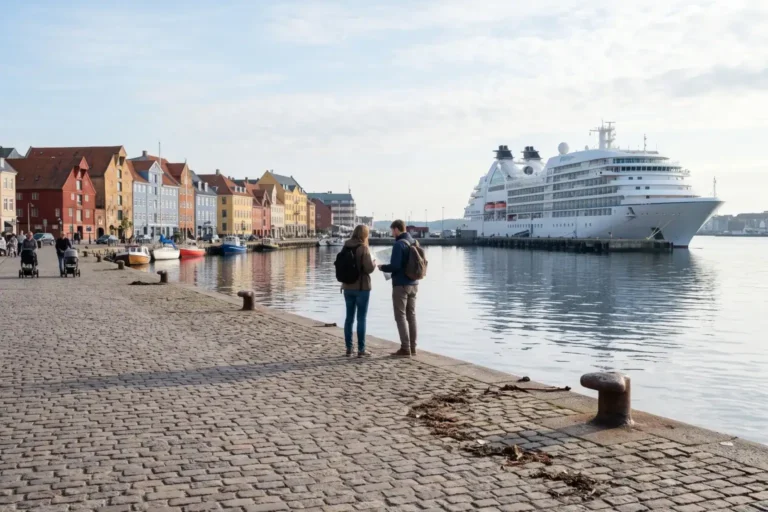
Arriving in Esbjerg on a Northern Europe itinerary introduces travellers to a distinct coastal port where industrial enterprise meets maritime history. Situated on the western coast of the Jutland peninsula in southwestern Denmark, this destination provides an authentic look into the working life of a major North Sea gateway while offering direct connections to fascinating regional sights.
For cruise passengers, arriving at a busy commercial harbour can raise practical questions regarding port transfers, walking distances, and independent sightseeing options. Understanding the harbour layout and local transport connections allows you to plan your day ashore with clarity and confidence.
Whether your interest lies in exploring coastal nature reserves, discovering historic market towns, or enjoying traditional Danish cuisine, this guide outlines the practical logistics required to make the most of your time in port.
Quick Overview for Cruise Passengers
As a coastal port city on Jutland’s western shore, the destination serves as an international, multimodal transport hub and a Scandinavian gateway to the world. It stands as one of the major intermodal hubs in the Nordic region and covers a total area of 4.5 million square metres, making it the largest port in Denmark. The construction of the port was originally decided in 1868 after Denmark lost the Port of Altona following the 2nd Danish-Prussian War. In 2000, the facility transitioned from state ownership to a public self-governing port owned by the Municipality.
Today, the harbour functions as Denmark’s leading offshore port, a major cargo hub in Northern Europe, and one of the largest originating ports for wind power globally. It operates as the world’s largest base port for offshore wind activities, having been involved in the shipping of components for more than 65 offshore wind farm projects. The port handles up to 1,500 MW of offshore wind energy capacity each year and is the leading port in Europe for handling and shipping out offshore wind power. Beyond renewable energy, commercial maritime business operations span offshore wind, oil and gas, land leasing, break bulk, bulk cargo, intermodal transport, and carbon capture and storage (CCS) terminals.
The harbour handles around 6,000 vessel calls per year, with approximately 4 million tonnes of cargo passing through each year before being moved onwards by road, rail, and sea. Six regular RoRo liner services connect the docks to more than 28 ports in Northern Europe and the Mediterranean Sea. The site also serves as one of Jutland’s two main international ferry ports, offering overnight ferry connections to and from Britain. Within the port area, over 250 businesses operate, employing more than 10,000 people.
Despite its vast industrial capacity, the location combines the energy of a working port with rich cultural roots, giving Northern Europe cruises a modern-meets-ancient feel. Recognized as a major North Sea port for its maritime heritage and wide sandy coastlines, the area is also home to the Blue Water Arena stadium, which serves as the home ground for the local football club Esbjerg fB.
Cruise Ship Docking and Terminal Facilities
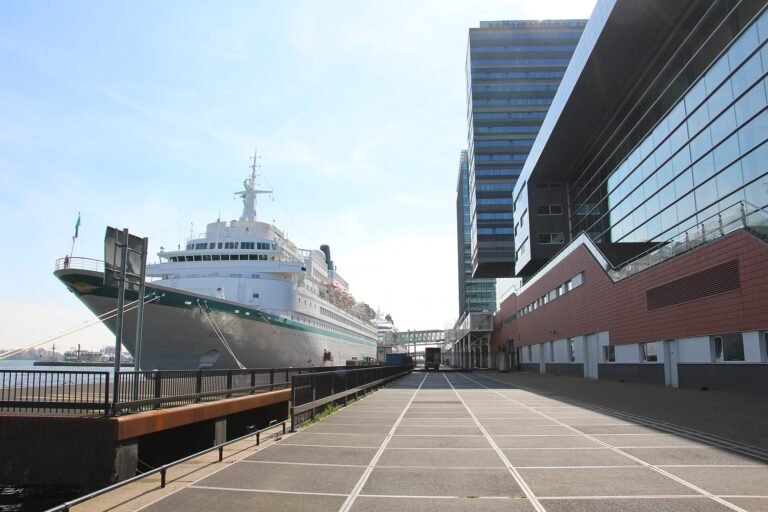
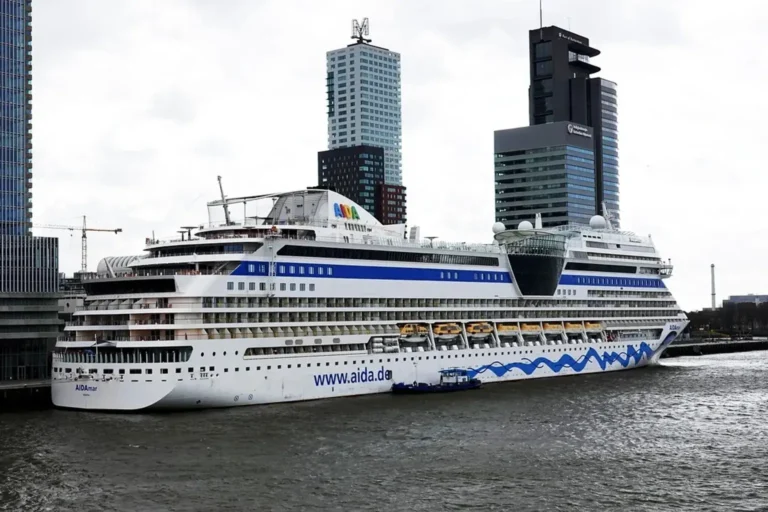
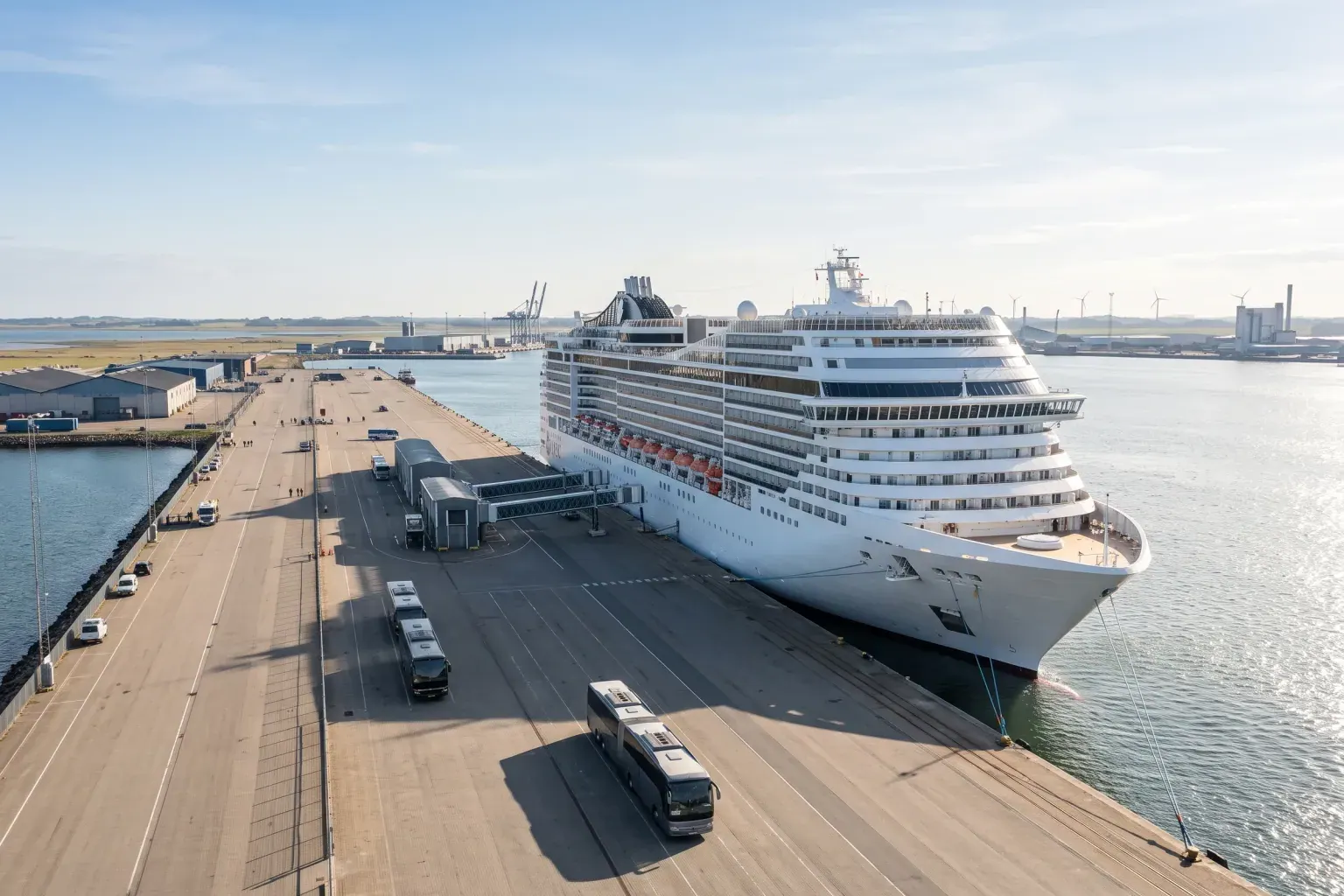
Cruise vessels berth within a commercial harbour complex located at Hulvejen 1, DK-6700. The harbour infrastructure features multiple distinct dock and basin sections including Dokhavn, Trafikhavn, Sydhavn, Nordhavn, and Østhavn. Deep-water berths feature a water depth of 12.2 metres, allowing deep-sea vessels to dock safely. To support environmental sustainability, the port provides shore power (OPS), electrification, and energy-efficient solutions to reduce vessel emissions, noise, and reliance on fossil fuels during calls.
The cruise berths are situated approximately 1 km (0.6 miles) from the city centre, though exact walking distances depend on the assigned berth and exit point for your vessel. The harbour administration provides downloadable driving directions to key harbour sites including the Seaman Centre, Port Innovation Hub, Port Administration, and Det Gule Palæ. Harbour officials or the Duty Officer can be contacted directly by phone at +45 7612 4000 or via email at vagt@portesbjerg.dk.
For smaller vessels and leisure craft, a new marina is situated on the harbour island within the newly constructed Strand port area. Payment of harbour fees provides access to the marina clubhouse, showers, washing machine, and dryer facilities. The marina clubhouse operates 24 hours a day, supplying an entry code once payment is made. Smaller vessels using the service bridge at the marina must adhere to a maximum stay limit of 3 hours for pilotage, refueling, and related services.
Getting to the City Centre and Nearby Transport
Connecting from the berth to central streets is straightforward, thanks to modern pedestrian infrastructure. Landgangen is an elevated pedestrian connection providing a direct walking route between Dokhavnen and the central town area.
Please note that all journey and transfer times provided are approximate guides; local traffic, weather, and port operations can alter travel times on the day. While central streets are walkable via the elevated bridge, taking a local bus or taxi to reach the seaside sculpture and nearby museum is more practical than walking during a short port call.
For regional rail links, the main train station is situated conveniently at the end of Skolegade. If you are organising independent air travel or a fly-cruise transfer, the regional airport is located approximately 9 km (6 miles) northeast of downtown. The port is directly accessible by the E20 motorway and the rail network, with driving transfers allowing about 15 minutes by car. Scheduled air services at the airport are provided by DAT and Loganair.
Top Attractions Near the Harbour
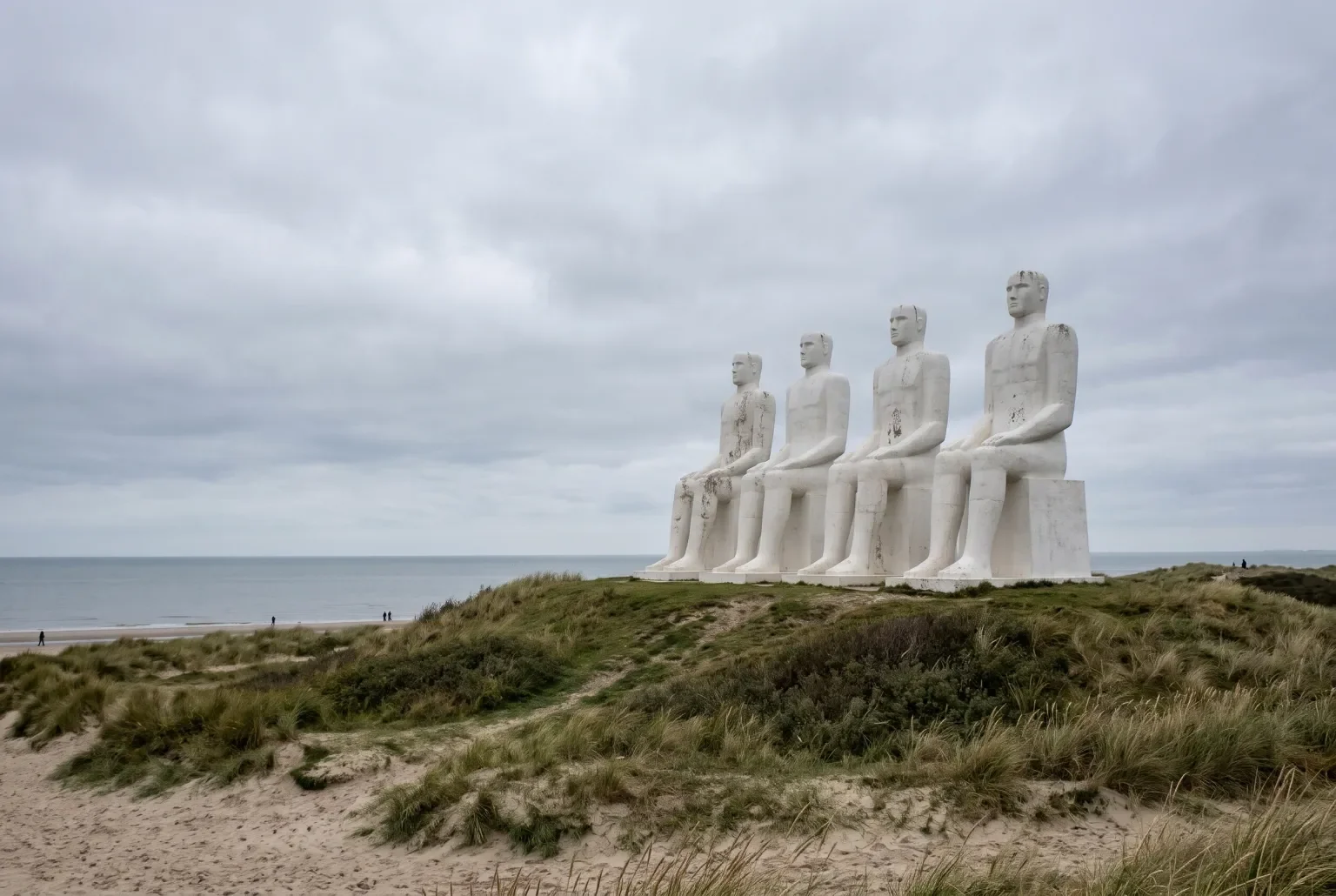
A highlight of visiting the port includes strolling along the harbourfront to view commercial shipping activities before visiting local sights. Among the most iconic sights in the area is the 30-foot-tall Man Meets the Sea (Mennesket ved Havet) sculpture, located near Sædding Beach. Danish sculptor Svend Wiig Hansen created these four seated white figures to mark the centennial of the town.
Situated near Sædding Strand right by the sculpture is the Fisheries and Maritime Museum (Fiskeri- og Søfartsmuseet). This comprehensive venue exhibits Denmark’s seafaring past, fishing evolution, shipping history, and local fishermen’s experiences. Visitors can explore aquariums, live seals, and outdoor maritime displays. Within the working harbour, the port authority is also developing a Sustainable Fishing Centre.
In the town centre, key cultural landmarks are situated near Byparken park and the Musikhuset cultural centre. Here, art lovers can visit the local Art Museum. Byparken also features the historic Water Tower, which remains a prominent exterior landmark, though it is no longer open for internal visits.
Best Shore Excursion Ideas
Beyond the harbour, the surrounding region offers excellent choices for natural and historical day trips. The port provides easy access to the UNESCO-listed Wadden Sea National Park, which is popular for seal safaris, birdwatching, and tidal flat walks. Guided tours are necessary for Wadden Sea mudflat and seal-bank excursions because safe walking depends strictly on local tides and sea conditions.
Another popular excursion option is taking a day trip to Fanø Island, reached via a short ferry ride across the harbour channel. The ferry crossing to Nordby on Fanø Island takes approximately 12 minutes. The island features historic thatched houses, charming coastal villages, and expansive dune landscapes.
For history fans, an excursion into Denmark’s heritage leads to nearby Ribe, which is recognised as Denmark’s oldest town. Visitors can explore Viking history and well-preserved cobble streets on an organised or independent trip.
Exploring Independently vs Guided Tours
Choosing between independent sight-seeing and organised tours comes down to your personal priorities for the day. Self-guided walking is ideal for central attractions, as the elevated Landgangen walkway links the berth directly to downtown shopping streets, galleries, and municipal parks.
However, if your plans involve venturing out onto coastal mudflats or visiting regional nature reserves, booking a guided excursion is recommended.
Independent travellers taking local buses or taxis to outer sights should always keep track of time and plan to return to the vessel well in advance of the scheduled all-aboard hour.
Food, Drink and Local Specialities
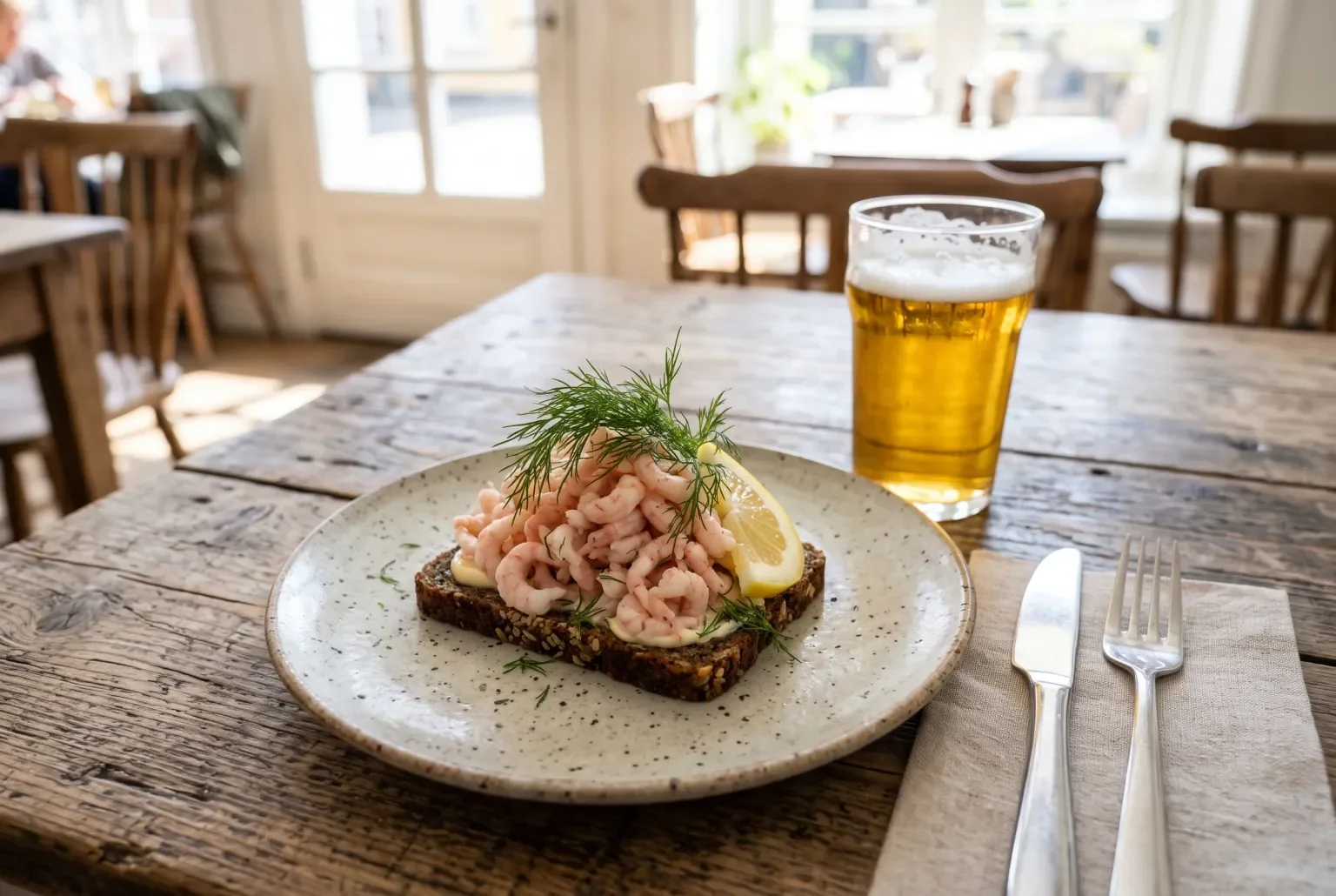
Sampling regional dishes is a rewarding aspect of a coastal Danish visit. The few remaining local fishing trawlers primarily target crabs, mussels, and shrimps, ensuring fresh seafood appears regularly on local lunch menus. Smørrebrød—traditional open-faced rye bread sandwiches—is widely served throughout the town centre.
Several notable eateries operate near the port and downtown squares. Inside the Fisheries and Maritime Museum, Café MS Smag offers seasonal Nordic dishes prepared with local ingredients. In town, Café Danmark on Vesterhavsgade was established in 1904 and specialises in traditional Danish smørrebrød and Nordic cuisine.
For pub dining and evening hospitality, Dronning Louise at Torvet 19 is a heritage-listed establishment functioning as a pub, restaurant, and nightclub. Guests seeking diverse options can visit Streetfood Esbjerg, which features varied food stalls including Moroccan, Vietnamese, burgers, and pizzas, with indoor and outdoor seating. Additionally, Cafe Vivaldi inside the central shopping mall offers traditional Danish smørrebrød alongside brunch, sandwiches, salads, and steaks.
Shopping and Local Goods
The primary shopping hub is located along Kongensgade, which serves as the main pedestrian shopping street in central districts. The street features a pleasant assortment of Scandinavian fashion boutiques, home decor shops, and craft stores.
For an indoor shopping environment, BROEN Shopping located at Exnersgade 20 is the largest shopping mall in West Jutland, containing over 60 stores. Across the broader town centre, visitors can explore around 200 speciality shops, cafes, restaurants, shopping centres, and department stores.
When planning your shopping time ashore, keep local business hours in mind. Typical store opening hours are Monday to Thursday from 10:00 to 17:30, Friday from 10:00 to 18:00, and Saturday from 10:00 to 15:00.
Practicalities, Currency and Accessibility
Navigating the area is easy for international travellers. The local currency is the Danish Krone (DKK), though contactless card payments are widely accepted at shops, eateries, and transit outlets. English is fluently spoken by locals, shop staff, and excursion operators, making travel straightforward.
For maps and travel assistance, the local tourist office is situated at Skolegade 33. Additionally, the municipality city office is located at Torvet 16, 1st floor in central streets. For visitors travelling by road, free parking is available at all municipal parking lots across the municipality.
Accessibility around the port and urban core is generally good, supported by smooth paving and modern walkways such as Landgangen. Cruisers with specific mobility requirements should check with their cruise line regarding step-free access for rural shore excursions or ferry boarding.
Who Is This Destination Best For?
This western Danish port offers a versatile stop for many types of cruise travellers. Nature enthusiasts and birdwatchers will appreciate quick access to coastal nature reserves and island ecosystems, while history enthusiasts can focus on maritime heritage and ancient settlements.
Families with children will enjoy interactive marine aquariums and outdoor seal displays alongside walkable town parks. The accessible distance between berths and central streets makes it equally appealing for passengers seeking a relaxed, self-paced day ashore.
By preparing sensible footwear, keeping weather conditions in mind, and verifying return transit times, you can look forward to a practical and enjoyable day along Denmark’s scenic coast.
Frequently Asked Questions
Additional Resources

The Essential Cruise & Travel Shop

Disclaimer
The Essential Cruise Shop Blog provides this guide for informational purposes and is not a travel agency. The information contained in this guide is for general guidance only. While we do our best to ensure the information is up-to-date and correct, we make no representations or warranties of any kind about its completeness or accuracy.
Cruise line policies, itineraries, and loyalty programs are subject to change without notice. We strongly recommend that you verify all details directly with your cruise line or a certified travel agent before making any bookings or financial commitments.
We cannot be held liable for any financial loss due to the reader’s failure to follow the above advice.
Affiliate Disclosure
Many of the links are affiliate links, The Essential Cruise Shop Blog may receive a commission from qualifying clicks, orders or bookings. This income helps support our efforts to provide and improve our site and turn it into a one stop resource for travellers with a bias towards cruising.