Halong Bay Cruise Guide: Essential Tips for Cruisers
Introduction
Planning a fly-cruise holiday to Northern Vietnam often begins with the iconic landscape of Halong Bay. For UK travellers preparing for their first visit or returning to explore further, understanding the practicalities of navigating this unique region can make your journey smooth and reassuring.
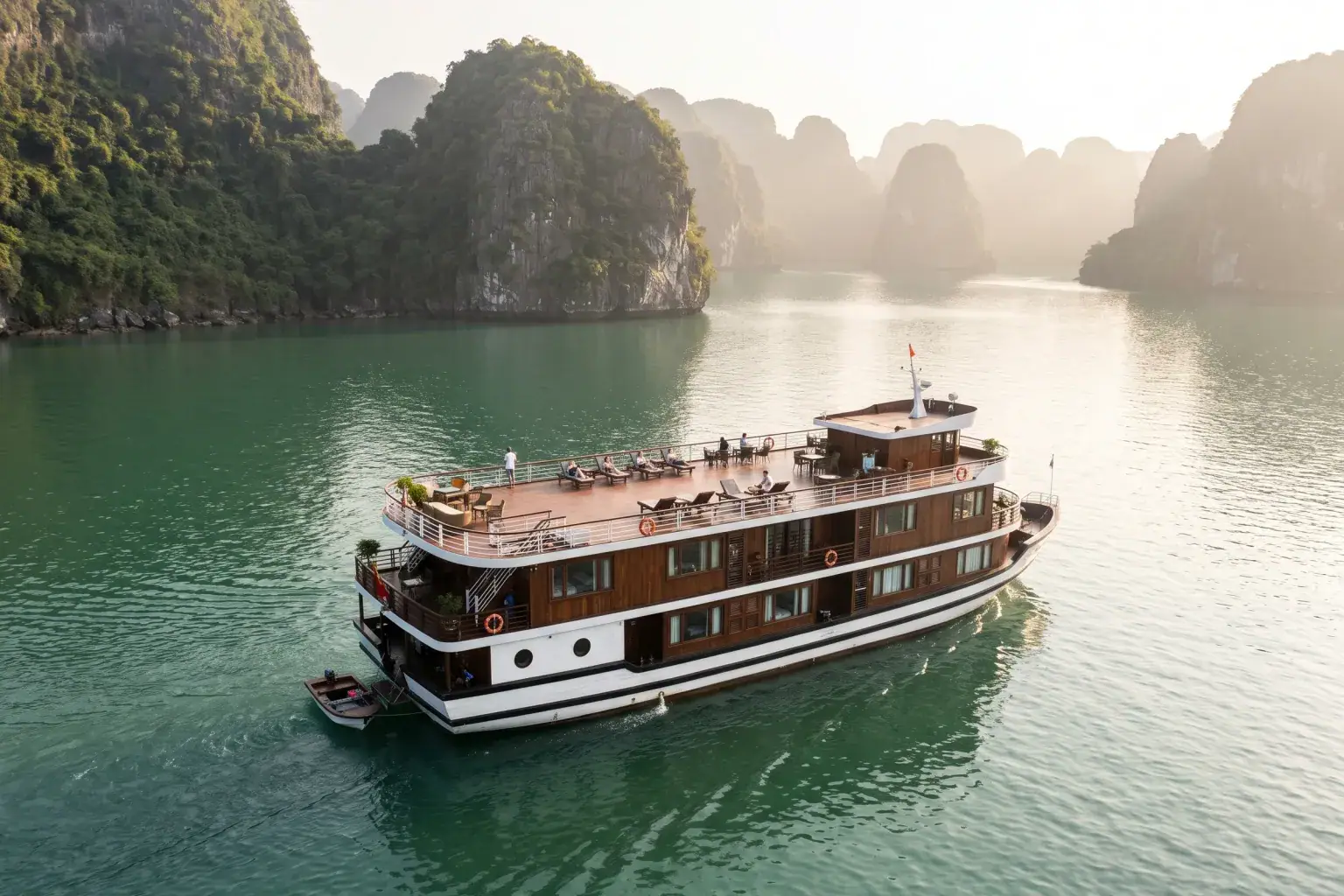
An overnight Halong Bay cruise provides an intimate way to experience the spectacular scenery, moving gently between ancient limestone towers and tranquil waters. Preparing your itinerary, knowing what to expect on embarkation day, and selecting appropriate clothing will ensure you enjoy every moment without unnecessary anxiety.
This comprehensive guide outlines everything you need to know, from local weather patterns and transfer options from Hanoi to safety features aboard ship and detailed packing advice for daytime excursions and smart casual evenings.
Understanding the Landscape and Governance of Halong Bay
Halong Bay is located in Northern Vietnam and features a tropical to subtropical climate with a 120-kilometre coastline. The bay spans an area of approximately 1,553 square kilometres and contains 1,969 islets, which are mostly composed of limestone. These ancient limestone karsts have been carved out internally over time by rain and water currents, creating dramatic formations rising from emerald green waters.
Recognising its exceptional natural beauty and geological value, UNESCO designated Halong Bay as a World Natural Heritage site in 1994 and again in 2000. Out of the 1,969 islands in the bay, only about 40 are inhabited. Tuan Chau and Cat Ba are the two larger islands that feature permanent residents along with established tourist facilities such as hotels and beaches.
Administrative governance across these coastal waters is split across local authorities. Halong Bay and neighbouring Bai Tu Long Bay are governed by Quang Ninh province. In contrast, nearby Lan Ha Bay is governed by Hai Phong province. Lan Ha Bay forms part of the wider Halong Bay – Cat Ba Archipelago, which received its own UNESCO World Heritage Site recognition in 2023.
Seasonal Weather and Choosing the Best Time for a Halong Bay Cruise
When planning a Halong Bay cruise, timing your trip according to local climate patterns will help you make the most of your time on the water. Average temperatures in the region generally range between 15 and 25 degrees Celsius, though conditions vary noticeably between the hot, humid summers and the cool, drier winters.
The best time of year to cruise Halong Bay is from October to April, when travellers can expect cool, dry weather and clear skies. Within this period, autumn (from September to November) and spring offer particularly clear, calm conditions ideal for peaceful navigation and sightseeing across the bay.
From May to September, the region experiences warmer weather accompanied by lush green landscapes, creating ideal conditions for swimming and kayaking. However, summer also brings hot, humid weather and the potential for seasonal storms. Cruisers travelling during these months should monitor local weather forecasts and maintain flexible travel plans in case sailing schedules are adjusted by port authorities.
Planning Airport Transfers and Embarkation Day Logistics
Reaching your departure port is a straightforward process when arranged in advance as part of your wider fly-cruise arrangements.
A shared limousine journey between Hanoi and Halong Bay typically takes around 2.5 hours under standard road conditions. Travellers should always allow extra time for journey and transfer times, as traffic, weather, and local road conditions can change expected arrival schedules. Alternatively, travellers seeking a unique aerial view can choose a scenic seaplane flight to travel from Hanoi to Halong Bay.
On embarkation day, arriving at the port with your hand luggage prepared makes the boarding process calm and efficient. Keeping essential items, travel documentation, and medications in your carry-on bag ensures you remain comfortable while your main luggage is transferred to your cabin by the vessel’s crew. Always check with your cruise line or local operator regarding exact boarding times and check-in procedures.
Selecting Your Itinerary and Key Ports of Call
Overnight cruises in Halong Bay typically run for two to three days, allowing guests to navigate deep into the surrounding waters and explore tranquil channels. Vessels sail between thousands of islands, islets, and hidden caves featuring ancient rock formations.
During your voyage, your vessel may anchor near significant geological grottoes and islands across Bo Hon Island and neighbouring areas. Sung Sot cave is situated on Bo Hon Island, while Thien Cung cave features a grand main chamber spanning over 100 metres in length. Furthermore, Hang Dau Go, also known as Wooden Stakes cave, is recorded as the largest grotto in the Halong area.
Other notable stops present distinct natural features. Dau Be Island features the Bo Ham lake group, which consists of hidden lakes linked by tunnel-notch caves. Meanwhile, Bai Tu Long National Park features a rich marine ecosystem complete with mangroves, coral reefs, and rare wildlife. For specific details on itinerary routes, travellers should review their cruise line’s published schedule before departure.
Excursions, Wildlife, and Outdoor Activities
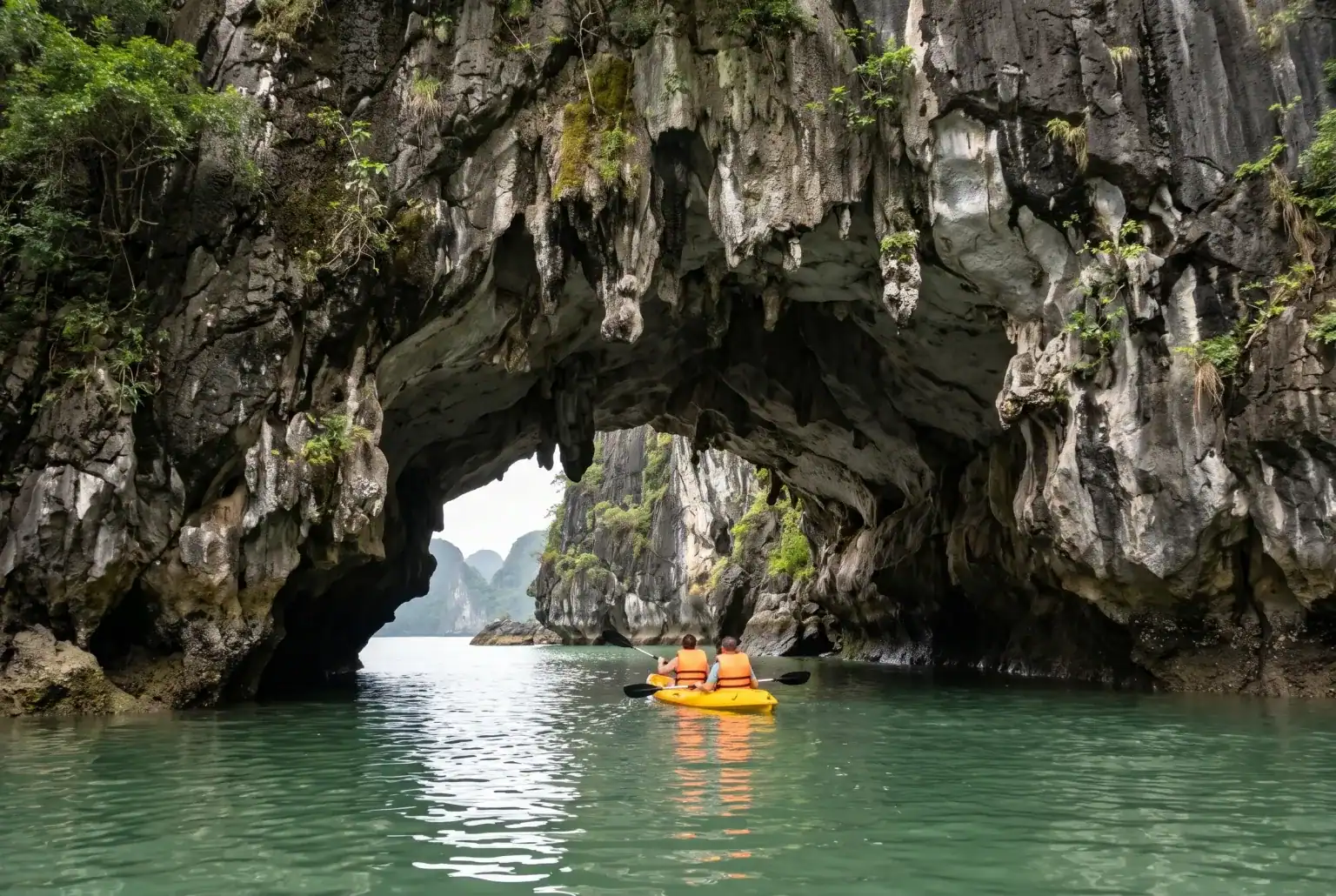
Excursions from your cruise vessel offer memorable encounters with local wildlife and natural landscapes. Luon Cave, located on Bo Hon Island, leads 50 metres into an enclosed tidal lake where golden monkeys can frequently be observed resting or playing along the cliff faces.
On Cat Ba Island, travellers can visit Viet Hai village, a remote community that can be explored by bicycle or electric cart. For active travellers, deep water solo rock climbing is popular across Halong Bay and Lan Ha Bay, particularly on Butterfly Island where dramatic limestone faces rise directly from the sea.
Kayaking shortly before sunset provides a peaceful way to explore quiet lagoons and see traditional fishing vessels up close. Floating fishing communities remain a central cultural feature of the region, with a population of around 1,600 people residing in four floating fishing villages in Halong Bay: Cua Van, Ba Hang, Cong Tau, and Vong Vieng.
Cultural Heritage and Regional Events
The region surrounding Halong Bay contains deep historical and spiritual roots that complement its natural wonders. The Yen Tu Scenic Landscape Complex serves as the centre of Truc Lam Buddhism in Vietnam, attracting visitors interested in ancient religious traditions.
Nearby in Quang Ninh province, An Sinh Temple stands as an ancient historical site over 600 years old, built to honour eight kings of the Tran dynasty. Exploring these cultural landmarks provides a rich historical backdrop to any voyage through Northern Vietnam.
Modern cultural events also enhance the region’s appeal for maritime enthusiasts. Quang Ninh plans to host the Halong Sailing Festival 2026 in front of Tuan Chau Marina, bringing vibrant sailing displays to the harbour waters. Cruisers planning future trips can check official local tourism websites for updated event dates.
Onboard Amenities, Safety Standards, and Night Scenery
Small overnight vessels operating across Halong Bay offer modern comforts designed for relaxing voyages. Guests can enjoy panoramic views of the water while dining on board or unwinding on the open top decks during atmospheric evening sailings.
Safety is a key priority for all licensed vessels operating in the bay. Lifeboats on the cruise ships are located on the sundeck, with each boat holding up to 12 people. Furthermore, individual cabins are equipped with an emergency lamp and a hammer designed for breaking windows in an emergency situation. Crew members conduct mandatory safety briefings upon embarkation day to familiarise guests with these features.
Night cruises on Halong Bay offer scenic views along the coast as vessels anchor in quiet bays. Passengers can observe illuminated landmarks including Bai Chay Bridge, the Queen Cable Car, and the Sun Wheel along the shoreline, creating a peaceful atmosphere after dinner.
Daytime Dress Code: What to Wear from Morning to Evening
Preparing your wardrobe for a Halong Bay cruise involves selecting practical items suited to a subtropical environment and varied shore activities. During daytime hours, light, breathable clothing made from natural fabrics keeps you cool and comfortable.
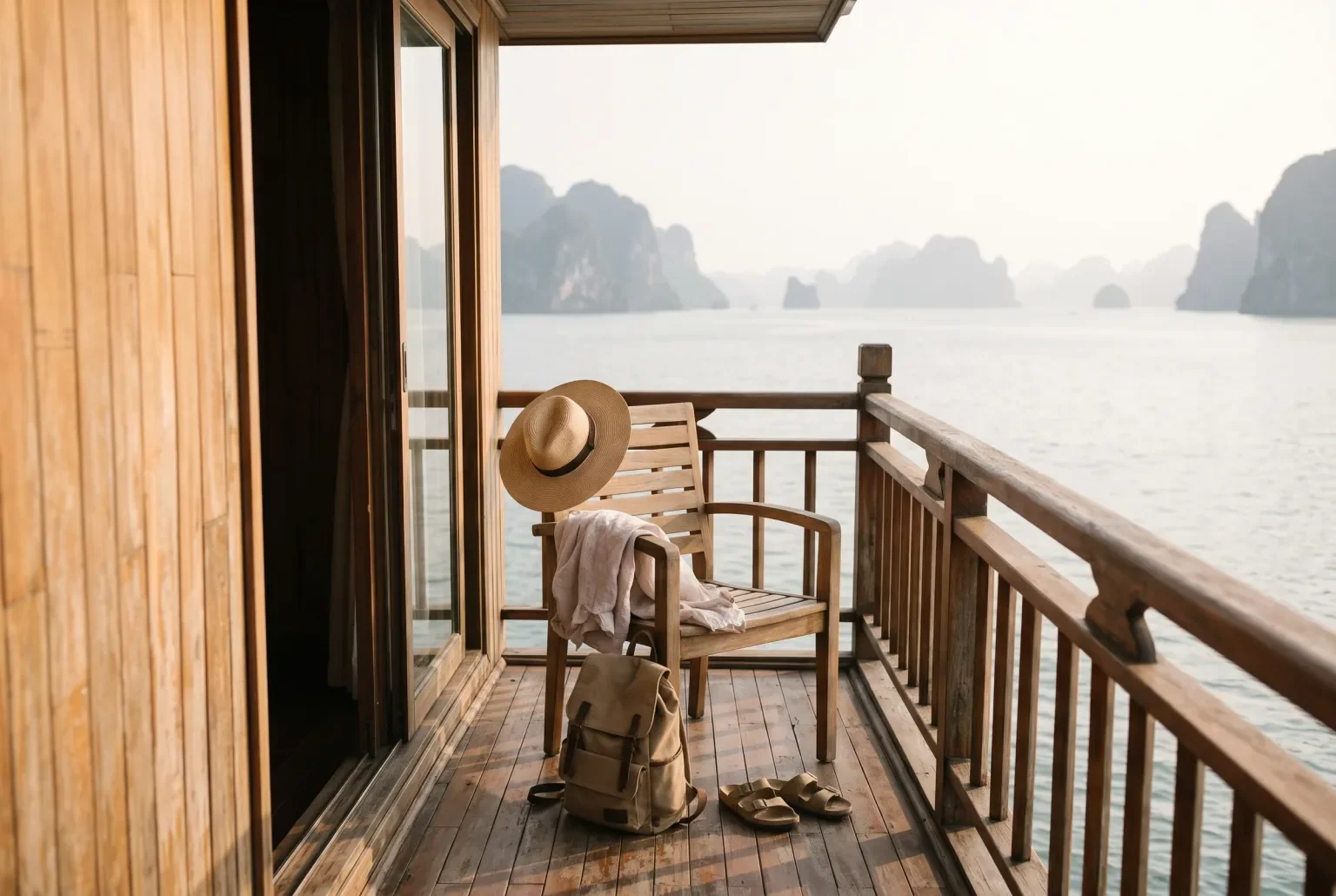
When embarking on tender boats or joining guided excursions, appropriate footwear is essential. Comfortable shoes or sandals are recommended for cave and beach excursions, providing secure traction on damp steps or uneven terrain.
Sun protection is equally critical when spending time on exposed boat decks or open water. Ensure you pack high-factor sunscreen, a wide-brimmed hat, and appropriate swimwear for kayaking or swimming stops.
Evening Dress Codes Explained and Smart Casual Guidelines
Evenings aboard Halong Bay cruise vessels generally follow a relaxed yet refined smart casual atmosphere. Men typically wear collared shirts or neat polo shirts paired with tailored trousers or shorts, while women often choose casual dresses, skirts, or lightweight trousers.
Although full formal wear is rarely required on small overnight bay vessels compared to large ocean liners, dressing in clean, smart casual attire for dinner enhances the dining experience for all guests.
Temperatures can drop noticeably once the sun sets, particularly during the cooler winter months between October and April. Packing a light jacket or cardigan ensures you remain warm while enjoying evening drinks or stargazing on the upper deck.
Expert Packing Tips for Any Itinerary
Efficient packing ensures a stress-free voyage through Northern Vietnam. Placing essential items in your hand luggage allows you to settle into your cabin easily without waiting for checked bags to arrive.
Always review your cruise line’s specific guidelines regarding luggage allowances, restricted items, and onboard amenities prior to departure. Having a clear checklist prevents overpacking while guaranteeing you have all necessary items for excursions.
- Light, breathable daytime attire suitable for warm weather and outdoor excursions.
- Comfortable shoes or sturdy sandals with good grip for visiting caves and rocky beaches.
- Sun protection items including sunscreen, a wide-brimmed hat, and UV-protective sunglasses.
- Swimwear for kayaking, swimming, and tender excursions.
- A light jacket or wrap for cooler evening breeze on the sundeck.
- Important travel documents, prescriptions, and electronic chargers stored safely in hand luggage.
Additional Resources and Essential Advice
Thorough preparation and practical flexibility are the keys to a memorable fly-cruise holiday in Vietnam. Understanding local weather patterns, transfer schedules, and excursion requirements allows you to approach your journey with confidence.
For specific policies regarding cabin amenities, dietary requirements, or transfer pickups, always consult your cruise operator, port authority, or official travel agent before setting off. Sensible planning ensures you can relax and absorb the breathtaking beauty of Halong Bay.
Frequently Asked Questions
Additional Resources

The Essential Cruise & Travel Shop

Disclaimer
The Essential Cruise Shop Blog provides this guide for informational purposes and is not a travel agency. The information contained in this guide is for general guidance only. While we do our best to ensure the information is up-to-date and correct, we make no representations or warranties of any kind about its completeness or accuracy.
Cruise line policies, itineraries, and loyalty programs are subject to change without notice. We strongly recommend that you verify all details directly with your cruise line or a certified travel agent before making any bookings or financial commitments.
We cannot be held liable for any financial loss due to the reader’s failure to follow the above advice.
Affiliate Disclosure
Many of the links are affiliate links, The Essential Cruise Shop Blog may receive a commission from qualifying clicks, orders or bookings. This income helps support our efforts to provide and improve our site and turn it into a one stop resource for travellers with a bias towards cruising.