Luanda Cruise Port Guide: What Cruise Passengers Need to Know
Introduction
Stepping ashore at the Luanda cruise port introduces travellers to one of West Africa’s most dynamic maritime destinations, where rapid urban development sits alongside deep historic roots. For cruise passengers arriving on an African itinerary or fly-cruise voyage, navigating an unfamiliar port of call can present practical questions regarding arrival logistics, entry requirements, and local transport.
Having clear, factual guidance allows you to approach your day ashore with complete confidence. Whether you plan to join a structured excursion to national parks, sample local culinary dishes along the bay, or inspect historic landmarks, thoughtful preparation ensures a seamless experience from embarkation day onwards.
Quick Overview for Cruise Passengers
The harbour is situated within a natural bay that is sheltered on its sea side by Ilha do Cabo, providing natural protection against ocean swells and strong currents. It is positioned directly near the heart of the capital, sitting between 0 and 3 km from the main promenade, shops, and dining establishments. When planning your movement, allow about 5 to 20 minutes on foot or a short taxi ride under typical conditions; please note that traffic, weather, and local road conditions can alter journey times.
As the world’s most populous Portuguese-speaking capital city and third most populous Portuguese-speaking city overall, the urban centre handles roughly 80 percent of the nation’s imports and exports. Visitors stepping ashore will experience an environment undergoing major reconstruction that is altering the cityscape, characterised by sharp economic contrasts where high wealth exists alongside pockets of poverty. It is also ranked among the world’s most expensive cities for resident foreigners, and travellers should prepare for notable infrastructure challenges, including traffic shortcomings and short supplies of essential services such as electricity and drinking water.
Stepping ashore requires strict adherence to national entry regulations. Passports must be valid for at least six months beyond your expected departure date, contain blank pages, and you must submit a scanned copy of your passport biographical page when applying for an entry visa. All entering travellers must present proof of vaccination against yellow fever via an International Certificate of Vaccination, which is also required for onward travel to specific destinations such as South Africa. Additionally, entry rules mandate proof of financial means to support your stay, and customs officials may request to see a return or onward travel ticket.
For nationalities that are not visa-exempt, a simplified online e-Visa procedure is available through the official government portal. The platform processes applications within a 72-hour timeframe, after which approved entry visas are emailed to applicants to present upon arrival. When applying, applicants must submit a police clearance certificate in English accompanied by a certified Portuguese translation. A tourist visa must be used within 60 days of issue, is valid for 30 days, and can be extended once for an additional 30 days. Be mindful that overstaying incurs a daily fine of 15,000 Angolan kwanzas, and unpaid fines may result in travellers being blocked from departing. Air passengers transiting without a visa to a third country may do so provided they remain inside the airport on their connecting flight, and future plans include joining the KAZA UniVisa scheme alongside Botswana, Namibia, Zambia, and Zimbabwe.
Where Cruise Ships Dock
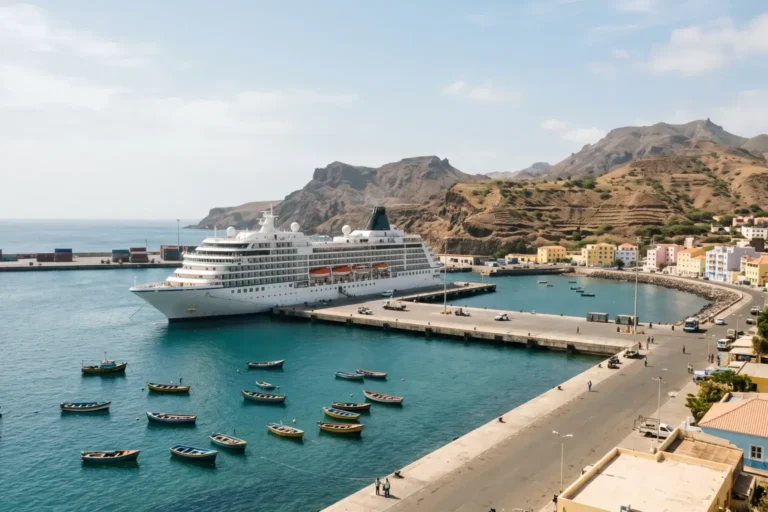
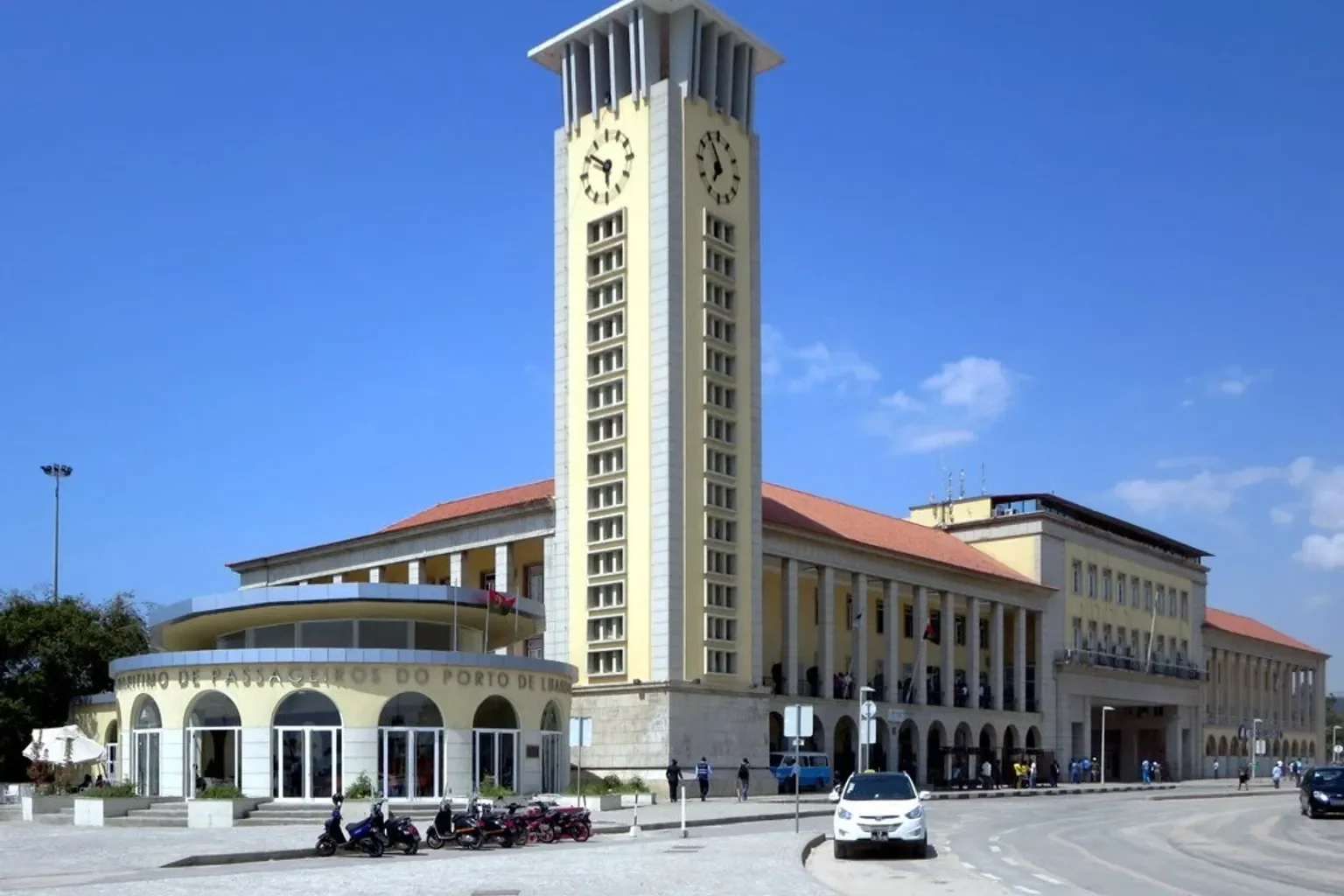
Passenger ships berth directly within the commercial maritime complex, utilising either the Terminal de Passageiros or the main quay along the bay, both offering a modernised waterfront facility. Vessels can also anchor safely inside the bay entry channel, which features a seabed of firm ground, sand, and mud with depths ranging between 15 and 30 metres. Mandatory pilotage applies to all national and foreign vessels of 500 gross tonnage or larger entering the facility.
The main commercial facility features 2,738 metres of berthing quay divided into seven distinct terminals, operating 24 hours a day with a maximum draft of 13.2 metres at high tide. Water depth along most quays ranges between 10.5 and 12.5 metres, with the Cabotage Terminal having a shallower draft between 3.5 and 5.5 metres. A newer commercial facility at Dande, situated approximately 30 km (19 miles) to the north, opened in 2014 to expand regional maritime capacity.
Dedicated amenities directly at the pier focus on essential maritime operations. Ships berthed or anchored can complete full provisioning for food supplies and spare parts, while heavy fuel oil and marine gas oil are available through the national fuel entity, SONANGOL. Fresh drinking water supply is accessible across all terminals, including emergency offshore supply options. However, cruise guests should be aware that occasional localised shortages of fuel, municipal water, and electricity occur across the surrounding metropolitan area, meaning drinking water and specific food items can occasionally be hard to find.
Getting Around and Transport Options
While visitors are able to walk along the bay waterfront, official travel advice strongly advises against exploring the wider city on foot, particularly when travelling alone or after dark. Walking between bars and dining venues on Ilha do Cabo should likewise be avoided for safety reasons.
Door-to-door taxis are scarce and expensive across the metropolitan area, making hiring a private car with a dedicated driver the recommended option for navigating local traffic shortcomings. Standard taxis are readily available right at the terminal exit. However, using mobile ride-hailing applications is recommended against where possible due to inconsistent safety standards and limited vehicle traceability.
Public transit options are unsuitable for cruise visitors. Local minibus networks and regional coaches are considered unsafe and should be strictly avoided by passengers seeking day travel.
Top Things to See and Do Nearby
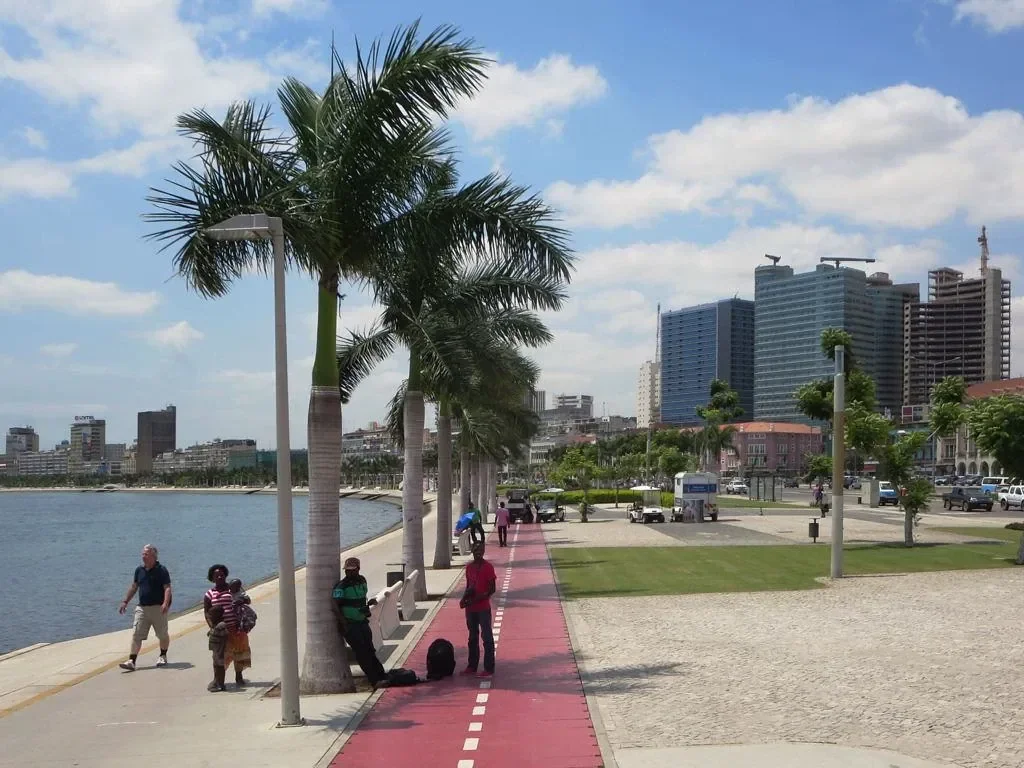
Originally founded by Portuguese explorer Paulo Dias de Novais in 1576 under the name Sao Paulo da Assumpcao de Loanda, the settlement developed through colonial trade, independence, and civil conflict into a major modern capital. Along the bay, the Marginal promenade serves as a scenic waterfront avenue lined with palm trees, benches, and local street vendors. This commercial stretch showcases a distinct architectural mix of modern high-rises, historic colonial buildings, and Soviet-style apartment blocks.
Prominent cultural landmarks near the city centre include the rocket-shaped Mausoléu de Agostinho Neto, which stands 120 metres (393 feet) high on the skyline and houses the remains of the nation’s first president. Nearby, the National Museum of Anthropology offers cultural exhibits, while the pink Banco Nacional de Angola provides a striking example of Portuguese colonial architecture along the bay front.
Across the water lies Ilha do Cabo, a narrow sandy spit that features high-end beachfront restaurants and scenic coastal views.
More Museums and Landmarks
Overlooking the bay, the Fortaleza de São Miguel was built by the Portuguese in 1576 and is Luanda’s oldest surviving building. It now houses the national military history museum, where you can walk along the walls and around the courtyard, see statues of figures from Portugal’s colonial past and follow tiled panels that trace Angola’s history. Access to the fortress is controlled by the military and visits have been guided, so check arrangements locally or with your ship before you go.
Beside the pink Banco Nacional de Angola on the waterfront, the Museu da Moeda (Currency Museum) tells the story of money in Angola from the zimbo shell to the kwanza, using the central bank’s coin and banknote collections. It opened in 2015 and sits largely underground, beneath the square next to the bank.
In the Baixa, the yellow Palácio de Ferro (Iron Palace) is an iron building dating from the 1890s whose design is attributed to the workshop of Gustave Eiffel. It reopened in 2016 as a diamond museum after restoration, but opening arrangements vary, so you may only be able to admire it from the street. Lonely Planet also suggests the Museu de História Natural alongside the National Museum of Anthropology if you have time for another museum.
Best Shore Excursion Ideas
Structured tours departing from the berth provide efficient exploration of both historical urban districts and regional natural reserves. Guided city excursions focus on the historic Baixa district to view colonial architecture, taking in stops such as the Banco Nacional de Angola and the historic Igreja de Nossa Senhora do Populo. Market excursions frequently take guests to Mercado do Kikolo, allowing visitors to view traditional Angolan foods, spices, fresh tropical produce, fabrics, and local handicrafts.
A day trip into the surrounding countryside is feasible via guided safari tours to Kissama National Park. These excursions feature guided jeep drives through open savanna and riverine forest, offering opportunities to observe native wildlife including elephants, giraffes, zebras, and indigenous bird species.
Further south along the Atlantic coastline, excursions visit Miradouro da Lua to view dramatic, heavily eroded rock formations overlooking the ocean. Additional coastal tours head to Ilha do Mussulo, a quiet sand spit peninsula south of the urban centre offering calm swimming lagoons, sandy beaches, seafood dining, and beach resorts. Historical excursions also travel to Morro da Cruz to visit the Museu Nacional da Escravatura, which displays historical artefacts detailing the transatlantic slave trade. Due to local transport complexity, booking structured excursions directly through your cruise line or verified tour operators is generally preferred over unguided independent travel.
Safety, Money, and Practicalities
Safety precautions require careful attention while ashore, as the city experiences high crime levels, including violent attacks, armed muggings, pickpocketing, and bag snatching in popular tourist areas. Theft from slow-moving or stationary vehicles is common in downtown traffic; keep vehicle windows fully closed and conceal all personal valuables. To reduce personal risk, avoid wearing expensive jewellery or watches, and refrain from displaying mobile phones publicly. If confronted by armed individuals, hand over cash and valuables immediately without resisting.
Legal regulations and official compliance are strictly enforced. Visitors must carry original Angolan-issued travel documents alongside locally certified copies of their passport identification page at all times. Note that photocopies must be notarised by an Angolan notary public, though notarised copies are not accepted for travel outside the capital. Failing to present personal identification when requested at common urban or rural police checkpoints can incur an on-the-spot fine of 15,000 Angolan kwanzas. Additionally, using cameras, binoculars, or GPS equipment near government buildings is strictly prohibited, and street photography may result in camera confiscation.
Currency and financial rules involve specific limits. The official currency is the Angolan Kwanza (AOA), though small US Dollar bills are often accepted by vendors and drivers, with local ATMs and exchange bureaus available. Non-resident visitors entering or departing must declare cash or traveller’s cheques totalling 5,000 US Dollars or more. Departing non-residents are restricted from taking out more than 5,000 US Dollars (or foreign currency equivalent), though they may carry up to 50,000 Angolan kwanzas in cash in addition to foreign currency limits.
Practical communications and health considerations are equally essential. Portuguese is the official language, though English is increasingly spoken in key tourist areas. Telecommunications outages occur frequently, and many foreign mobile phones are incompatible without local reprogramming; avoid using public Wi-Fi networks as they may be compromised by criminals. Health guidance recommends antimalarial medication, avoiding swimming or wading in untreated freshwater lakes, rivers, or ponds to prevent schistosomiasis, and taking precautions against rabies, which is widespread in local wildlife and dogs.
Weather and overland travel conditions dictate careful planning. The rainy season runs from November to April, bringing heavy downpours that cause sudden, severe flooding. Overland travel outside urban areas should only be undertaken in convoys of at least two four-wheel drive vehicles due to unexploded ordnance and landmines near bridges and unpaved roads. Furthermore, driving under the influence of alcohol is frequent on weekends, making road travel and return trips from coastal beaches hazardous, while public demonstrations occur occasionally and can unexpectedly disrupt transport.
Local Food, Shopping, and Culture
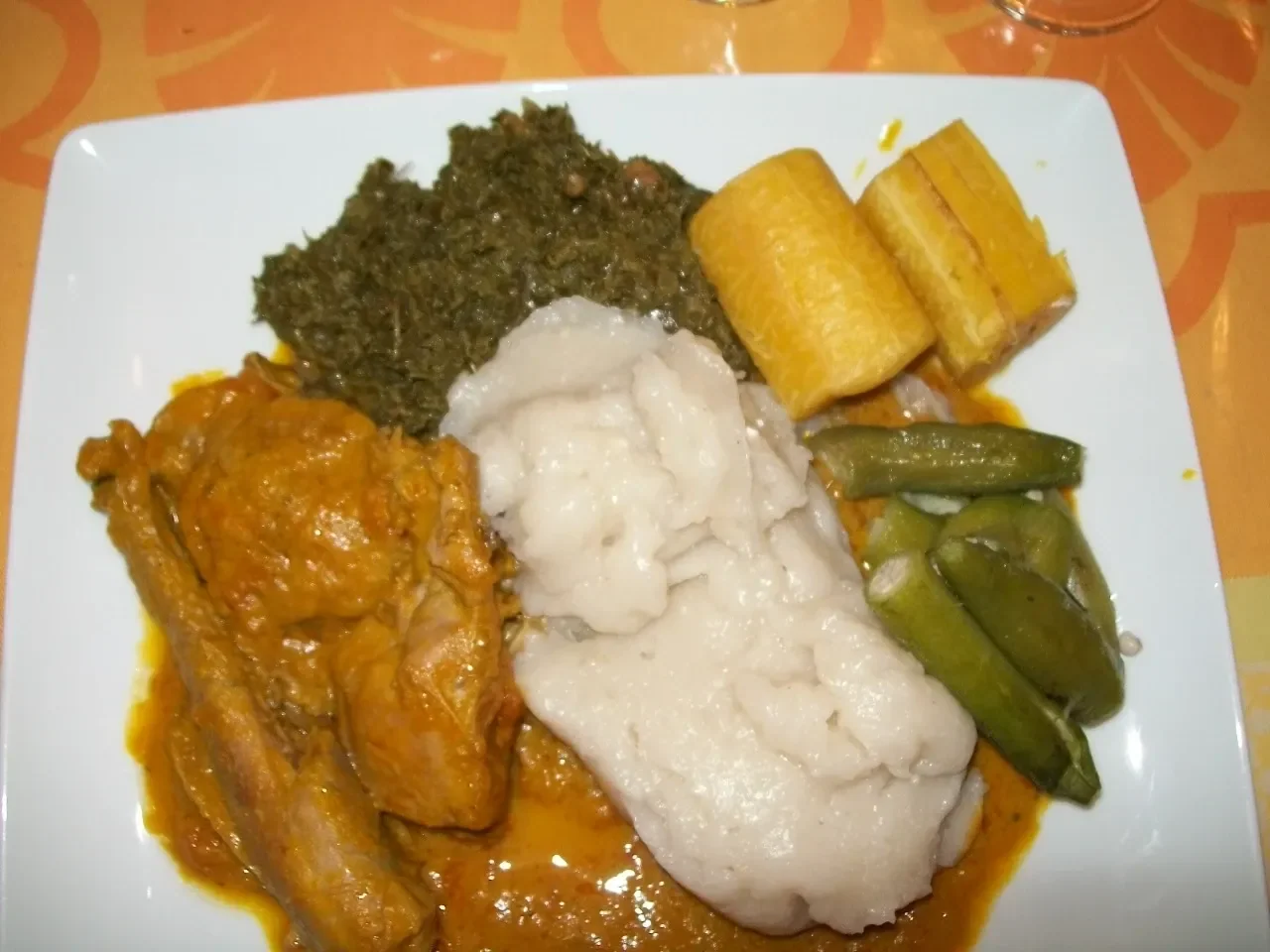
Oceanfront dining venues situated near the port area and along the waterfront, including Lookal Mar and Cafe del Mar, offer an ideal setting to sample regional cuisine. Key Angolan dishes to try include freshly grilled prawns and muamba de galinha, a traditional savoury chicken stew cooked with palm oil and spices.
Cultural souvenir shopping requires an understanding of strict environmental protection laws. While traditional fabrics, carvings, and regional handicrafts are available at local markets, buying or trafficking souvenirs made of ivory is strictly illegal in Angola and punishable by heavy fines or imprisonment.
Etiquette guidelines reflect conservative local customs. Public attitudes toward same-sex relationships remain conservative across the country, and public displays of affection may draw negative attention. Always seek verbal permission before taking photographs of individuals or market stalls to show proper respect to local residents.
Who Is This Port Best For?
This destination is best suited for intrepid cruise travellers, history enthusiasts, and nature lovers seeking an authentic, off-the-beaten-track African port call. Passengers who appreciate dramatic coastal landscapes, rich colonial history, and wildlife safaris will find plenty of rewarding experiences when visiting structured sights.
Independent exploration is considerably more complex here than in standard European or Caribbean ports of call. Given the strict legal documentation rules, traffic shortcomings, and specific safety considerations, organised ship excursions provide the most seamless and reassuring way to explore.
Passengers with mobility needs should prepare for variable street infrastructure outside modern waterfront zones. While the updated promenade area offers flatter walking paths, exploring older historic districts or embarking on wilderness safaris requires moderate physical flexibility and advance coordination with your cruise line.
Final Cruise Port Advice
Maximising a single day ashore comes down to realistic planning and prioritising one or two key activities. Review your ship’s daily programme before departing the vessel, ensure your entry documents and certified papers are stored securely in your hand luggage, and confirm all excursion timing with your tour guide.
Maintaining a sensible buffer time for your return to the pier is vital. Because urban traffic bottlenecks and sudden rain downpours can cause unexpected transport delays, plan to begin your return journey well ahead of the official all-aboard time, keeping your day relaxed, reassuring, and completely stress-free.
Frequently Asked Questions
Additional Resources
The Essential Cruise & Travel Shop
Disclaimer
The Essential Cruise Shop Blog provides this guide for informational purposes only and is not a travel agency or professional travel adviser. The information in this Luanda cruise port guide is general guidance only. While we do our best to ensure it is correct and up to date, we make no representations or warranties of any kind about its completeness or accuracy. Angolan entry and e-Visa rules, yellow fever and other health requirements, identity document and currency regulations, safety advice, berthing arrangements, local transport and excursion availability are subject to change without notice. Please check the latest UK Government travel advice and verify all details directly with your cruise line, tour operator, the relevant official authorities or a certified travel agent before making any bookings or financial commitments. We cannot be held liable for any financial loss arising from reliance on this information.
Affiliate Disclosure
Many of the links are affiliate links, The Essential Cruise Shop Blog may receive a commission from qualifying clicks, orders or bookings. This income helps support our efforts to provide and improve our site and turn it into a one stop resource for travellers with a bias towards cruising.