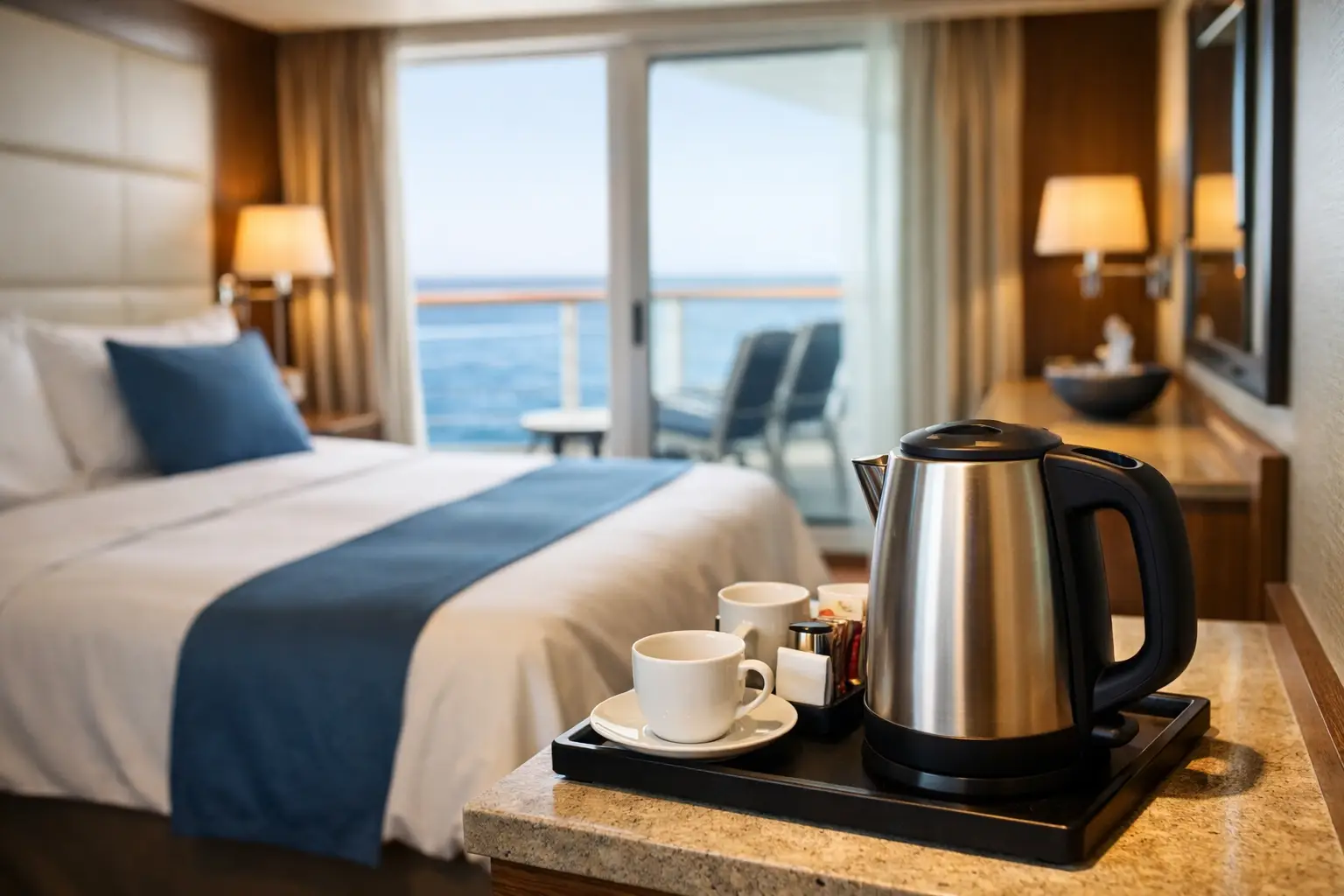
Do Cruise Cabins Have Kettles? What to Expect
Introduction
A morning cup of tea can feel like a small detail until you are standing in a cruise cabin at 6am, waiting for room service or getting dressed to find the nearest café. So, do cruise cabins have kettles? Sometimes, but it is far from guaranteed – and the answer can vary by cruise line, ship, cabin grade and even itinerary.
For UK travellers in particular, this is worth checking before packing. A kettle is a familiar cabin essential in many hotels, but cruise ships operate differently. Electrical safety, limited cabin space and onboard catering policies all affect what you will find in your room.
Do cruise cabins have kettles as standard?
Most mainstream ocean cruise cabins do not have a kettle as standard. Many ships provide tea and coffee facilities in suites, premium accommodation or selected cabin categories, while standard inside, ocean-view and balcony cabins may only have cups and glasses. Some ships offer a kettle on request, but availability is not universal.
British-focused cruise lines are more likely to understand that guests expect in-cabin tea-making facilities. On some ships, kettles, tea bags, coffee and long-life milk are common in cabins. However, policies change as ships are refurbished, transferred between brands or updated, so an old forum post is not a reliable basis for packing decisions.
Luxury and expedition cruise lines often provide a more generous in-cabin drinks set-up, particularly in higher-grade suites. River cruise lines can also be more variable: cabins are compact, and the focus may be on an onboard lounge with self-service hot drinks rather than a kettle in every room.
The practical rule is simple: treat a cabin kettle as a welcome extra, not an entitlement, unless your cruise line confirms it for your specific ship and grade.
Why kettles are not always provided
Cruise cabins are carefully managed environments. A domestic kettle draws a significant amount of power, produces steam and needs to be used safely on a moving vessel. Cruise lines must also consider fire prevention, electrical load and the risk of guests using unsuitable equipment in small cabins.
There is also a commercial and service element. Ships have cafés, buffet stations, room service and bars designed to supply drinks throughout the day. That does not make an early cup of tea less desirable, but it explains why a kettle may not be treated as a standard cabin fitting.
On larger ships, the location of your cabin matters too. A cabin close to the buffet or a 24-hour drinks station may make the lack of a kettle barely noticeable. If you are several decks away, have mobility concerns or simply prefer a quiet start to the day on your balcony, it can matter considerably more.
Check the cruise line, ship and cabin category
Before you sail, look beyond the broad question of whether a brand supplies kettles. Check the amenities listed for your exact accommodation category on the ship you are booked on. A suite can have an espresso machine or kettle while an otherwise similar balcony cabin does not.
If the information is unclear, contact the cruise line or your travel agent and ask directly whether a kettle is provided in your cabin category, and whether one can be requested. It is sensible to ask about tea, coffee, milk and mugs at the same time. A kettle alone is only part of the picture.
If you have a medical or dietary reason for needing hot water, explain this when you ask. Cruise lines may be able to make arrangements, although this should never be assumed. Parents travelling with babies should also contact the line in advance rather than relying on a cabin kettle for bottle preparation.
Do this before finalising your packing. It is much easier to adjust expectations at home than to discover on embarkation day that the nearest hot-water station is busy or closed overnight.
Can you bring your own travel kettle on a cruise?
Usually, no. Many cruise lines prohibit travel kettles, immersion heaters, hot plates and other heating appliances in cabin luggage. Even compact, low-wattage models may be removed during security screening and returned at the end of the cruise, depending on the line’s policy.
The reason is not inconvenience for its own sake. Appliances with exposed heating elements, unfamiliar plugs or variable safety standards can create a fire risk. Cruise ships also use different socket types and voltage arrangements, so an appliance that works safely at home may not be suitable onboard.
Do not assume that a travel adaptor makes a kettle acceptable. Adaptors only address plug compatibility; they do not increase the power available from a socket or override the cruise line’s prohibited-items rules. Likewise, avoid attempting to heat water with an appliance intended for another purpose.
If a proper cup of tea is part of your holiday routine, the better approach is to choose a line or cabin category with facilities included, request a kettle in advance where permitted, or plan around the ship’s drinks provision.
What are the alternatives when there is no kettle?
A missing kettle need not mean missing out on a hot drink. Most ships have several practical options, although their convenience and cost differ.
The buffet is often the easiest place to find hot water, tea bags and coffee, especially at breakfast. Opening hours vary, however, and some buffet drink stations are not available late at night. Cafés may serve better coffee but charge extra, depending on your fare and drinks package.
Room service can be ideal for a relaxed cabin morning, particularly if you have an early shore excursion. Check whether hot drinks are included, whether a service charge applies and whether continental breakfast must be ordered the night before. Policies differ widely between cruise lines.
Some ships provide a self-service drinks station in a lounge or near the buffet. This can be particularly useful for topping up a reusable travel mug before heading ashore, provided the ship permits it and the station is open. For hygiene reasons, fill a clean cup rather than placing a bottle directly under a dispenser.
You can also bring your preferred tea bags, herbal infusions, decaffeinated coffee sachets or hot-chocolate powder. These take up very little room and make a basic onboard hot-water option feel much more familiar. Pack them in their original sealed packaging where possible, particularly if your itinerary includes countries with strict food-import rules.
Tea, coffee and milk: the details that catch people out
Even where kettles are supplied, the quality and quantity of complimentary provisions can be modest. You may receive a small selection of standard tea bags and instant coffee, with replacements supplied only during cabin servicing or on request.
Milk is the most common complication. Cabin supplies may be limited to sachets, powdered creamer or UHT pots rather than fresh milk. If this matters to you, ask whether fresh milk can be delivered through room service or collected from the buffet. Refrigeration in a cabin minibar is not always cold enough, or available, for storing milk safely for long periods.
Those who enjoy specialist coffee should also manage expectations. A capsule machine in a suite may be convenient, but it is not the same as a barista-made flat white. Conversely, a ship with no kettle may have an excellent onboard café. Think about the routine you actually want, rather than focusing only on one piece of equipment.
Planning tips for a smoother cabin routine
Once you know the ship’s policy, make a small plan. If there is no kettle, choose a cabin location that makes your preferred drinks venue easy to reach. Guests who value a peaceful first cup may find that a balcony near the buffet is more useful than a more distant cabin with a marginally better view.
Bring a lidded, reusable cup if you like taking a drink back to your cabin or onto an early-morning deck walk. It is also useful on embarkation day, when cabins may not be ready immediately and cafés can be busy. Check the ship’s rules and crew guidance before using it at self-service stations.
Finally, avoid packing prohibited heating appliances just in case. A confiscated kettle creates hassle at security and will not improve your first day onboard. A quick pre-cruise check, a few favourite tea bags and a realistic idea of where hot drinks are available will usually provide the comfort you are looking for.
A cruise holiday should feel easy from the first morning. Confirm the cabin facilities before you travel, then you can decide whether to enjoy tea on your balcony, visit the buffet, or let room service bring the kettle’s work to you.
Frequently Asked Questions
Additional Resources

The Essential Cruise & Travel Shop
Disclaimer
The Essential Cruise Shop Blog provides this guide for informational purposes only and does not act as a travel agency or professional travel adviser. The information contained within this guide is for general guidance only. Whilst reasonable efforts are made to ensure content remains up to date and correct, no representations or warranties of any kind are made concerning its completeness or accuracy. Onboard cabin amenities, prohibited electrical appliance rules, room service policies, and cruise line equipment guidelines are subject to change without notice. You are strongly advised to verify all specific cabin facilities and luggage restrictions directly with your cruise line or a certified travel agent before making any travel decisions, packing choices, or financial commitments. No liability is accepted for any financial loss arising from a failure to follow this advice.
Affiliate Disclosure
Many of the links are affiliate links, The Essential Cruise Shop Blog may receive a commission from qualifying clicks, orders or bookings. This income helps support our efforts to provide and improve our site and turn it into a one stop resource for travellers with a bias towards cruising.