Cruise Smoking Rules Every Guest Should Know
A cigarette on a private balcony may feel like a small holiday freedom, but on a cruise ship it can lead to one of the most expensive and avoidable mistakes a guest makes. Cruise smoking is tightly controlled because ships are enclosed environments, fire safety is paramount, and smoke can quickly affect neighbouring cabins and public areas.
The practical rule is simple: never assume that an outside space is a smoking space. Your cruise line’s policy, your particular ship and even the itinerary can affect what is permitted. Checking the rules before packing means you can make arrangements that work for you without risking a fine, a cleaning charge or an uncomfortable conversation with the crew.
Cruise smoking rules are stricter than many expect
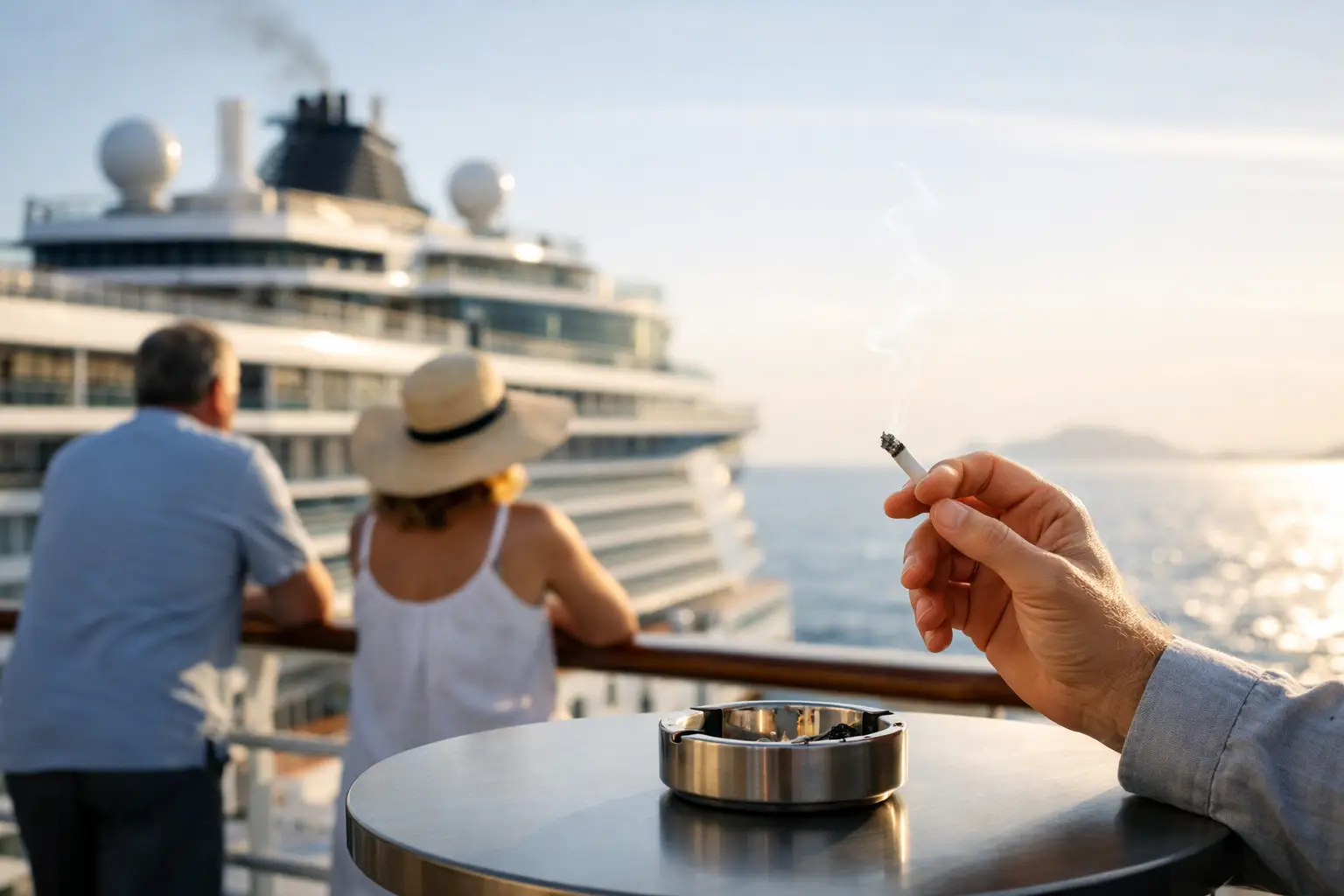
Most mainstream ocean cruise lines allow smoking only in clearly marked, designated areas. These are often on an open deck, sometimes beside a bar or in a particular section of an adults-only outdoor space. A smaller number of ships have an indoor cigar lounge or smoking room, although these are far less common than they once were.
Cabins are almost always non-smoking, and this normally includes balconies and terraces. The same restriction usually applies to electronic cigarettes and vapes. A balcony is part of your accommodation, but it sits directly beside other balconies and above or below other guests. Smoke, ash and odour do not remain within its boundary.
River cruises can be more restrictive still. River vessels are smaller, with closer outdoor spaces and fewer areas that can be separated from other guests. Smoking may be limited to a small section of the top deck, or prohibited throughout much of the vessel. On some itineraries, local port rules may further limit when and where smoking is possible.
Policies change, so the most reliable source is the current guest conduct or smoking policy issued by your cruise line for your sailing. Read it alongside your booking documents rather than relying on an old forum post or a friend’s experience on another ship.
Why balconies are usually off limits
Balcony smoking restrictions are not simply about courtesy. A discarded cigarette, hot ash or lighter can create a serious fire risk at sea. Modern ships have extensive safety systems, but prevention remains essential, particularly around soft furnishings, towels and balcony partitions.
There is also a comfort issue. Smoke can drift into an adjoining balcony, enter another cabin through an open door, or affect guests using outdoor space with children, allergies or respiratory conditions. Cruise lines need a policy that is clear enough to enforce consistently, rather than one based on whether a nearby guest complains.
If a crew member sees smoking on a balcony, expect to be asked to stop. Repeated breaches can lead to escalating action. Depending on the line, this may include a charge added to your onboard account, removal from the ship at the next port, or being refused future travel. The consequences may sound severe, but fire regulations leave little room for discretion.
Vaping, heated tobacco and cannabis products
A common packing assumption is that vaping falls outside smoking rules. In practice, most cruise lines treat e-cigarettes, heated tobacco devices and vape pens in the same way as cigarettes. Use is generally restricted to designated smoking areas, not cabins, balconies, restaurants, theatres or corridors.
Vapes also need careful packing. Devices and spare lithium batteries should normally travel in your hand luggage for the flight, protected from damage and accidental activation. Do not charge a device where this is prohibited, and do not leave it unattended. Airline rules and cruise line rules are separate, so check both before leaving home.
Cannabis and CBD products require even greater caution. A product that is legal or prescribed in one country may be illegal in another, and cruise ships visit multiple jurisdictions. Cruise lines commonly prohibit cannabis in any form, including some oils, edibles and vaping products. A prescription does not automatically permit it onboard or ashore. If you use prescribed medication, speak to your clinician and contact the cruise line well before travel to understand the available options.
Plan your day around the designated area
For smokers, a cruise holiday can still be straightforward with a little planning. Find the smoking area soon after embarkation, when you are already getting your bearings around the ship. Check the deck plan or ask Guest Services if it is unclear. On larger ships, it may be a fair walk from your cabin or favourite lounge, so allow for that rather than expecting to step outside for a moment.
Think about timing too. The designated area may be busier during sea days, after dinner and late in the evening. If you are travelling with a non-smoking partner, agreeing an easy meeting point can avoid the familiar problem of one person waiting in a bar while the other searches several decks.
Weather matters more than many first-time cruisers expect. The smoking section may be exposed to wind, sun or rain, particularly when the ship is at sea. Pack a light layer for cooler evenings and do not assume a smoking area will be covered. On a winter fly-cruise, you may begin your journey in chilly conditions even if the destination is warm.
What not to pack or do on board
Avoid bringing anything that could suggest you intend to smoke outside the authorised area. Candles, incense, charcoal burners and other naked-flame items are generally prohibited for the same safety reasons. Do not dispose of cigarettes overboard, even if you are standing in a permitted area. Use the ashtrays provided.
It is also wise not to carry loose tobacco, lighters or vaping equipment in a way that could cause delays during security screening. Keep items together and declare anything if asked. Some ports and destinations have restrictions on tobacco quantities, so travellers combining a cruise with a stay abroad should also check local allowances and customs rules.
If you are sharing a cabin with a smoker, be clear before you travel about storing tobacco and managing the smell of clothing. Smoke odour can cling to formalwear and light fabrics, which is unhelpful when you have packed carefully for evening dining. A small sealed pouch for tobacco items and a separate bag for worn clothes can make a noticeable difference.
If you want to cut down during the sailing
A cruise can make smoking feel more routine because there are sea days, drinks packages and social evenings. Equally, the limited locations can be useful for anyone hoping to smoke less. Nicotine replacement products may be a practical option, provided they are suitable for you and packed in accordance with airline and cruise line guidance.
If you are considering stopping before your holiday, do not leave it until embarkation day without a plan. Travel days can be long, busy and stressful, especially when flights, transfers and luggage are involved. Speak to a pharmacist, GP or stop-smoking service in advance if you would like support.
Be considerate in shared spaces
Guests who smoke and guests who do not can enjoy the same ship when everyone follows the boundaries. Use only the designated area, keep conversations and music considerate, dispose of waste properly and avoid returning indoors smelling strongly of smoke immediately before a show or dinner if you can freshen up first.
For non-smokers, it helps to remember that designated areas exist so smokers have a permitted option. If smoke is coming from a non-designated location, report it discreetly to a crew member rather than confronting another guest. The crew are trained to handle it and can do so without spoiling anyone’s evening.
The Essential Cruise Shop’s approach to smoother cruising is built on details like this: check the policy, plan around it and leave the grey areas behind. Once you know where smoking is allowed, you can focus on the better parts of the voyage – the sailaway, the dinner plans and the view from the deck.