River Cruise Cabin Guide: How to Choose Well
Introduction
If you have ever looked at a river ship deck plan and thought all the cabins seem more or less the same, you are not alone. A good river cruise cabin guide matters because the differences are often subtle on paper but noticeable once you are onboard, especially if you care about light, privacy, stairs, noise or simply getting the best value for your fare.
Unlike ocean cruises, river ships have a much smaller footprint and a more standardised layout. That can make booking feel simpler, but it also means a cabin’s position has a bigger effect on your day-to-day comfort. On a ship carrying around 100 to 200 guests, there is less distance between public areas and accommodation, fewer category choices, and more reliance on deck level and window style to separate one cabin from another.
How a river cruise cabin guide differs from ocean cruise advice
On an ocean ship, you might be weighing up aft versus midship, sheltered versus open balcony, or how close you are to the theatre, lifts and pool deck. River cruising is a little different. The ship is narrower, facilities are fewer, and many cabins are built to a very similar shape.
That means your choice often comes down to four practical questions. What kind of window or balcony do you want? Which deck are you comfortable being on? How much do you want to spend for extra light and a better view? And are you likely to be bothered by operational noise near engines, public lounges or mooring activity?
For many travellers, the answer is not about booking the most expensive suite. It is about avoiding the cabin type that does not suit how they actually holiday.
Understanding the main river cruise cabin types
The most common starting point is the lowest deck cabin. On many river ships, this will have a smaller fixed window positioned high on the wall, sometimes nearer ceiling level. You still get natural light, but the view is limited. These cabins are usually the best value and can be an excellent fit if you plan to spend most of your time in the lounge, on deck or ashore.
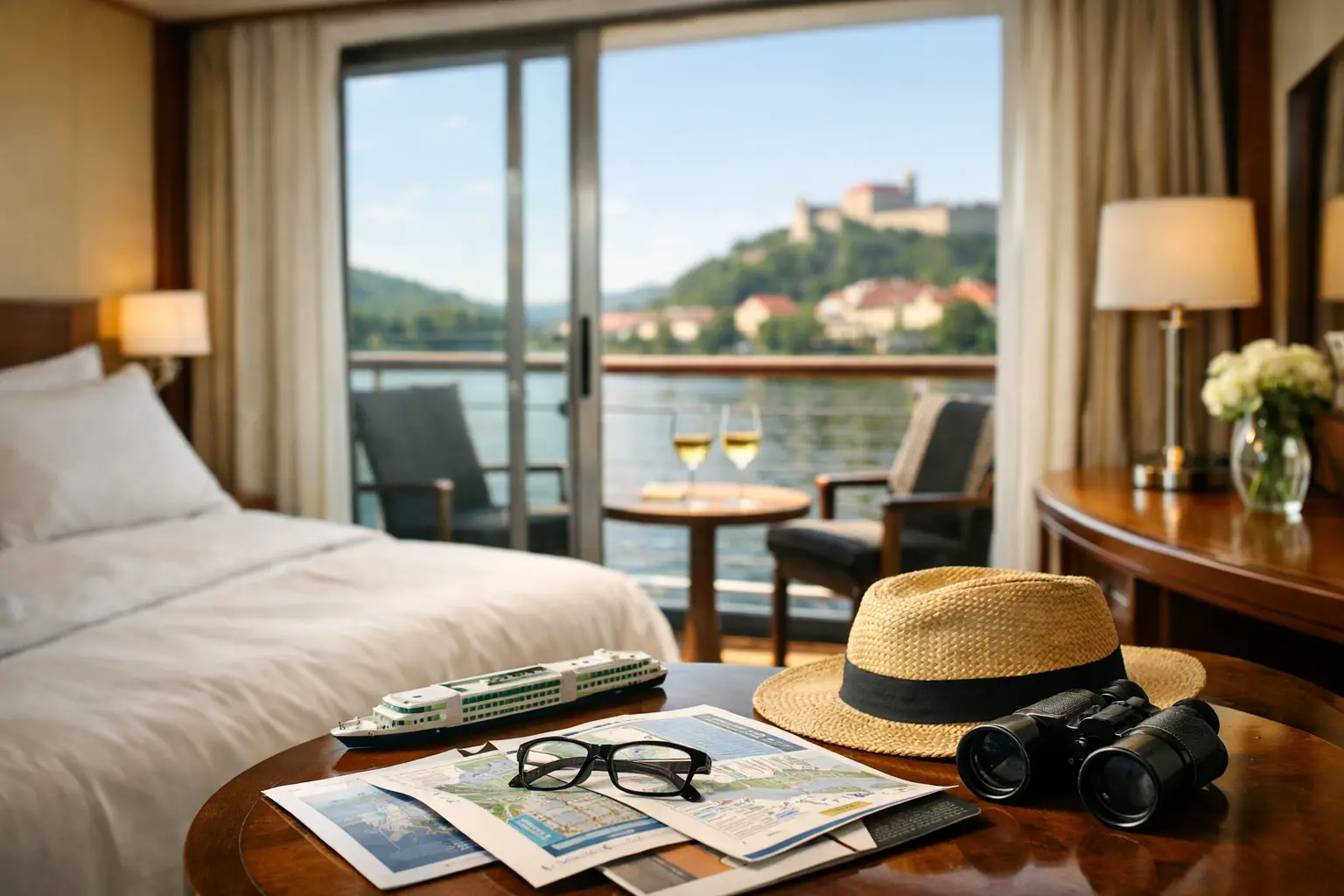
Move up a deck and you will often find French balcony cabins. These usually have sliding glass doors with a railing outside rather than a step-out balcony. In practice, they give you better light, a more open feel and a full-height view of the river, but not outdoor seating space. For many people, this is the sweet spot between comfort and cost.
Some lines also offer step-out balconies or more innovative split-balcony designs. These can sound especially appealing if you are used to ocean cruising, but they are not always a must on a river ship. River vessels pass close to banks, locks and other ships, and there are times when curtains may be more useful than sitting outside. A proper balcony can still be lovely in good weather, but it tends to command a much higher fare.
Suites, where available, add space and sometimes extra perks, though river cruise suites vary by line. On some ships, the difference is substantial. On others, you are paying mainly for a little more room and a better location. Whether that is worthwhile depends on how much time you expect to spend in your cabin.
French balcony or fixed window?
This is often the key decision. If you enjoy having daylight flood the cabin and like watching the scenery from your room, a French balcony is usually worth serious consideration. River cruising is all about the passing landscape, and full-height glass does enhance that experience.
If, however, you are booking primarily for itinerary and value, a fixed-window cabin on the lower deck can make perfect sense. Many experienced river cruisers are happy to save the money and use public spaces instead. The right answer depends less on prestige and more on your habits.
Choosing the right deck
Middle and upper decks are usually the most sought after because they tend to offer better views and are often home to French balcony cabins or suites. They may also feel more convenient if the lounge, restaurant or reception is nearby.
That said, convenience is not always universal. Some travellers prefer being further from busier social areas, particularly if they are light sleepers. A cabin underneath the restaurant or close to the lounge can mean earlier morning movement or late evening noise, even on a generally quiet river ship.
The lower deck can be a good practical choice if you are comfortable with a smaller window and want to keep the budget under control. It is not automatically a poor cabin. On many sailings, it represents some of the strongest value on the ship.
Check lift access carefully
This point catches out more first-time river cruisers than it should. Not all river ships have lifts, and where they do exist, they may not serve every deck. Some lifts do not reach the sun deck, and on certain vessels there may still be stairs between key areas.
If mobility is a concern, or you simply do not want to tackle stairs regularly, check the ship details before you book rather than assuming all decks are easily connected. This is particularly important for older ships and smaller vessels.
Cabin location matters more than many people expect
Because river ships are compact, there are fewer truly remote cabins. Even so, location still affects comfort. Cabins at the very front may pick up more foot traffic or operational sounds. Cabins towards the rear can be more prone to engine vibration on some ships, although modern vessels vary widely.
If you are sensitive to noise, look for a cabin away from the main lounge, reception area and service points. Also consider where crew may be working early in the morning, especially on turnaround days or busy port calls.
Mooring is another factor unique to river cruising. Ships often dock side by side, which can affect both privacy and your view. Even a premium balcony cabin may spend part of the cruise facing another vessel at close range. This is normal and not necessarily a sign of a poor cabin, but it is worth understanding before paying a premium mainly for private views.
Is a more expensive cabin worth it?
Sometimes yes, sometimes not. If you value natural light, enjoy quiet mornings in your room, or tend to rest during the day, a French balcony or upper-deck cabin can feel like money well spent. The extra comfort is tangible, not just cosmetic.
If your priority is the itinerary, included excursions, food and overall onboard atmosphere, a standard lower-deck cabin may give you everything you need. River cruises are destination-led, and many guests spend very little waking time in their room.
This is where honest self-assessment matters. Travellers often book aspirationally rather than realistically. If you rarely use the balcony on ocean cruises, you may not need the top cabin category on a river ship either.
Small details that improve the experience
Beyond cabin type and deck, a few practical checks can make your holiday smoother. Look at the cabin square metre measurement, not just the category name. River cabins can be compact, and a few extra metres make a noticeable difference when unpacking and moving around together.
Storage is worth checking too. Some ships are cleverly designed, while others have limited drawer space. If you are travelling for more than a week, or combining the cruise with a hotel stay before or after, efficient storage helps keep the cabin comfortable.
Bathroom layout also varies. Many modern river ships have smart, well-planned bathrooms, but some older vessels feel tighter. If this matters to you, cabin photos and ship age can tell you quite a lot.
For couples, bed configuration is another useful detail. On some river ships, twin beds convert neatly to a double. On others, the arrangement may be less generous than hotel standards. It is worth checking if sleeping space is a priority.
Best river cruise cabin choices by traveller type
If you are a first-time river cruiser, a mid-deck French balcony cabin is often the safest all-round choice. It gives you a strong sense of the scenery, feels bright and avoids some of the compromises of lower-deck windows without moving into top-tier pricing.
If you are budget-conscious and spend most of your day out and about, the entry-level lower-deck cabin is often the smartest value. Put the saved money towards flights, pre-cruise hotel nights or a longer itinerary.
If you are celebrating a special occasion or know you enjoy private downtime in your room, a suite or larger balcony cabin may be worth the extra spend. Just book it for the added comfort, not for the assumption of complete privacy in every port.
If mobility and ease matter most, focus less on category names and more on where the lifts are, how the decks connect and how far your cabin sits from the main lounge and restaurant. Practical positioning can be more useful than an upgraded view.
A sensible river cruise cabin guide should leave you feeling clearer, not pressured into the most expensive option. The best cabin is the one that matches your budget, your habits and the way you want to spend your time onboard. Pick with that in mind, and you are far more likely to step aboard feeling organised, comfortable and ready to enjoy the holiday.
Frequently Asked Questions
Disclaimer
The Essential Cruise Shop Blog provides this guide for informational purposes and is not a travel agency. The information contained in this guide is for general guidance only. While we do our best to ensure the information is up-to-date and correct, we make no representations or warranties of any kind about its completeness or accuracy.
Cruise line policies, itineraries, and loyalty programs are subject to change without notice. We strongly recommend that you verify all details directly with your cruise line or a certified travel agent before making any bookings or financial commitments.
We cannot be held liable for any financial loss due to the reader’s failure to follow the above advice.
Affiliate Disclosure
Many of the links are affiliate links, The Essential Cruise Shop Blog may receive a commission from qualifying clicks, orders or bookings. This income helps support our efforts to provide and improve our site and turn it into a one stop resource for travellers with a bias towards cruising.