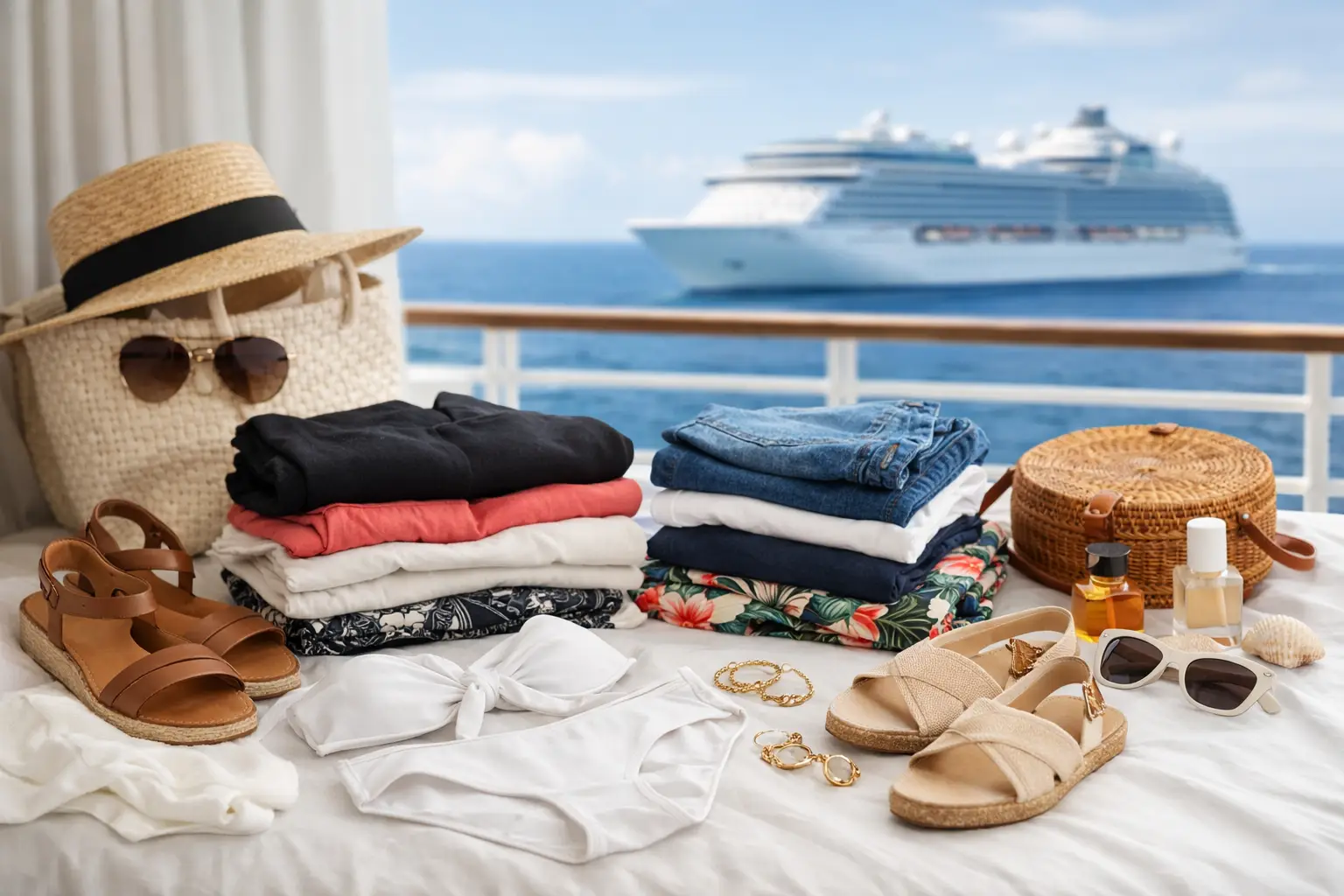
A Cruise Wardrobe Capsule Example for 7 Nights
Introduction
A good cruise wardrobe capsule example is not about wearing the same outfit every day. It is about taking a small, well-planned selection that works for sea days, ports, evening meals and the occasional change in weather – without wrestling with an overfilled case at the airport or in your cabin.
For a typical seven-night cruise, most UK travellers can pack comfortably with two or three flexible colours, a few layers and outfits that can be worn more than once. The exact mix will depend on your cruise line, itinerary and dining plans, but the principle remains the same: every item should earn its place.
Start with the cruise, not the clothes
Before choosing anything, check your itinerary and your cruise line’s dress code. A Mediterranean sailing in July needs a different capsule from a Norwegian Fjords itinerary in May, while a relaxed contemporary ship will require less formalwear than a traditional cruise line with designated formal evenings.
Also consider how you are travelling to the port. If you are flying to join the ship, luggage limits matter. If you are driving to Southampton, you may have more room, but a larger case still has to fit under the bed or in the wardrobe. Cabin storage is useful, not limitless.
A practical capsule is built around your real plans. Think about port days, sea days, excursions, spa visits, speciality dining and any formal or celebration nights. There is little value in packing three dressy outfits if your preference is a casual buffet supper and an early night after a busy day ashore.
The seven-night cruise wardrobe capsule example
This example suits a smart-casual ocean cruise in warm or mild weather. It is designed for a couple or solo traveller who wants to look put together at dinner, stay comfortable on excursions and avoid taking too much.
Choose a simple colour palette first. Navy, white, stone and soft blue work particularly well, but black, cream and a brighter accent colour can be equally effective. Keeping shoes, trousers and outer layers in neutral shades makes it much easier to mix items across the week.
Daywear for decks, ports and relaxed lunches
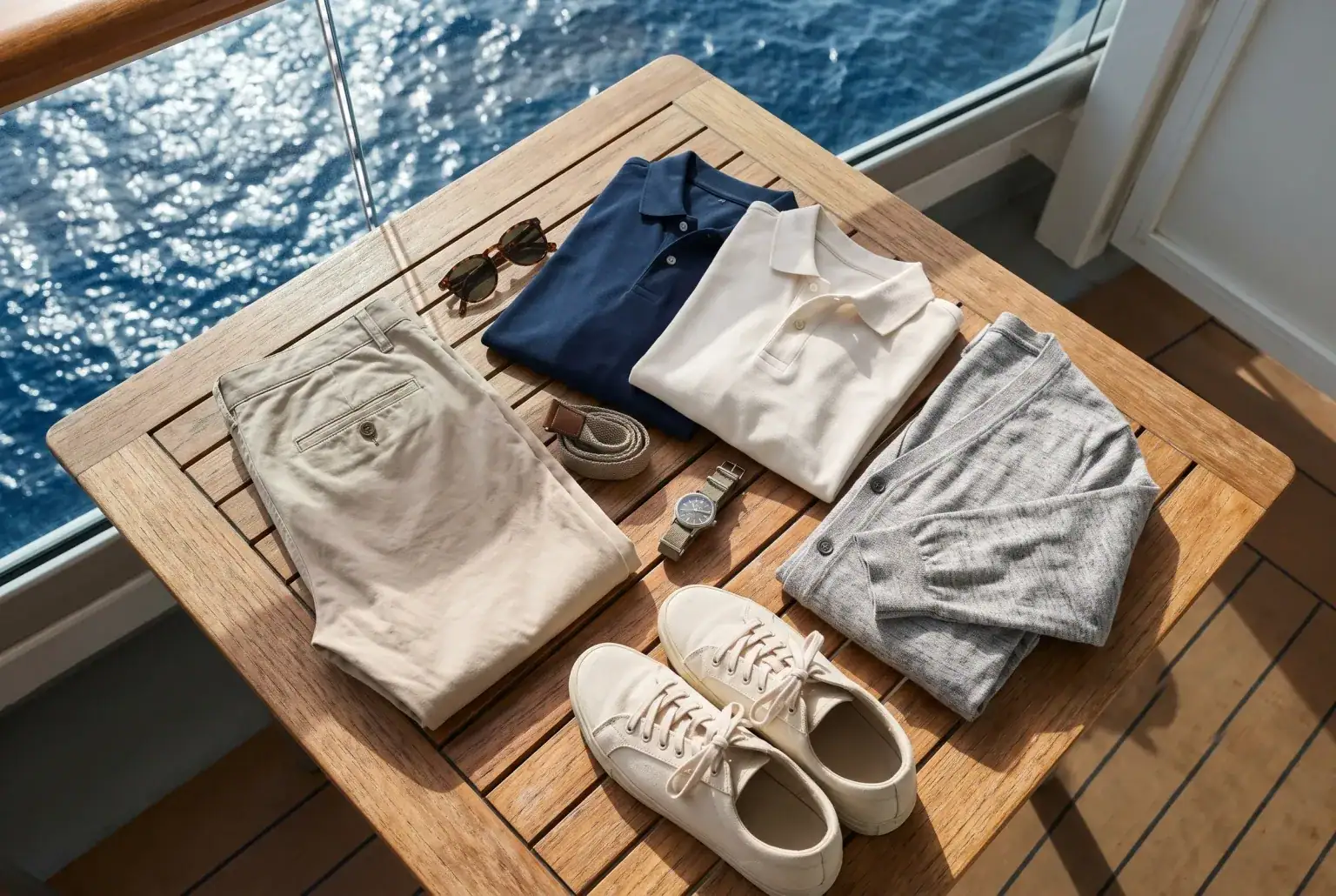
For daytime, take two pairs of lightweight trousers, chinos, cropped trousers or tailored shorts, depending on the climate and your comfort. Add one pair of jeans or darker trousers for cooler days and travel. Three to four tops or polos, plus two T-shirts or casual shirts, give enough variety without creating a mountain of laundry.
A casual dress, skirt or smart shorts can add another option for those who prefer them. The key is choosing pieces that work with the same cardigan, overshirt or lightweight jacket. A shirt dress, for example, may be suitable for breakfast, a port call and a casual evening with a change of shoes and jewellery.
For excursions, prioritise breathable fabrics and clothes you can move in. Ancient cities, vineyard tours and coastal walks often involve uneven ground, steps and long periods standing. Save your newest white trainers for the ship if you are likely to encounter dust, rain or cobblestones ashore.
Evening outfits without overpacking
Most cruise evenings are smart casual rather than formal. For a seven-night sailing, two pairs of smarter trousers or skirts, three evening tops, shirts or blouses, and one versatile dress or coordinated outfit will cover most dining rooms and bars.
If your cruise includes one formal or dress-to-impress night, pack one outfit you genuinely feel comfortable wearing. This might be a cocktail dress, jumpsuit, tailored trousers with a dressy top, or a blazer with a shirt and smart trousers. A dinner jacket or full-length gown is optional on many ships, but check the cruise line guidance if formal nights are central to your plans.
Rewearing evening trousers, a blazer, or a favourite pair of smart shoes is entirely normal. Changing the top, adding a scarf or switching jewellery creates a different look without adding bulk. Cruise dining rooms are not fashion competitions, and comfort tends to matter more by the third evening than travellers expect.
Layers and outerwear are the sensible part of the capsule
Even warm-weather cruises can feel cool on deck after sunset. Take a lightweight cardigan, pashmina, overshirt or fine jumper that works with both daytime and evening outfits. A packable waterproof jacket is particularly useful for British departures, northern Europe, Alaska and any itinerary with changeable conditions.
For colder sailings, swap some lightweight pieces for thermal base layers, a warmer fleece or jumper, waterproof trousers and a proper insulated coat. A capsule does not mean ignoring the forecast. It means reducing duplication while retaining the items that will keep you comfortable.
Shoes: fewer pairs, better choices
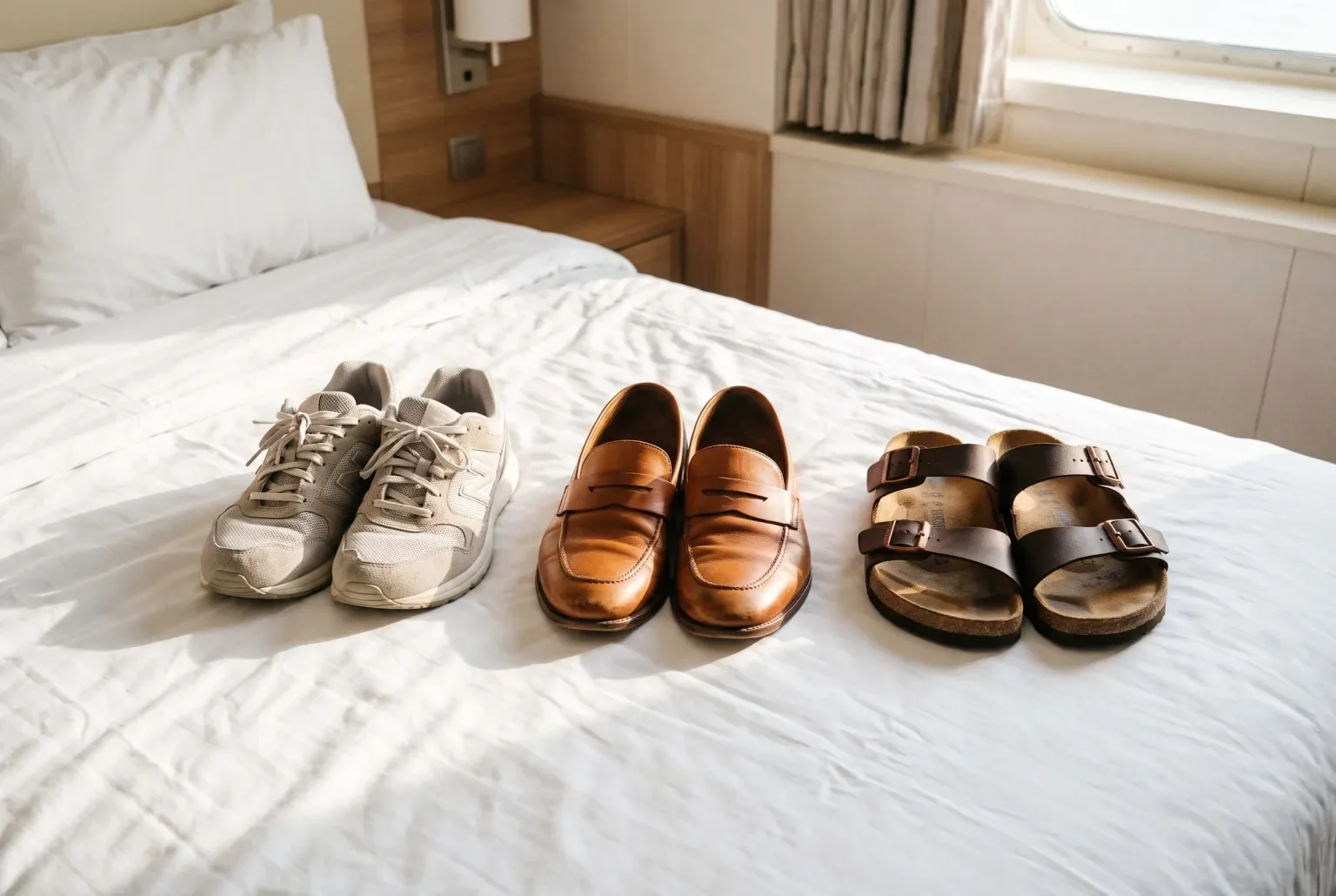
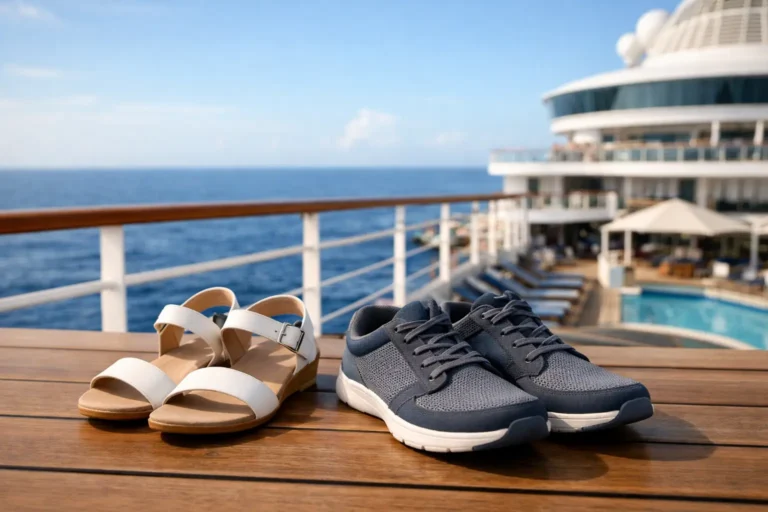
Shoes take up more space than almost anything else, so limit them to those with a clear purpose. For most seven-night cruises, three pairs are enough: comfortable walking shoes or trainers for ports, smart-casual shoes for evenings, and sandals, loafers or deck-friendly flats for warm days onboard.
Add a fourth pair only when the itinerary demands it, such as walking boots for active excursions or formal shoes for a special occasion. Break in every pair before travelling. Blisters can turn an otherwise enjoyable port day into a frustrating one, especially when you are several miles from the ship.
Avoid relying on flip-flops as your only pool or deck footwear. Wet deck surfaces can be slippery, and supportive sandals are usually a safer choice when walking around the ship.
What changes for river cruises and longer sailings?
River cruises often have a more relaxed feel and fewer formal evenings, but they can involve more walking through towns and cities. Comfortable footwear, a weatherproof layer and day-to-evening separates become even more valuable. You may also return to the ship between excursions, which makes a quick change practical.
On a longer ocean cruise, do not simply double every item. Instead, plan to use the ship’s laundry service, self-service laundrette where available, or wash a few lightweight pieces in your cabin. Seven to ten days of clothing can cover a two-week itinerary if it is coordinated well.
For a fly-cruise, place one complete change of clothes, swimwear, medication and essential toiletries in your hand luggage. Checked bags can occasionally arrive late, and having a basic first-day outfit removes a great deal of stress.
Small additions that make the capsule work harder
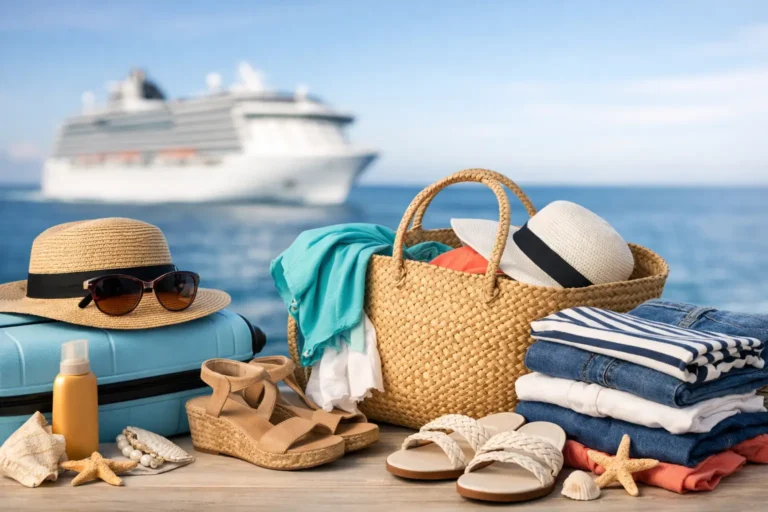
Accessories are where a cruise capsule becomes more flexible. A scarf, lightweight belt, simple jewellery or a patterned shirt can change the feel of repeat outfits without taking meaningful luggage space. A foldable day bag is also useful for shore days, carrying water, sun cream, a light layer and any essentials required for the ship.
Do not forget a sun hat, sunglasses and refillable water bottle for warm itineraries. For cooler cruises, add gloves, a warm hat and a compact umbrella if your planned excursions involve time outdoors. These are not glamorous purchases, but they are often the items travellers wish they had packed.
It is also sensible to leave a little room in your case. You may buy souvenirs, pick up local food items where permitted, or simply want an easier repack before travelling home.
A final check before you zip the case
Lay everything out and ask one straightforward question: can each item be worn in at least two ways? If the answer is no, it may still deserve space for a specific formal event or activity, but it should be the exception rather than the rule.
The best cruise wardrobe is the one that lets you step off the ship ready for the day, feel comfortable at dinner and return home without wondering why half your suitcase was never worn. Pack for the holiday you have planned, not for every possible version of it.
Frequently Asked Questions
Additional Resources

The Essential Cruise & Travel Shop

Disclaimer
The Essential Cruise Shop Blog provides this guide for informational purposes only and does not act as a travel agency or professional travel adviser. The information contained in this guide is for general guidance only. While we endeavour to keep information up to date and correct, we make no representations or warranties of any kind, express or implied, about its completeness or accuracy. Cruise line dress codes, airline baggage allowances, itinerary rules and shore excursion requirements are subject to change without notice. We strongly recommend that you verify all details directly with your cruise line, airline or a certified travel agent before making any bookings, decisions or financial commitments. We cannot be held liable for any financial loss caused by failure to follow this advice.
Affiliate Disclosure
Many of the links are affiliate links, The Essential Cruise Shop Blog may receive a commission from qualifying clicks, orders or bookings. This income helps support our efforts to provide and improve our site and turn it into a one stop resource for travellers with a bias towards cruising.