How to Choose a Cruise Wardrobe for Your Voyage
Introduction
The wrong pair of shoes can spoil a day ashore, while an overpacked case can make every transfer harder than it needs to be. Knowing how to choose cruise wardrobe pieces begins with planning for the way you will actually spend your time: travelling to the port, relaxing onboard, dining in the evening and exploring in changing weather.
A cruise wardrobe does not need to be large. It needs to be adaptable, comfortable and suitable for your particular ship, itinerary and cruise line. A fortnight in the Norwegian fjords requires a very different approach from a Mediterranean fly-cruise, and a river voyage usually feels different again from a larger ocean ship.
Start with your itinerary, not your favourite outfits
Before choosing individual clothes, look at the practical shape of your holiday. Check the expected temperatures at every port, including the likely conditions in the morning and evening. Remember that the weather at sea can feel cooler and windier than it does on land, even on a warm-weather itinerary.
Your departure point matters too. If you are sailing from Southampton, you may need a waterproof outer layer and comfortable clothing for embarkation day, even when the ship is heading towards the sun. On a fly-cruise, think about what you will wear for the airport, flight and transfer. This outfit should be comfortable enough for a long day but smart enough to wear for lunch or boarding if your cabin is not ready immediately.
Also consider how active your shore excursions will be. A panoramic coach tour calls for different footwear from a walking tour of Dubrovnik, a vineyard visit or a day on uneven cobbled streets. If you have booked an adventure-focused excursion, dress for that activity rather than trying to make one resort outfit do every job.
How to choose a cruise wardrobe around dress codes
Dress codes vary significantly between cruise lines and can even differ by ship, region and sailing length. The daily programme or cruise line app will normally show the evening expectation, but it is worth understanding the general style before you pack.
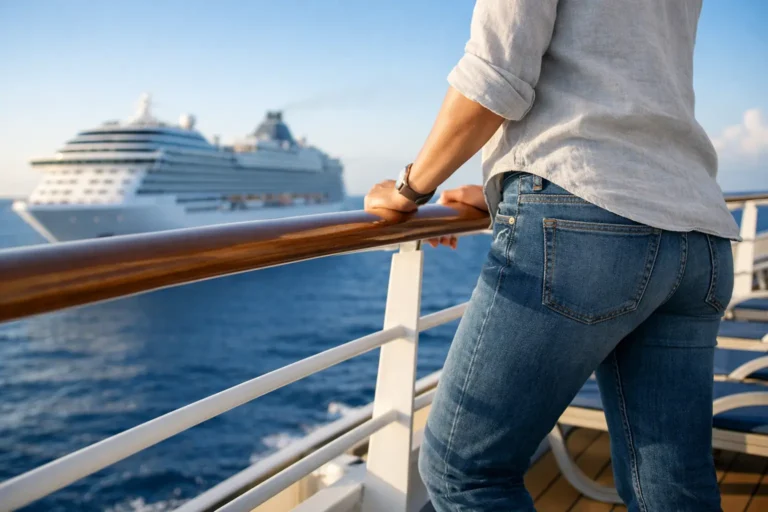
Many contemporary cruise lines favour a relaxed, smart-casual approach. For the main dining room, this often means trousers, chinos, skirts, dresses, smart tops, collared shirts or polos. Swimwear, flip-flops and very casual daytime clothing are usually not appropriate in indoor dining venues after the day has finished.
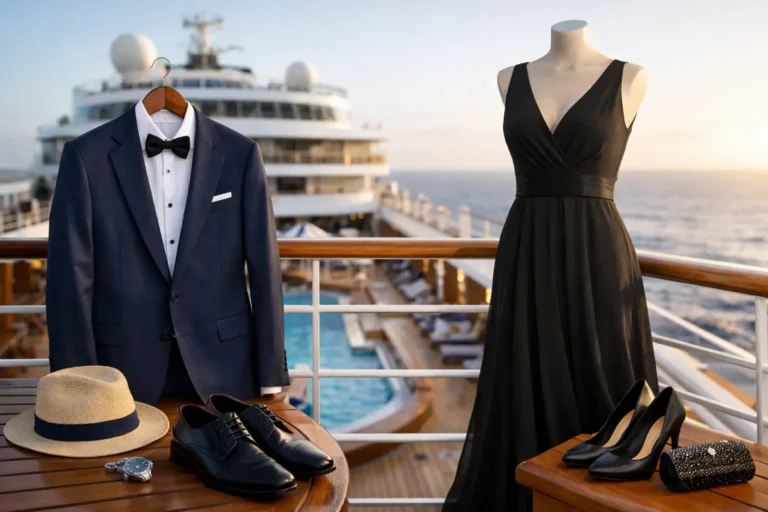
Some premium and traditional lines have more defined formal, gala or elegant evenings. These do not always mean black tie, but they may be the right occasion for a suit, jacket, cocktail dress or more polished separates. Check the wording used by your cruise line rather than relying on a general rule. “Formal”, “gala”, “dress to impress” and “elegant casual” can mean different things depending on the operator.
River cruises tend to be more understated. Smart-casual clothing is normally sufficient, with an emphasis on neat, comfortable outfits that work for excursions and dinner. Expedition cruises are even more practical, where technical layers and sturdy footwear matter far more than formalwear.
If you enjoy dressing up, bring an outfit or two that makes you feel good. If you do not, there is no need to fill half your suitcase with occasionwear for a single evening. The most useful approach is to pack smart pieces that can be worn more than once in different combinations.
Build a small wardrobe that works together
Choose a simple colour palette of two or three neutrals, then add a few colours or prints you genuinely enjoy wearing. Navy, black, white, stone, denim and soft grey are easy foundations, but the best palette is one that allows you to mix items without needing a separate shoe, bag or jacket for every outfit.
For a typical seven-night cruise, many travellers find that the following categories provide enough choice without excess:
- Comfortable travel clothes and a light layer for embarkation day.
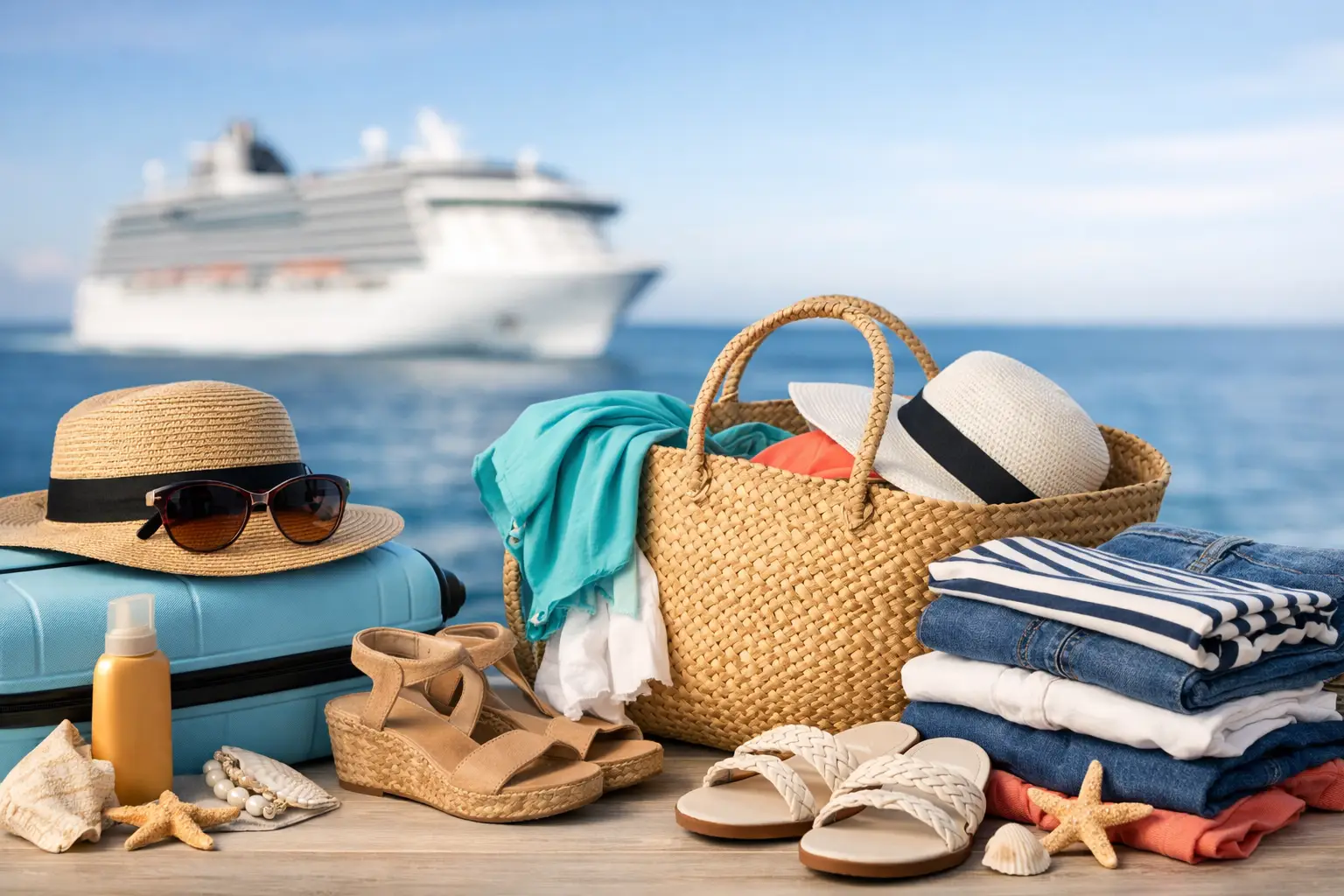
- Casual daytime outfits for sea days, including swimwear and cover-ups where relevant.
- Two or three smart evening options that can be restyled with different tops, shirts or accessories.
- Practical clothes for excursions, including a weather layer and shoes suited to walking.
- Sleepwear, underwear and a few small accessories that earn their space.
The exact quantities depend on whether you are happy to re-wear items, whether laundry is available and how long you are away. Cruise ship laundry services can be convenient but costly, while self-service facilities are more common on some lines than others. For longer voyages, packing fabrics that wash and dry quickly can reduce the amount you need to carry.
Prioritise layers over bulky clothing
Layering is one of the simplest ways to avoid packing for every possible forecast. A breathable T-shirt or blouse, light knit or cardigan, and packable waterproof jacket can cover a surprising range of conditions. On cooler itineraries, add a warmer mid-layer rather than relying on one heavy coat that takes up most of your case.
Natural fabrics can feel pleasant in warm climates, but linen creases easily and cotton can take longer to dry. Blended, wrinkle-resistant fabrics are often more useful for cruising, particularly if you want clothes to look presentable after being folded in a suitcase. A crease-release spray can be useful, although hanging clothes in the bathroom while you shower may help with minor creases.
For warm destinations, include sun-protective pieces alongside lighter outfits. A shirt with sleeves, a hat and sunglasses are often more valuable on a full day ashore than another evening top. Air-conditioned lounges, theatres and restaurants can also feel cool, so a light wrap, overshirt or cardigan is worth keeping close by.
Choose footwear for comfort first
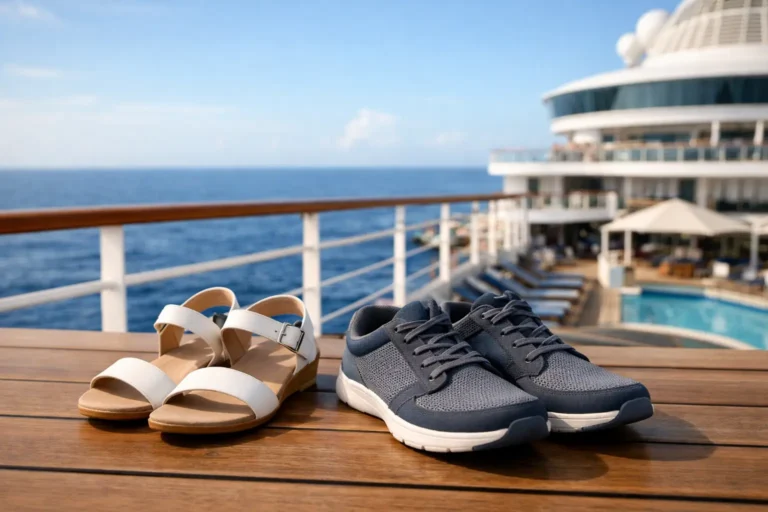
Shoes are among the hardest items to pack efficiently because they take up space and tend not to work across every occasion. Most guests can manage well with three pairs: supportive walking shoes or trainers for excursions, sandals or casual shoes for warm sea days, and one smarter option for dinner.
Avoid taking brand-new shoes on holiday. A ship is a poor place to discover that a pair rubs, especially when you may be walking long distances in port the following morning. Wear in your excursion shoes beforehand and take a small supply of blister plasters.
If you like heels, consider a lower, stable style for onboard evenings. Deck surfaces can be uneven, ships can move in rougher seas, and staircases are used more often than many first-time cruisers expect. Smart flats, loafers, wedges or low block heels are usually a more practical choice.
Account for cabins, luggage limits and travel days
Cruise cabins are cleverly designed but storage is finite. Folding organisers or packing cubes can help separate daytime clothes, eveningwear and underwear, while keeping drawers easier to use. They are particularly helpful if two people are sharing a cabin and one suitcase has to be opened at a time.
Keep essentials for the first few hours in your hand luggage. Checked cases may not arrive outside your cabin until later in the afternoon or evening. Include medication, travel documents, valuables, swimwear if you plan to use the pool, and a change of clothes if needed. If you are flying, always pack at least one complete outfit in your cabin bag in case checked luggage is delayed.
Do not forget your luggage allowance for the journey home. Souvenirs, purchases in port and additional layers bought for unexpected weather all take space. Leaving a little room in the case is a practical kindness to your future self.
Common cruise wardrobe mistakes to avoid
The most frequent mistake is packing for an imagined version of the holiday rather than your real habits. If you rarely wear formal shoes, several pairs are unlikely to become useful because you are on a ship. If you prefer trousers to dresses, build your evening outfits around trousers instead of buying items solely for the cruise.
Another is overlooking the weather at ports with a single-minded focus on the destination’s daytime temperature. A Mediterranean sailing in spring or autumn can bring cool evenings and rain. Likewise, Caribbean showers can be heavy and brief, making quick-drying layers and a compact rain jacket more useful than a large umbrella.
Finally, do not make every outfit dependent on one item. A favourite pair of trousers may get stained, a sandal strap may break, or an excursion may leave you wetter or muddier than expected. A wardrobe with interchangeable pieces gives you options without requiring a larger suitcase.
A well-chosen cruise wardrobe should make getting ready feel straightforward, not like a daily packing puzzle. Lay out your planned outfits a week or two before departure, remove anything that only works once, and keep the pieces that will let you feel comfortable from the gangway to the last dinner onboard.
Frequently Asked Questions
Additional Resources

The Essential Cruise & Travel Shop

Disclaimer
The Essential Cruise Shop Blog provides this guide for informational purposes only and does not act as a travel agency or professional travel adviser. The information contained in this guide is general guidance only. While we endeavour to keep information up to date and correct, we make no representations or warranties of any kind about its completeness or accuracy. Cruise line dress codes, luggage restrictions, laundry services, excursion guidelines, and airline baggage rules are subject to change without notice. We strongly recommend that you verify all details directly with your cruise line, airline, shore excursion operator, or certified travel agent before making any bookings, packing decisions, or financial commitments. We cannot be held liable for any financial loss resulting from a failure to follow this advice.
Affiliate Disclosure
Many of the links are affiliate links, The Essential Cruise Shop Blog may receive a commission from qualifying clicks, orders or bookings. This income helps support our efforts to provide and improve our site and turn it into a one stop resource for travellers with a bias towards cruising.