
Rotterdam Cruise Port Guide: Practical Tips & What to Do
Introduction
Planning a visit using a Rotterdam Cruise Port Guide helps smooth out every detail of your journey before stepping ashore. Arriving in a bustling European hub presents exciting possibilities, whether you are stopping for a few hours as a transit passenger or embarking on a longer ocean voyage. Knowing what to expect regarding terminal layout, transit links, and local customs ensures your day runs smoothly from the moment you step off the gangway.
The destination offers an intriguing blend of modern architectural feats, deep maritime heritage, and seamless connectivity to famous surrounding towns. Preparing your itinerary in advance allows you to navigate the area comfortably without feeling rushed or overwhelmed by local logistics.
From practical transport connections to regional culinary treats, having the essential facts to hand guarantees a stress-free experience. This guide breaks down the core logistics, helping you make informed decisions for your day ashore.
Quick Overview for Cruise Passengers
First established in 1270 following the construction of a dam across the Rotte River, the settlement sits in South Holland province, roughly 12 miles (30 km) inland from the North Sea. According to the 2020 census, it has an estimated population of 651,157 people.
The port functions as a major European departure point in the Netherlands, hosting departure routes to the Norwegian fjords, the Baltic Sea, the Mediterranean, and the British Isles. Equipped with a deep-water, lock-free river channel, the location easily accommodates vessels of any size, operating effectively as both a transit port of call and a homeport.
The official language spoken is Dutch, and the local currency is the Euro (EUR). The region operates on Central European Time (CET, GMT+1) during winter months and switches to Central European Summer Time (CEST, GMT+2) in the summer.
When planning your voyage, timing plays a key role in the overall experience. April to May brings mild weather and lighter crowds, offering optimal conditions for tulip season. June to August marks the peak summer season with the longest daylight hours for northern itineraries, while September to October offers pleasant autumn weather and fall foliage for regional cruises.
Cruise Terminal Location & Facilities
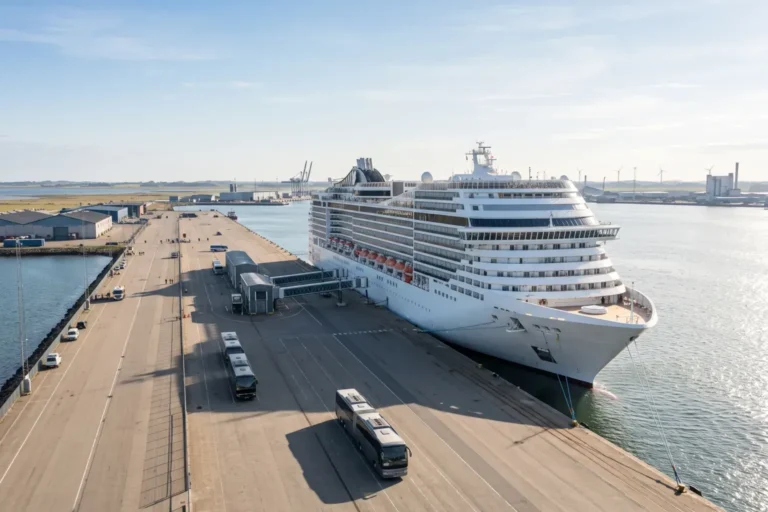
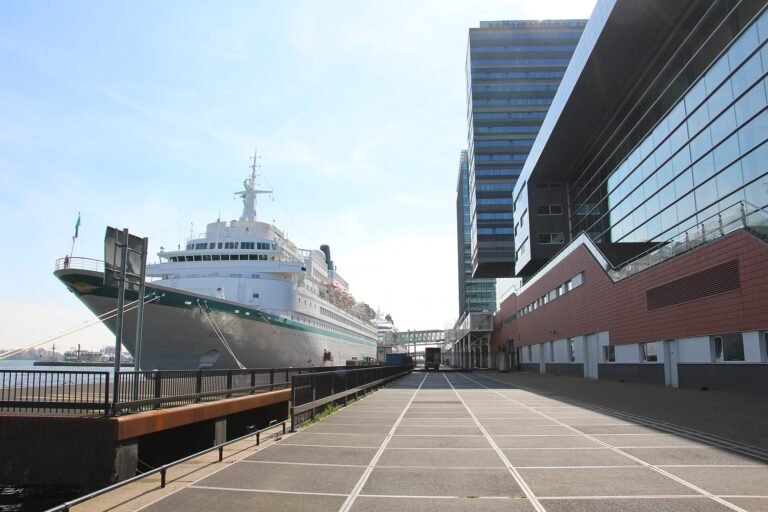
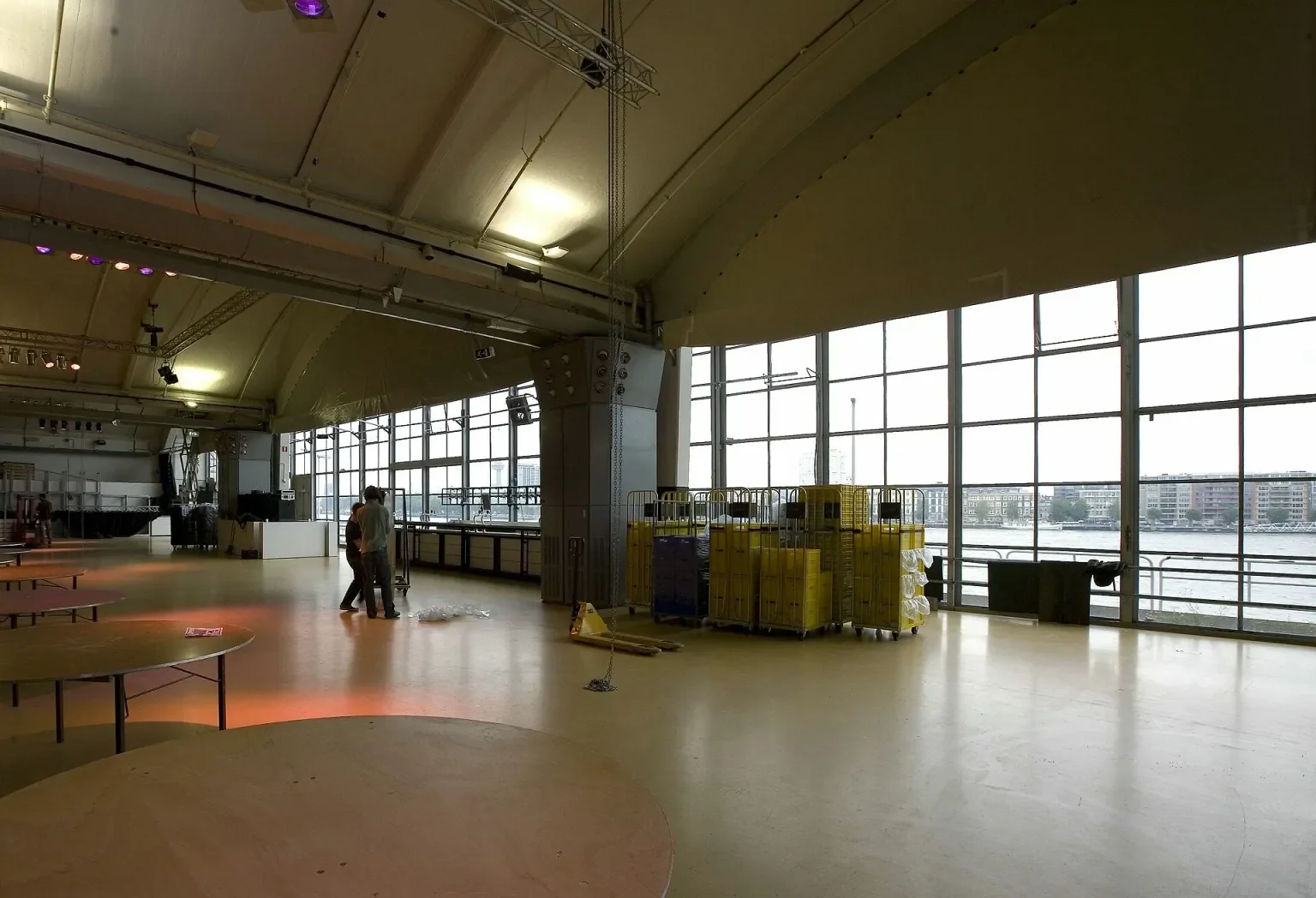
Cruise ships dock at the cruise terminal, a modern facility situated at Wilhelminakade 699 along the banks of the Nieuwe Maas River, directly across from the city centre. Five historic warehouses were originally constructed on the north side of the pier between 1946 and 1949, with the building named ‘loods Rotterdam’ regularly handling passenger vessels since 2000. Recognising its cultural heritage, the building was officially designated as a national monument (Rijksmonument) in 2011.
The terminal occupies a highly central location within the port city. Inside the hall, passengers have access to a spacious 3,000 square metre passenger and crew lounge, an on-site tourist information desk, restrooms, transit maps, a small café, and complimentary Wi-Fi. Large windows throughout the facility provide panoramic views across the urban skyline and water.
Maritime and tourist services are managed through a dedicated one-stop office to assist visiting ships efficiently. Passengers should note, however, that there is no luggage storage available at the pier. If you require temporary bag storage during your visit, you will need to make alternative arrangements in advance.
Getting to the City Centre & Transport Options
The port functions as a major West European infrastructure hub, integrating port facilities, highways, and airport links. Exploring the urban core is straightforward, whether on foot or by public transport options such as the metro, tram, or bus. Walking from the pier across the Erasmus Bridge to major highlights takes usually around 20 minutes along flat, signposted sidewalks. While walking, pedestrians must remain on concrete sidewalks, as dedicated red-asphalt bike lanes (fietspaden) are strictly reserved for fast-moving cyclists.
For public transit, direct links operate right by the quayside, with access points located just a 1-minute walk away. Wilhelminaplein is the nearest metro station, situated allow about a four-minute walk from the exit. From here, RET Metro lines D and E reach Blaak Station in usually around 4 minutes and the central railway station in approximately 7 minutes. Please keep in mind that traffic, weather, and other conditions can alter travel times on any day.
For rail connections, the central station serves as the primary hub for cruise travellers. Pier transport facilities include dedicated taxi ranks, passenger parking, and bus parking, while rideshare services such as Uber and Bolt operate widely across the waterfront. Transferring to or from Amsterdam Schiphol Airport involves a travel distance of 40 miles (65 kilometres), which usually takes about 60 minutes depending on prevailing road conditions.
Top Things to See and Do Near the Dock
Several major landmarks sit within easy reach of the pier. Hotel New York, housed inside the original Holland America Line office building, is positioned at the tip of the pier just a 4-minute walk from the main exit. Another maritime landmark nearby is the SS Rotterdam, the former flagship of the Holland America Line, which is now permanently moored in the harbour. Visitors can board a public water taxi directly from an official dock located on the waterfront outside the terminal to reach the historic vessel or explore other sights along the river. Harbour and river boat tours also run regularly, offering fine views of the city skyline, busy shipping channels, and waterfront points of interest.
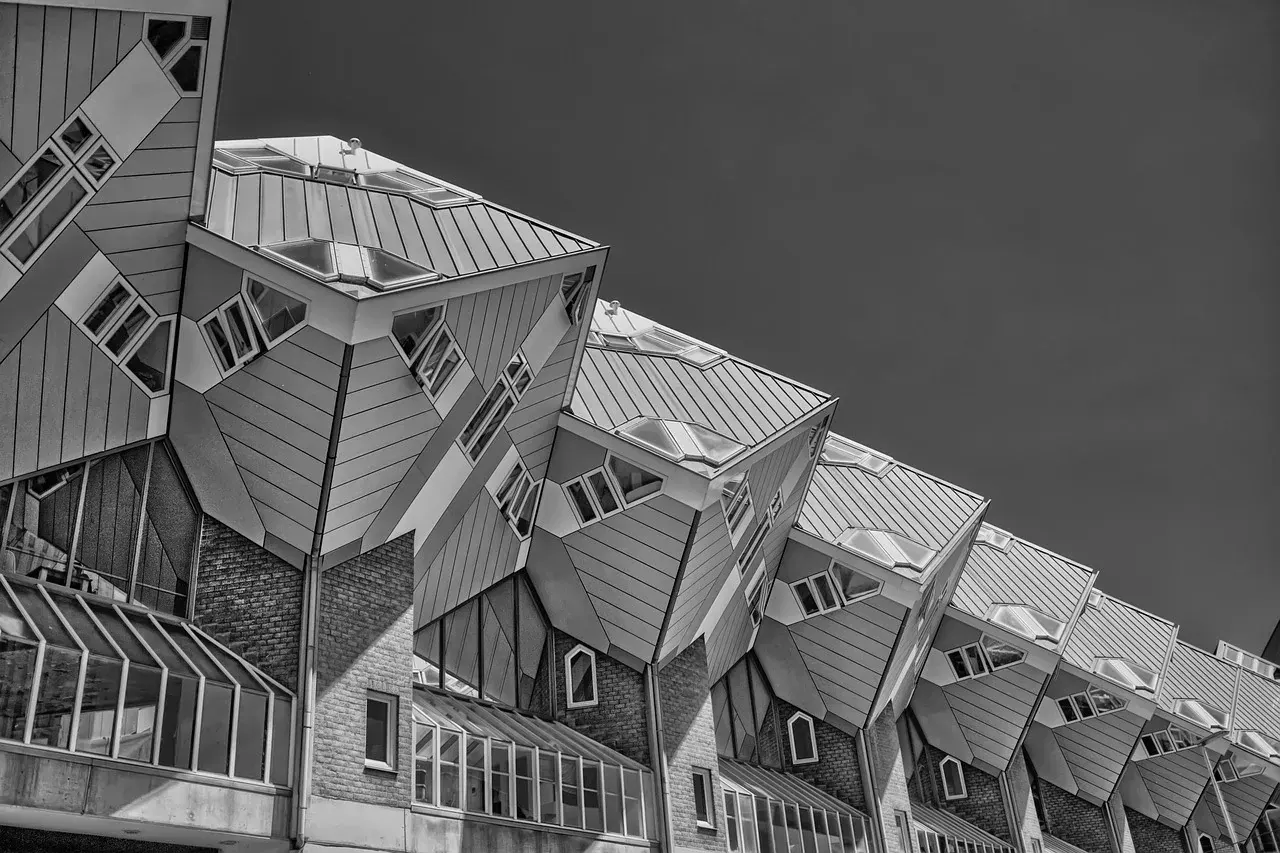
Architectural enthusiasts will find major highlights close together, including the Depot, the famous Cube Houses, the striking Markthal, and the 185-metre Euromast observation tower, which affords 360-degree panoramic views over the skyline. At the Cube Houses, visitors can step inside the Kijk-Kubus (Show Cube), a fully furnished museum home demonstrating how living spaces fit within 45-degree angled walls. Nearby, the Markthal features 96 individual food stalls beneath a ceiling decorated with ‘Horn of Plenty’ by Arno Coenen, recognised as the world’s largest artwork.
Planning your visit to the Markthal around mid-morning or mid-afternoon helps avoid peak lunchtime crowds. The building is open daily, though Sunday hours are slightly shorter. Its basement level connects directly to Blaak station for effortless onward transport. Additionally, the Binnenrotte outdoor market—the largest outdoor market in the Netherlands—takes place every Tuesday and Saturday adjacent to Blaak station.
Best Shore Excursions & Day Trips
The port acts as a convenient regional gateway for exploring broader Dutch countryside attractions and neighbouring cities. Major destinations like Amsterdam and Antwerp sit within a one-hour drive of the terminal. Rail connections from the central station are frequent and efficient, with direct NS Intercity trains to historic Delft departing every 10 to 15 minutes and taking around 14 minutes. Direct rail journeys to Amsterdam take approximately 25 minutes, while Gouda can be reached by train in allow about 20 minutes.
Organised shore excursions cater to a wide range of interests. Popular day trips include excursions to Keukenhof Gardens and Lisse’s flower fields, featuring over seven million tulips, as well as the historic Keukenhof Windmill gifted by Holland America Line in 1957. Other tours combine the Keukenhof Tulip Festival with a city panorama, or offer guided trips to Gouda featuring its Market Square and historic Gothic town hall. Excursions to Kinderdijk showcase 19 historic 18th-century windmills, forming the largest preserved windmill site in the country; travellers can also take a direct WaterShuttle boat from Willemskade dock across the river to Kinderdijk in about 30 minutes.
For those interested in maritime history and culture, guided options include self-guided audiophone tours or daily guided walking tours aboard the SS Rotterdam. Alternatively, the Maritime Museum near the centre offers interactive exhibits, a historic naval ship, and tailored public programmes. Shore excursions to Amsterdam frequently pair independent sightseeing with a canal cruise aboard a vintage 1940 Holland America lifeboat, or combine scenic canal cruising with a guided visit to the renowned Rijksmuseum. Nearby, historic Delfshaven presents a preserved 17th-century quarter with traditional drawbridges and the historic church where the Pilgrims prayed prior to their voyage to America.
Food, Drink, and Local Specialties Near the Dock
Sampling local cuisine is a highlight of any visit ashore. Standard Dutch lunches tend to be light, typically consisting of simple sandwiches and soup, whereas substantial midday meals can be found at the Markthal or the Fenix Food Factory in Katendrecht. The Fenix Food Factory is open Thursday to Sunday and is situated approximately a 10-minute walk from the Wilhelminakade tram stop. Dinner service at local establishments usually begins between 5:30 pm and 6:00 pm, with final orders taken around 9:00 pm.
Traditional Dutch specialities should not be missed during your walk through town. Classic snacks include raw Dutch herring (haring), served cleaned and filleted with chopped raw onion and pickles, traditionally eaten whole by the tail; the first catch of the season, known as Hollandse Nieuwe, becomes available in late May or early June. Bitterballen are deep-fried snacks consisting of croquettes filled with a thick, slow-cooked beef ragout and roux, commonly served with mustard at local pubs. For sweet treats, look for poffertjes—small, pillowy Dutch pancakes cooked in a special iron pan and topped with icing sugar and butter—or stroopwafels, which consist of thin waffle discs joined with caramel syrup. Traditional Dutch appeltaart offers a moist apple pie dessert reminiscent of bread pudding, while patatje oorlog provides a hearty street food option featuring french fries topped with satay peanut sauce, mayonnaise, and diced onions.
The city’s diverse culinary landscape also highlights international flavours. Surinamese roti presents flatbread wraps filled with curried potato, vegetables, and meat served alongside savoury fried bara doughnuts, while an Indonesian rijsttafel presents an elaborate meal composed of numerous small regional dishes. For dining out, Witte de Withstraat in the city centre serves as a primary dining strip lined with bars and eateries. THOMS on Meent offers lunch, dinner, drinks, a spacious terrace, and an Underground Bar open on Friday and Saturday nights. Café Melief Bender on Oude Binnenweg, operating since 1876, stands as the oldest official traditional Dutch brown café in the city centre.
Distinct venue choices extend to historic waterside districts as well. Delfshaven features independent cafés, local eateries, antique boutiques, art studios, historic canal houses, and a craft beer brewery set along 17th-century streets. Altstadt Rotterdam in Delfshaven functions as a theatre, restaurant, and cultural venue with a waterfront terrace. Aboard the SS Rotterdam, options include the Lido Grill Restaurant, Ocean Wine Bar, Captains Lounge, Lido Terrace, and the refined Club Room, where Chef Tony Strijk prepares dishes using seasonal ingredients.
Embarkation and Disembarkation Tips
Smooth embarkation day planning starts with adhering strictly to your cruise line’s assigned arrival slot. Staggered check-in times ensure that terminal security and check-in desks process passengers efficiently without excessive queuing. Keeping your travel documents, passport, and cruise boarding passes in your hand luggage allows for quick verification at each checkpoint.
On disembarkation day, organise your departure timing based on your onward travel plans. Passengers heading home via air can book a debarkation tour that combines city sightseeing with a direct transfer to the airport. Before leaving the terminal hall, double-check all personal belongings and review official line instructions for luggage collection to ensure an unhurried end to your journey.
Money, Cards, and Practical Tips
Navigating daily purchases ashore requires understanding local payment customs. Major credit cards are widely accepted across stores and restaurants throughout the city. However, the region has largely transitioned to cashless transactions. Physical euro bills are regularly declined on public transit, at market stalls inside the Markthal, and on regional ferries, while most fixed restaurants and market stalls accept card payments only.
Public transit payments are streamlined via the nationwide OVpay system. Passengers can pay on trams, buses, and metro lines simply by tapping in and out at station turnstiles or onboard validators using a contactless payment card or smart device. Stores in the city remain open seven days a week for shopping convenience.
Primary shopping areas in the centre include Beurstraverse, Lijnbaan, Meent, Van Oldenbarnevelt street, and Witte de With. Unique shopping finds can also be discovered at Toko 51, a concept store offering vintage clothing and artwork. When dressing for a day of exploring, lightweight layers and comfortable walking shoes are recommended to navigate paved streets comfortably.
Who Is This Destination Best For?
This port destination caters exceptionally well to a broad spectrum of cruise travellers. Passengers with reduced mobility will appreciate the cruise terminal’s completely flat, step-free design, which connects seamlessly to paved pedestrian sidewalks outside. Modern urban planning makes moving around the waterfront straightforward and accessible.
Architecture, art, and history enthusiasts will find abundant interest. Having been completely rebuilt in a revolutionary style after being bombed in WWII, the city stands as a major site for modern architecture. It also features Europe’s first completely car-free pedestrian shopping street. Visitors looking for pre-WWII historic architecture can explore the Old Harbour and Delfshaven, the latter of which survived the 1940 bombing. Museum Park hosts the Kunsthal, designed by architect Rem Koolhaas and featuring rotating modern art exhibitions, alongside Museum Boijmans Van Beuningen, which exhibits masterworks by prominent Dutch artists such as Vincent van Gogh and Piet Mondrian.
Families and leisure seekers are equally well served. Attractions such as Spelen bij Beelen in Rotterdam-Zuid offer activities tailored specifically for children aged 0 to 12. Aboard the SS Rotterdam, custom escape room experiences set in former cold storage spaces challenge visitors with puzzles based on secrets of a past captain. Cley Distillery produces organic, locally sourced whisky and gin, offering tours, tastings, and an on-site café with a terrace. For peaceful outdoor recreation, Kralingse Plas provides a tranquil lakeside setting to relax and view traditional windmills, while Lommerrijk offers seven flexible event spaces along the nearby Bergse Plas water. Nightlife enthusiasts can enjoy active evening entertainment, with dozens of nightclubs, hundreds of pubs, wine bars, and theatres operating across town.
Frequently Asked Questions
Additional Resources

The Essential Cruise & Travel Shop
Disclaimer
The Essential Cruise Shop Blog provides this guide for informational purposes only and does not act as a travel agency or professional travel adviser. The information contained in this guide is provided for general guidance only. While we endeavour to ensure that all details are accurate and up to date, we make no representations or warranties of any kind regarding its completeness or accuracy. Cruise line itineraries, port and terminal arrangements, public transport routes and schedules (including RET metro and NS rail services), venue opening hours, and local payment regulations are subject to change without notice. We strongly recommend that you verify all critical details directly with your cruise line, local transport operators, venue management, or official destination providers before making any travel bookings, decisions, or financial commitments. We cannot be held liable for any financial loss resulting from your failure to follow this advice.
Affiliate Disclosure
Many of the links are affiliate links, The Essential Cruise Shop Blog may receive a commission from qualifying clicks, orders or bookings. This income helps support our efforts to provide and improve our site and turn it into a one stop resource for travellers with a bias towards cruising.