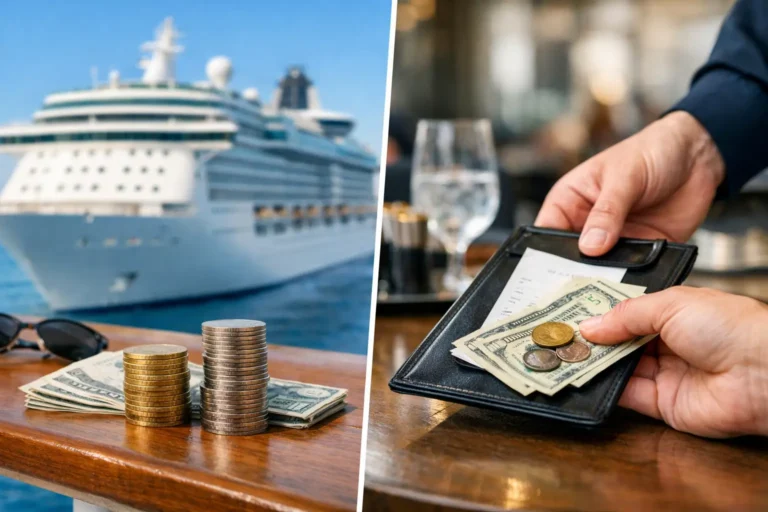

How to Tip Onboard Staff: Cruise Etiquette
Introduction
A drinks receipt, a daily service charge and a discreet cash envelope can all appear on the same cruise holiday. That is why understanding how to tip onboard staff before you sail is far more useful than trying to work it out in the final queue at Guest Services. The right approach depends on your cruise line, fare type and personal preference, but it need not be awkward.
For most UK guests, the simplest rule is this: check what is already included, budget for any automatic gratuities, then use cash only when you genuinely want to recognise exceptional personal service. You are not expected to hand money to every crew member you meet.
Start with your cruise line’s gratuity policy

Tipping is handled very differently across the cruise industry. Many mainstream ocean cruise lines add a daily gratuity or hotel service charge to each guest’s onboard account. This amount is normally intended to recognise the wider team behind your holiday, including cabin stewards, restaurant staff, galley teams and other crew members whose work is less visible.
The charge may be listed per person, per day, and can vary by cabin grade or accommodation type. It is usually charged in the ship’s operating currency, often US dollars or euros, even when you booked through a UK travel agent. Before departure, check your booking confirmation and the cruise line’s current terms rather than relying on an old forum post or a friend’s previous sailing.
Some premium and luxury lines include gratuities in the fare. Others include them only in selected packages, promotional fares or suite categories. River cruise lines also vary widely: gratuities may be included, suggested at the end of the cruise, or divided between a general crew fund and the cruise director.
A service charge is not always exactly the same as a tip in the traditional sense, but for practical budgeting purposes it should be treated as part of the cost of your cruise. If it is not included in your fare, allow for it from the outset.
Can you change automatic gratuities?
Some cruise lines permit guests to amend or remove automatic gratuities at Guest Services. Others do not, or have stricter conditions. Even where changes are allowed, it is worth considering what the charge supports before making a decision. Much of the onboard service you receive relies on teams working behind the scenes, not solely the people you see at your table or in your corridor.
If there has been a genuine service issue, raise it early with the relevant manager or Guest Services. This gives the ship an opportunity to put matters right while you are still onboard. Reducing gratuities at the end of the voyage is rarely the most effective way to resolve a problem that could have been addressed on day two.
How to tip onboard staff in cash
Cash tips remain welcome in many situations, particularly when a crew member has made a noticeable difference to your holiday. A cabin steward who has thoughtfully handled a special request, a dining team that has carefully managed an allergy, or a bartender who remembers your preferred drink may all be people you choose to thank personally.
There is no fixed amount that every guest should give. The length of the cruise, local currency, service already covered by gratuities and your own budget all matter. A modest note offered with a sincere thank you is perfectly appropriate. The gesture should feel comfortable, not pressured.
If you plan to give cash, take a supply of small notes in the currency used onboard. Trying to obtain change on the final morning can be frustrating, and crew members may be unable to break larger notes. Clean, unfolded notes and a small envelope are thoughtful but not essential.
It is usually best to give a personal cash tip towards the end of the sailing, once you know who has looked after you consistently. However, there is nothing wrong with thanking someone earlier if they have gone out of their way to help. Do so quietly and directly, without making the moment a performance.
Know when a tip has already been added

Automatic gratuities do not always cover every purchase. Bars, speciality restaurants, spa treatments and room service may carry their own service charge, often shown on the menu or receipt. In that case, adding more is optional rather than expected.
Take a moment to read the bill before signing. A common source of confusion is seeing a suggested additional tip line after a service charge has already been included. You can leave it blank if you are happy that the included amount reflects the service. Equally, if someone has been outstanding, an extra amount is a personal choice.
Casino dealers, photographers, salon staff and excursion guides may have different tipping customs. Onboard guidance, daily programmes or a quick question at Guest Services can clarify the position. Do not assume that land-based hotel practice applies in every department of a ship.
Tipping on shore excursions and transfers
Cruise-organised excursions introduce a separate decision. Local guides and coach drivers are not normally covered by the ship’s daily gratuity, although some cruise lines include guidance in the excursion information. Tipping expectations can vary considerably by country, so the destination matters as much as the cruise line.
For a half-day tour, a small tip for a helpful guide or driver is customary in many places but should never feel compulsory. Consider the quality and length of the tour, the local norm and whether a tip has already been collected or included. Keep a little local currency or small notes from the ship’s operating currency for this purpose, especially on port days where card payments are less practical.
The same applies to private transfers, hotel porters and pre-cruise hotel staff. These are part of the wider holiday budget, not the onboard gratuity system.
River cruises need a slightly different approach
River cruise tipping often feels more personal because ships are smaller and you may see the same crew throughout the voyage. It is common for the cruise line to provide suggested per-person amounts at the end of the trip, sometimes with separate guidance for the crew and cruise director.
Follow the line’s stated process where one is provided. There may be a tip box, envelopes in your cabin, an option to add gratuities to your account, or a final-night collection. If tips are included in your fare, there is no need to feel obliged to give extra cash, though some guests still choose to recognise exceptional service.
On a river itinerary covering several countries, do not assume the local tipping custom of one port is the rule for the whole holiday. The cruise line’s guidance is usually the clearest starting point.
A simple way to budget before you sail

Tipping is easier when it is not competing with your final onboard bill. Add the estimated daily service charge to your cruise budget before booking extras. Then set aside a separate, flexible amount for personal cash tips, excursions and transfers.
A useful approach is to keep this money separate from your spending budget for drinks, souvenirs and the spa. If you return home with some left over, that is fine. It is better than feeling you must make hurried decisions because every pound has already been allocated elsewhere.
For cruise lines charging gratuities in US dollars, remember that your card provider’s exchange rate may affect the final sterling cost. Paying the onboard account with a suitable card can be more convenient than carrying a large amount of foreign cash, while small notes cover the occasions where a personal thank you feels right.
Tipping etiquette that keeps things comfortable
Crew members work hard, often on long contracts away from home, and respectful manners matter as much as money. Learn names where possible, say thank you, and mention excellent service in the end-of-cruise survey. Positive named feedback can be valuable to crew members and their managers.
Avoid comparing tips with other guests or discussing what you gave in front of staff. Different budgets and cultural expectations are normal. There is also no need to apologise for following the cruise line’s included-gratuity policy rather than adding cash to every interaction.
If you are travelling with a large family group, have complex dining needs or make frequent special requests, you may feel that a personal tip is appropriate. That is a judgement call, not a rule. The fairest approach is one you can afford and feel comfortable with.
Before you pack, confirm the gratuity policy for your particular sailing and take a few small notes if you would like the option of personal tips. Once that detail is organised, you can focus on the far more enjoyable parts of embarkation day: finding your cabin, learning the ship and beginning your holiday with confidence.
Frequently Asked Questions
Additional Resources

The Essential Cruise & Travel Shop

Disclaimer
The Essential Cruise Shop Blog provides this guide for informational purposes only and does not act as a travel agency or professional adviser. The information contained in this guide is provided for general guidance only. While we endeavour to ensure that content is accurate and up to date, we make no representations or warranties of any kind regarding its completeness or accuracy. Cruise line gratuity policies, daily service charges, venue surcharges, and destination tipping practices are subject to change without notice. We strongly advise that you verify all relevant details directly with your cruise line, tour operator, or Guest Services before making any bookings, decisions, or financial commitments. We accept no liability for any financial loss resulting from a failure to follow this advice.
Affiliate Disclosure
Many of the links are affiliate links, The Essential Cruise Shop Blog may receive a commission from qualifying clicks, orders or bookings. This income helps support our efforts to provide and improve our site and turn it into a one stop resource for travellers with a bias towards cruising.