
What to Wear on Embarkation Day
Introduction
You will spot embarkation-day outfits straight away at the terminal. Some people arrive in full holiday mode, others look ready for a long-haul flight, and a few seem to have packed for every possible weather shift between Southampton and the ship. If you are wondering what to wear on embarkation day, the best answer is usually simple: dress for a travel day first, and a cruise day second.
That matters because embarkation is rarely as polished as the rest of the holiday. You may be handling cases, waiting in queues, going through security, walking long corridors and spending a few hours with only your hand luggage before cabins are ready. The right outfit makes that part of the journey far easier, and it can save you from starting your cruise feeling too hot, too cold or generally uncomfortable.
What to wear on embarkation day really needs to do
The easiest mistake is dressing for the brochure rather than the reality. Embarkation day is not a formal night, and it is not usually the moment for anything fussy, restrictive or difficult to carry off after a train journey, hotel stay or flight.
A good embarkation outfit should be comfortable for sitting and walking, practical for changing temperatures, smart enough for public areas on board and easy to manage with your hand luggage. That often means breathable fabrics, layers and shoes you can walk in for more than ten minutes.
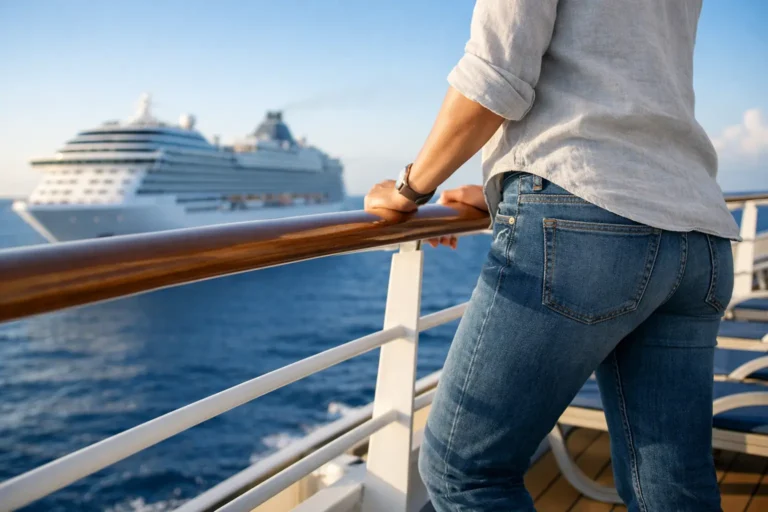
For most cruises, a smart-casual approach works best. Think lightweight trousers, chinos, jeans without rips, casual dresses, polo shirts, T-shirts under a cardigan, or a relaxed blouse with comfortable bottoms. If you are sailing from the UK, a light waterproof or soft jacket is often sensible even in summer. If you are flying to a warmer port, you may want cooler clothing, but still avoid anything that leaves you feeling sticky or overly exposed while moving through the terminal.
The best outfit formula for most cruises
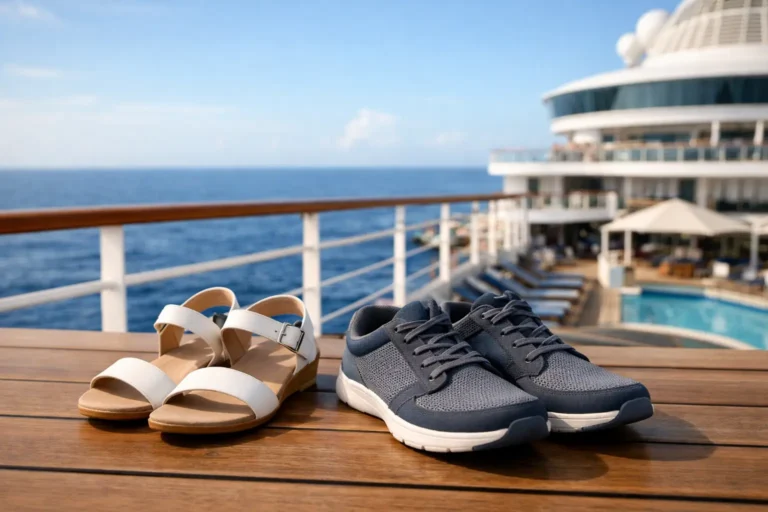
For women, a reliable choice is a casual dress with a cardigan or light jacket, or comfortable trousers with a breathable top. Flat sandals can work in warm weather, but trainers or supportive loafers are often the better option if the terminal involves more walking than expected.
For men, chinos or smart shorts in a hot-weather port, paired with a polo shirt or neat T-shirt, usually strikes the right balance. Add a lightweight overshirt or jumper if you are boarding in the UK or expect strong air-conditioning indoors.
If you prefer very simple packing decisions, build your embarkation outfit around three things: easy movement, one removable layer and shoes you trust. That combination suits most mainstream ocean cruises and many river cruises as well.
Shoes matter more than most people expect
If there is one part of what to wear on embarkation day that deserves extra thought, it is footwear. Cruise terminals can involve more standing and walking than people anticipate, particularly if there are transfers, security checks or a wait before boarding begins.
Choose shoes that are already broken in. Embarkation day is not the time for brand-new sandals, stiff loafers or anything with a heel you would not happily wear through an airport. Comfortable trainers, supportive flats, deck shoes or cushioned sandals are all reasonable options, depending on weather and cruise style.
It is also worth thinking ahead to your first few hours on board. You may want to explore open decks, head to the buffet, check your dining arrangements or walk to the spa or pool area to make bookings. Shoes that work both in transit and on the ship make the day easier.
Dress for the gap before your luggage arrives
One of the most overlooked parts of embarkation day is the time between handing over your suitcases and getting access to your cabin. Your main luggage may not appear until later in the afternoon or early evening, so whatever you wear and carry needs to see you through that gap.
That is why layering is so useful. A terminal may feel cool and breezy, while the ship’s atrium or buffet can feel much warmer. If you board in a sleeveless top and no layer, strong air-conditioning may become irritating. If you wear heavy clothing for a warm-weather sailing, you may feel uncomfortable before you can change.
A practical middle ground is best. Lightweight layers are easier to adjust than one thick outer layer, and they take up less space in your day bag if the temperature changes.
Should you wear swimwear on embarkation day?
Usually, no – at least not as your main outfit.
Some guests like to pack swimwear in their hand luggage and head straight to the pool once they have boarded, especially on warm-weather sailings. That can make sense if your cabin is ready early or there is a changing area available. But arriving at the port dressed for the pool is rarely the most practical option.
Instead, wear normal travel clothes and pack swimwear, sun cream and anything else you may want for the first afternoon in your carry-on. That gives you flexibility. If the weather is poor, the pool deck is crowded or your luggage arrives quickly, you have not committed to an outfit that only works for one plan.
What not to wear on embarkation day
Most cruise lines are fairly relaxed during boarding, but a few choices still tend to create unnecessary hassle.
Very tight clothing can become uncomfortable quickly, especially if your journey to the port has been long. White or very delicate fabrics may not be ideal if you are handling luggage or sitting in busy waiting areas. Anything overly formal will usually feel out of step with the day unless you have a very specific reason for dressing up.
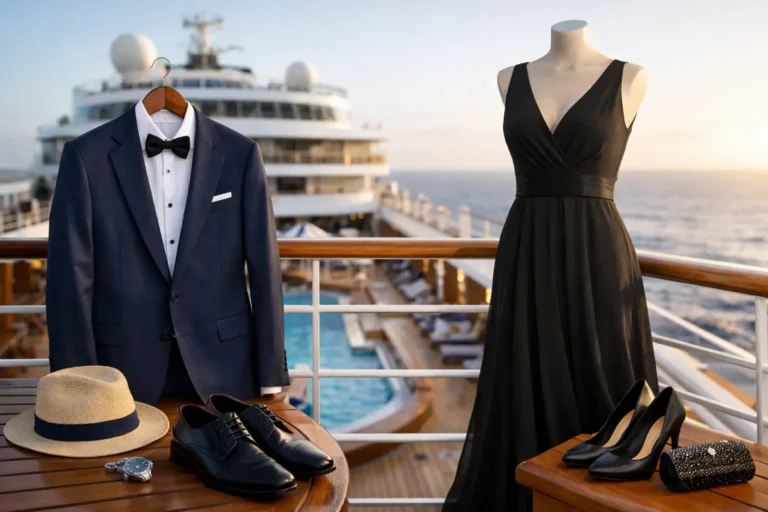
Fancy heels, heavy tailoring and outfits that crease badly are best saved for later in the cruise. The same goes for clothing that depends on having immediate access to your checked luggage, such as a dress that only works with shoes or accessories packed elsewhere.
For fly-cruise passengers, it is also worth being cautious with bulky metal accessories, belts or complicated footwear that may slow you down at security.
Does the cruise line make a difference?
Sometimes, yes. The broad rule stays the same, but the style can shift slightly depending on the line and itinerary.
On premium and luxury cruises, guests often lean a little smarter even during embarkation, though still comfortably. On family-focused mainstream lines, practical casualwear is far more common. River cruise guests also tend to dress neatly but without much formality on boarding day.
The departure port matters too. Southampton embarkations often call for layers and weather awareness. Mediterranean sailings may be hotter at the terminal but heavily air-conditioned indoors. Caribbean departures can be humid, so breathable fabrics become more important.
If you are ever unsure, aim for neat, comfortable and understated. That fits almost everywhere.
Your embarkation-day hand luggage should support your outfit
Clothing choices work best when they match what you are carrying. If you are dressed for warm weather but your hand luggage does not include a cardigan, medications, sunglasses or a small bottle of water, the outfit will only do part of the job.
A well-packed embarkation bag should cover the first several hours on board. Keep travel documents, valuables, chargers, any essential medication and a few practical extras with you. If you want to change into swimwear later, pack that as well. Many experienced cruisers also keep one evening outfit essential in hand luggage just in case checked bags are delayed, though that depends on your tolerance for risk.
This is where practical cruise planning matters more than fashion. The most successful embarkation-day outfit is the one that works together with your day bag, the weather and the boarding process.
A simple rule if you are still unsure
If you cannot decide what to wear on embarkation day, dress as though you are heading to a smart casual lunch after a comfortable journey. That usually lands in exactly the right place – presentable, easy to move in and suitable for the first photos of the trip without feeling overdressed.
Cruising tends to run more smoothly when you remove avoidable friction from the small decisions. Embarkation-day clothing is one of those details that can either support the start of your holiday or quietly make it more awkward than it needs to be. Choose comfort, add a little polish, and let the ship handle the glamorous part later.
Frequently Asked Questions
Disclaimer
The Essential Cruise Shop Blog provides this guide for informational purposes and is not a travel agency. The information contained in this guide is for general guidance only. While we do our best to ensure the information is up-to-date and correct, we make no representations or warranties of any kind about its completeness or accuracy.
Cruise line policies, itineraries, and loyalty programs are subject to change without notice. We strongly recommend that you verify all details directly with your cruise line or a certified travel agent before making any bookings or financial commitments.
We cannot be held liable for any financial loss due to the reader’s failure to follow the above advice.
Affiliate Disclosure
Many of the links are affiliate links, The Essential Cruise Shop Blog may receive a commission from qualifying clicks, orders or bookings. This income helps support our efforts to provide and improve our site and turn it into a one stop resource for travellers with a bias towards cruising.