Cruise Gratuities Versus Tipping Explained
The final bill can surprise even well-prepared cruisers. Cruise gratuities versus tipping is one of the most commonly misunderstood parts of a cruise holiday, largely because the wording varies between lines and the charges do not always appear in the fare you first see. Once you understand what is automatic, what is optional and where extra service charges apply, it becomes much easier to budget without awkwardness onboard.
What cruise gratuities actually are
Gratuities are usually a daily per-person charge added to your onboard account. Cruise lines use the money to recognise the work of crew who support your holiday, including restaurant teams, cabin stewards, housekeeping staff and behind-the-scenes colleagues you may never meet.
On many mainstream ocean cruises, this charge is applied automatically each day. It may be described as a gratuity, hotel service charge, crew appreciation charge or service charge. The name differs, but the practical effect is similar: it is part of the expected cost of sailing unless your fare specifically says gratuities are included.
The amount can vary by cruise line, ship, cabin grade and destination. It is commonly shown in US dollars on ships that operate with a dollar onboard currency, even when you book from the UK. Before paying your balance, check whether the quoted amount is per person, per day and whether it includes children. These details make a meaningful difference on a fortnight-long cruise.
Some cruise lines allow you to prepay gratuities before departure. This can be useful for UK guests because it fixes that portion of the holiday budget in pounds and leaves fewer charges to settle at the end. Others include gratuities in selected fare types, suites or promotional packages. Included does not always mean every service charge has disappeared, however, so read the fare terms carefully.
Cruise gratuities versus tipping: the key difference
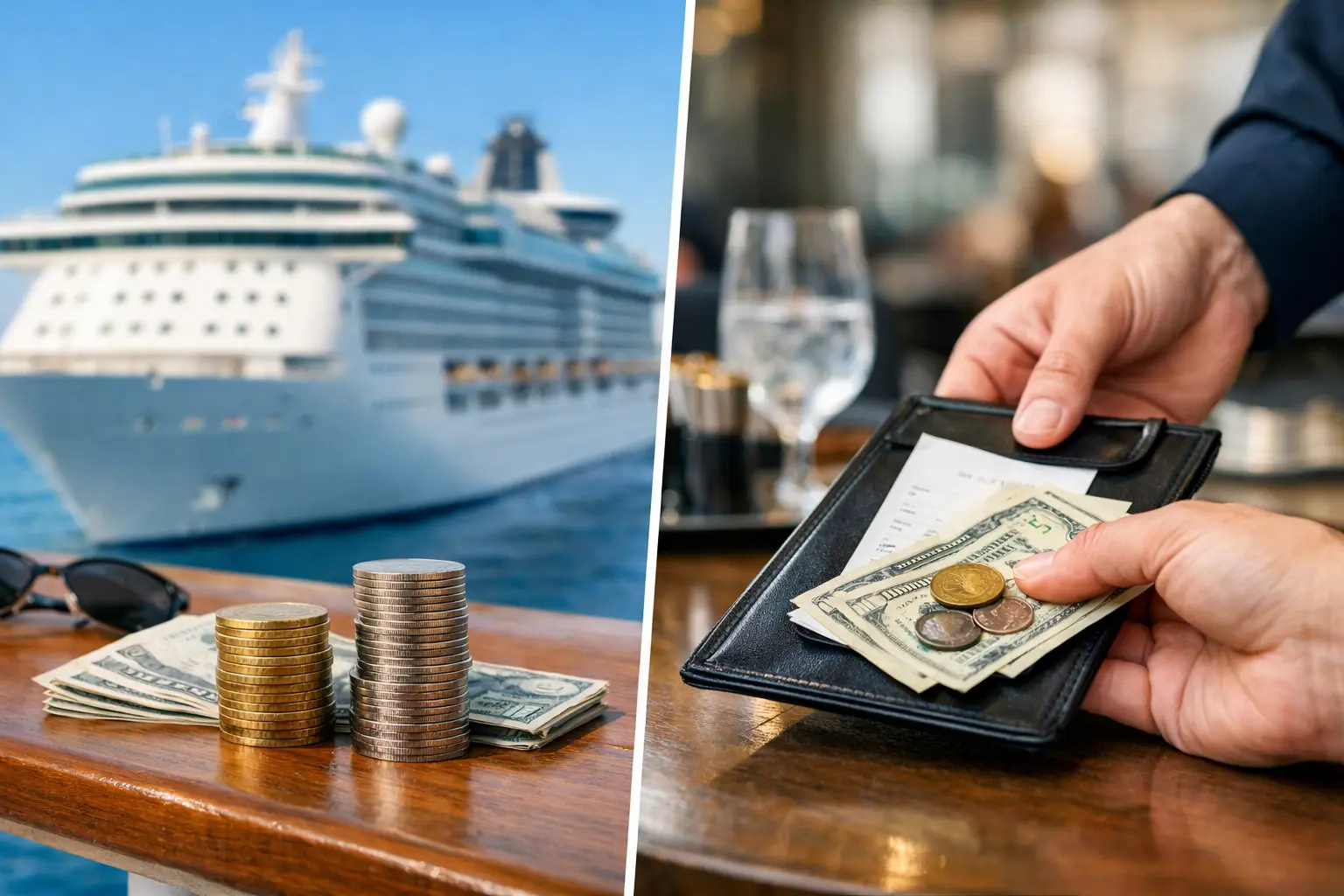
An automatic gratuity is a planned, cruise-line-administered charge. A tip is a voluntary amount you choose to give directly, usually in cash, to someone whose service has made your holiday noticeably better.
That distinction matters because automatic gratuities are designed to share recognition more widely than the staff you see each day. Your cabin may be kept immaculate and your table service may be excellent, but many other crew members contribute to that experience. The daily charge supports that broader system.
A personal cash tip is more individual. You might give one to your cabin steward for thoughtful help with a medical fridge, extra hangers or keeping a family cabin especially organised. You may also choose to thank a dining team that has carefully managed allergies, remembered your preferences or gone out of its way to make a celebration special.
There is no universal rule that says you must give extra cash on top of automatic gratuities. Many guests do not, and a crew member should never make you feel pressured. Think of additional tipping as a personal thank-you, not an obligation you have failed to meet if you decide against it.
When an automatic charge may not cover everything
The daily gratuity normally relates to core hotel and dining service. It may not cover every paid service onboard. Drinks purchases often attract an automatic service charge, which is usually displayed on the menu or drinks package terms. Spa treatments, salon appointments and speciality dining may also have a service charge added, depending on the line.
These charges can cause confusion because guests may see a daily gratuity, then an additional percentage on a cocktail or massage. They are separate systems. Check your onboard account during the cruise rather than waiting until the final morning, when there is less time to query anything.
How tipping expectations differ by cruise type
Ocean cruising is not one single model. Large international lines, luxury ships, premium brands and expedition vessels can take very different approaches. A line with a lower lead-in fare may add daily gratuities separately, while a more inclusive fare may absorb them into the upfront price. Neither approach is automatically better. The sensible comparison is the total holiday cost.
River cruising often feels more inclusive, but practices vary here too. Some operators include gratuities, while others provide a suggested amount for the cruise director, ship’s crew and local guides. River cruise tips can be presented as recommendations rather than an automatic charge, especially on European itineraries. The suggested figures are helpful for budgeting, but they are not a substitute for checking your particular operator’s documents.
For UK travellers, cultural expectations can be a factor. British guests may be less accustomed to routine cash tipping than American guests, while many ships have an international passenger mix and crew. The most comfortable approach is simple: pay any stated service charge that forms part of your booking terms, then give extra only where you genuinely want to.
Should you prepay cruise gratuities?
Prepaying works well when you want a clearer holiday budget. It is particularly handy if you prefer to avoid exchange-rate movements or do not want a sizeable onboard-account balance at the end of the sailing. It also means the amount is dealt with before you begin the holiday.
There are trade-offs. If a cruise line permits adjustments to automatic gratuities onboard, prepayment does not necessarily remove that option, but the process and refund method vary. You may also be able to find a fare that includes gratuities alongside drinks, Wi-Fi or dining benefits, which could represent better value than adding each element separately.
Do not prepay simply because it sounds compulsory. First establish whether your selected fare already includes gratuities. Then compare the daily rate against the convenience of paying in advance. A short cruise may involve a modest amount; on a longer voyage or for two guests sharing a cabin, it deserves a line in your holiday budget.
A practical way to budget for tips and charges
Start with the automatic daily charge, multiplied by the number of guests and nights. Add any known service charges on drinks, spa appointments, speciality restaurants and room service where applicable. Finally, set aside a small, separate cash amount only if you think you may wish to give personal tips.
For cash, small-denomination notes in the onboard currency are usually most practical. On a US-dollar ship, that often means US dollars. If you are cruising in Europe, euros may be useful for local guides, drivers, taxis and independent port services, even when the ship itself uses a different currency. Keep cash tips in an envelope in your cabin safe or organiser so they are easy to find on the final evening.
It is wise not to budget every last pound for gratuities alone. Shore days can bring their own tipping decisions, particularly on escorted tours, private transfers and hotel stays before or after the cruise. Those are separate from shipboard charges, and local customs can differ considerably by country.
Can you change or remove gratuities onboard?
Some cruise lines allow guests to adjust or remove automatic gratuities by speaking to Guest Services. Others have tighter policies, particularly where gratuities have been prepaid or are included in the fare. Procedures can change, so rely on your current booking confirmation and onboard information rather than old advice from forums or previous sailings.
Before asking for a change, separate a concern about service from a concern about cost. If something is not right with your cabin, dining arrangement or accessibility support, raise it early with the appropriate manager. Most issues can be resolved far more effectively during the cruise than on the last morning.
If affordability is the issue, there is no harm in asking Guest Services to explain the policy and your options. Just remember that these charges support crew whose work is central to your comfort throughout the voyage. Making an informed decision is fairer than treating the charge as an unexpected extra after the holiday has already begun.
The best etiquette for personal tips
When you do give a personal tip, hand it over discreetly and directly, ideally with a brief word of thanks. A small note mentioning exactly what the crew member did well can be just as meaningful. Crew feedback surveys also matter, especially when you name the individual and describe the service clearly.
Avoid assuming that all staff can accept cash or that one amount suits every itinerary. Some lines have staff-recognition systems, and some crew may prefer a written acknowledgement. If you are uncertain, Guest Services can explain the ship’s policy without making the moment uncomfortable.
The aim is not to turn your holiday into a running calculation. Check the gratuity policy before you travel, allow for the likely extras, and then let exceptional service guide any personal tipping. With that detail settled before embarkation, you can spend more time enjoying the ship and less time worrying about the final statement.
Frequently Asked Questions
Additional Resources

The Essential Cruise & Travel Shop

Disclaimer
The Essential Cruise Shop Blog provides this guide for informational purposes and is not a travel agency. The information contained in this guide is for general guidance only. While we do our best to ensure the information is up-to-date and correct, we make no representations or warranties of any kind about its completeness or accuracy.
Cruise line policies, itineraries, and loyalty programs are subject to change without notice. We strongly recommend that you verify all details directly with your cruise line or a certified travel agent before making any bookings or financial commitments.
We cannot be held liable for any financial loss due to the reader’s failure to follow the above advice.
Affiliate Disclosure
Many of the links are affiliate links, The Essential Cruise Shop Blog may receive a commission from qualifying clicks, orders or bookings. This income helps support our efforts to provide and improve our site and turn it into a one stop resource for travellers with a bias towards cruising.