A Cruise Packing List for Men That Covers It All
Introduction
A good cruise packing list for men starts with one useful reality: the same holiday can take you from a chilly embarkation port to a sunny pool deck, a smart dining room and a cobbled shore excursion within a few days. Packing well is less about bringing more and more about choosing clothes that work across those settings without leaving your case overstuffed.
The right balance depends on your cruise line, itinerary, sailing season and how much you enjoy dressing up in the evening. A Mediterranean voyage in July needs a very different wardrobe from a Norwegian fjords cruise in May, while a relaxed contemporary ship will usually require fewer smart items than a traditional luxury line or a river cruise with included evening dining.
Start with your cruise line’s dress code
Before deciding how many shirts or trousers to take, check the dress code for your specific ship and sailing. Terms such as casual, smart casual, elegant casual and formal night are not always used in quite the same way.
On most mainstream ocean cruises, daytime is relaxed. Shorts, polo shirts, T-shirts, swimwear and comfortable footwear are appropriate around the ship and on many shore days. In the main dining room in the evening, however, beachwear, vests, flip-flops and football shirts are generally not suitable. Smart jeans or chinos, a collared shirt and clean, closed shoes will cover most smart-casual evenings.
Formal or gala nights can range from a jacket and open-neck shirt to a full dark suit or dinner jacket. A suit is the safest choice if you plan to dine in the main restaurant and enjoy the occasion, but it is rarely compulsory on every ship. Many lines offer casual restaurants and buffets where a more relaxed outfit is accepted. River cruise dress codes are often smart casual throughout, although a lightweight jacket remains useful for special dinners.
Build your cruise packing list for men around outfits
Avoid packing separate clothing for every day. Instead, choose a small set of pieces that can be mixed easily, then add itinerary-specific layers. Neutral trousers in navy, stone, grey or charcoal make this much simpler.
For a typical seven-night warm-weather cruise with access to laundry only if needed, many men will be comfortable with the following:
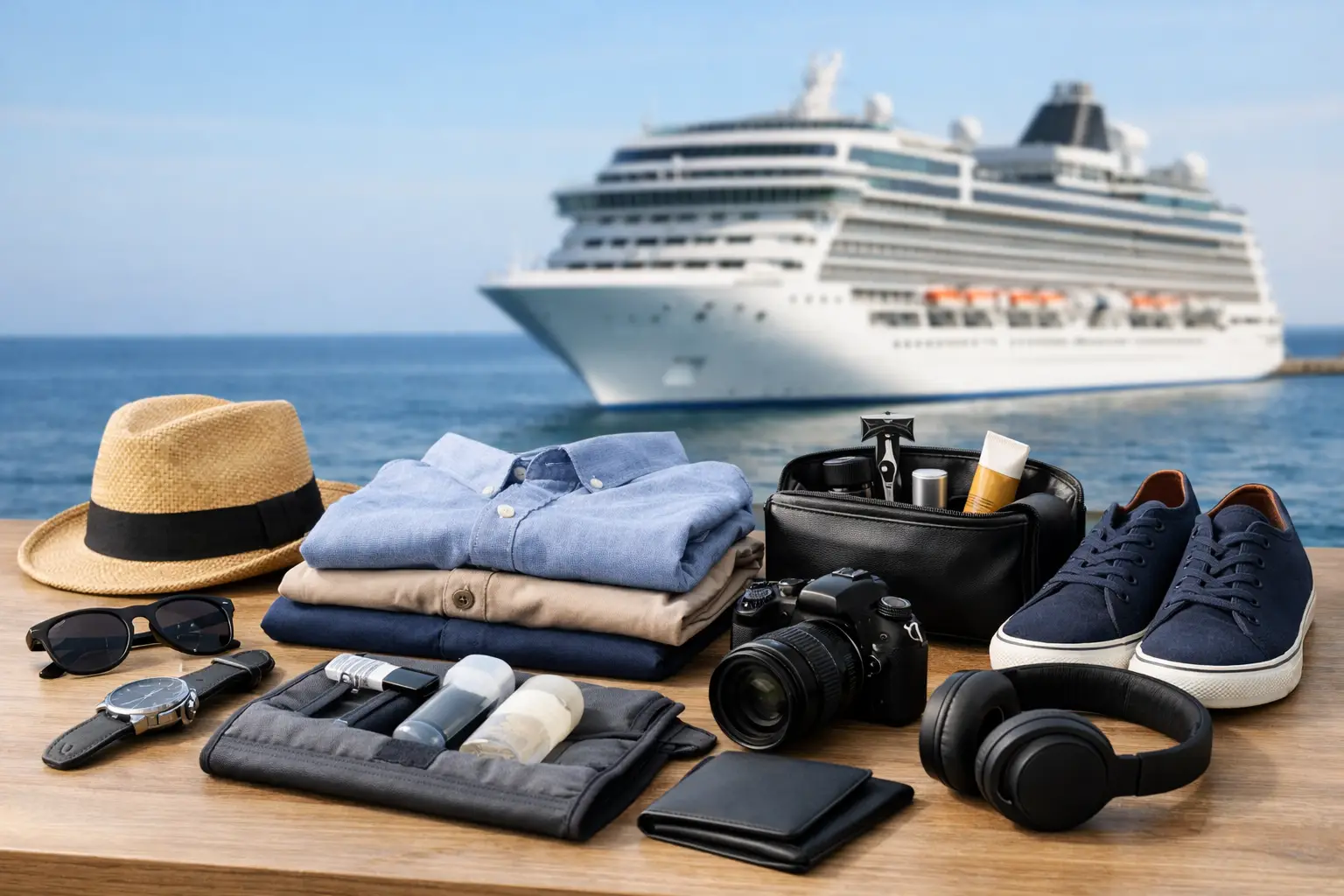
- Two pairs of lightweight trousers or chinos, plus one pair of smart dark jeans if they suit the cruise line and climate.
- Three to five casual tops, such as polos, breathable T-shirts and short-sleeved shirts, alongside two smarter collared shirts for evenings.
- Two or three pairs of tailored shorts for sea days and informal ports, plus enough underwear and socks for the week with a small spare supply.
- One smart jacket or suit for formal evenings, with a belt, suitable shoes and a simple tie or pocket square if you expect to use them.
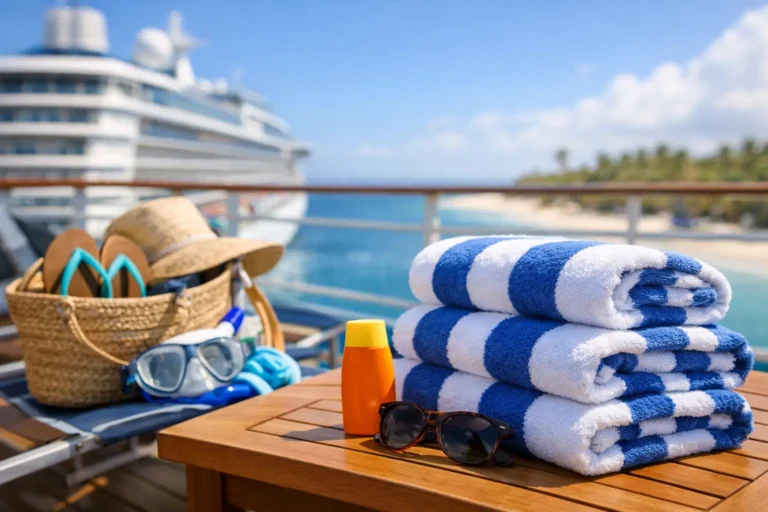
- Swim shorts, a rash vest if you burn easily, and a lightweight cover-up for walking between your cabin and the pool deck.
This is a starting point rather than a rule. On a 14-night sailing, add a few tops and another pair of trousers rather than doubling everything. If you are flying with hand luggage only, prioritise versatile fabrics and plan to use the ship’s laundry service or wash smaller items in your cabin.
Choose fabrics that travel well
Creased linen looks excellent in warm ports but can be frustrating by dinner time unless you are happy with a relaxed appearance. Cotton-linen blends, pique polos and lightweight technical shirts tend to pack more neatly while staying comfortable in heat.
For cooler itineraries, think in layers rather than bulky items. A merino jumper, long-sleeved shirt, waterproof outer layer and packable insulated jacket are more adaptable than one heavy coat. Ships can also feel cool in air-conditioned lounges and theatres, even when the weather outside is warm.
Footwear needs more thought than most travellers expect
Shoes occupy valuable luggage space, so aim for three pairs that each have a clear job. Comfortable walking trainers are essential for independent exploring and active excursions. Smart loafers, brogues or clean leather-style trainers can work for dinner, depending on the dress code. Sandals or pool slides are useful for the lido deck, spa and cabin balcony.
Add hiking shoes only if your excursions genuinely require them. For fjords, Alaska, the Canaries in winter, or walking-focused river cruises, supportive waterproof footwear may be worthwhile. For a city-based Mediterranean itinerary, well-cushioned trainers are normally more practical and easier to wear again onboard.
Wear the bulkiest pair while travelling to the port or airport. This saves room and gives you reliable footwear if checked luggage is delayed.
Pack a proper embarkation-day bag
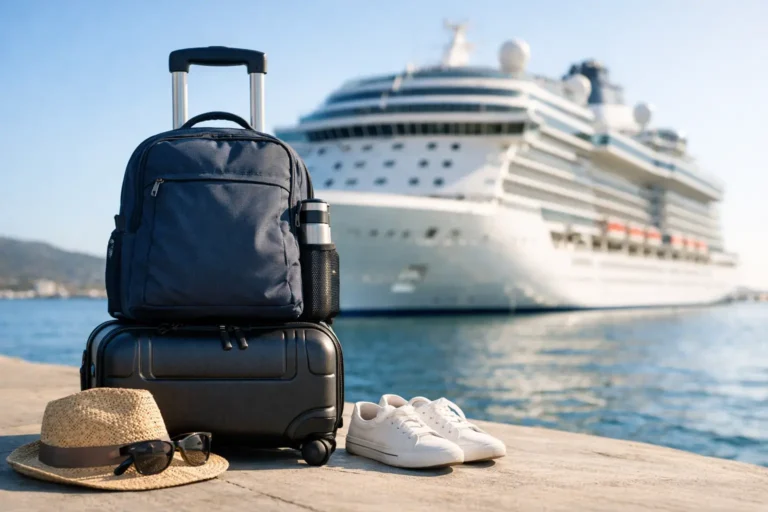
Your main case may not reach your cabin until late afternoon or early evening. Keep essential items in a rucksack, holdall or small cabin bag so the first day feels easy rather than disorganised.
Include your passport, boarding documents, travel insurance details, payment cards, medication, mobile phone, charger and any glasses or contact lenses. Add swimwear, sun cream, a change of clothes and a light layer. You can then have lunch, explore the ship or use the pool without waiting for your suitcase.
It is also sensible to keep one evening outfit and spare underwear in this bag, particularly when flying to meet the ship. Lost or delayed luggage is uncommon, but a simple contingency plan protects the start of the holiday.
Do not overlook shore-day essentials
Ports are where a cruise wardrobe is most likely to be tested. You may be walking on uneven paving, entering religious buildings, taking an open boat trip or returning to the ship in a sudden shower.
A compact day bag should hold refillable water, sun cream, sunglasses, a cap, tissues, hand sanitiser, a light waterproof and a portable charger. For hot destinations, take more sun protection than you think you need. Sea days reflect sunlight strongly, and windy decks can make it easy to underestimate exposure.
If visiting churches, temples or other conservative sites, pack a shirt that covers your shoulders and trousers or longer shorts. Excursion operators may refuse entry where local dress requirements are not met. For beach stops, bring a dry bag or waterproof pouch for your mobile phone, ship card and valuables.
Prepare for changing weather at sea
Even warm itineraries can have breezy sailaways and cooler evenings. A lightweight windproof jacket is one of the hardest-working items you can take. On northern routes, add a warm hat, gloves and a scarf, especially for scenic deck viewing. They may feel unnecessary in the suitcase, but they make a significant difference when standing outside for an hour in cold wind.
A small collapsible umbrella can be useful for European city ports, although a hooded waterproof jacket is often better when your hands are full. Check the forecast shortly before departure, but pack for the season and route rather than relying on one forecast alone.
Toiletries, health items and cabin comforts
Cruise ships sell toiletries, but choice can be limited and prices may be higher than at home. Bring your preferred deodorant, shaving kit, moisturiser, toothpaste and any hair products in travel-friendly sizes if flying. After-sun lotion and lip balm are particularly useful in sunny or windy conditions.
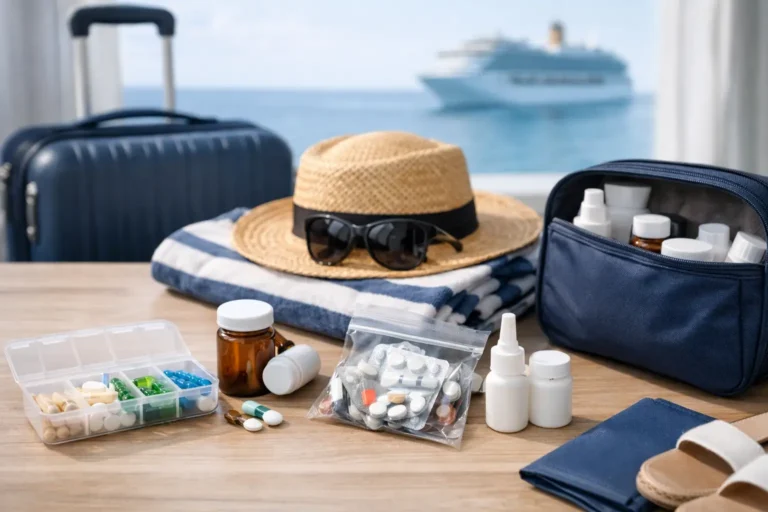
Medication deserves special attention. Take enough for the whole trip plus extra for delays, keep it in its original packaging and carry it in your hand luggage. Bring copies of prescriptions where appropriate. Seasickness remedies can be helpful even for people who do not usually suffer from motion sickness, particularly on crossings or smaller ships. Speak to a pharmacist or clinician before travel if you need advice on the most suitable option.
A few modest cabin items can improve comfort: a reusable water bottle, sleep mask, earplugs and a small power bank are practical choices. Check your cruise line’s rules before taking multi-socket extensions, steamers or other electrical items, as some may be prohibited for fire-safety reasons.
Keep documents and valuables simple
Your passport, cruise documents, insurance information, medication list and emergency contacts should be readily accessible rather than buried in a suitcase. It is worth saving secure digital copies to your mobile phone as a backup, but do not rely on your mobile phone alone if the battery fails or mobile signal is poor.
Most ships operate a cashless onboard account, so a credit or debit card is usually enough for onboard spending. Carry a little local currency for independent ports where useful, but avoid taking unnecessary cash or expensive jewellery. Use your cabin safe for passports, spare cards and valuables when you are not using them.
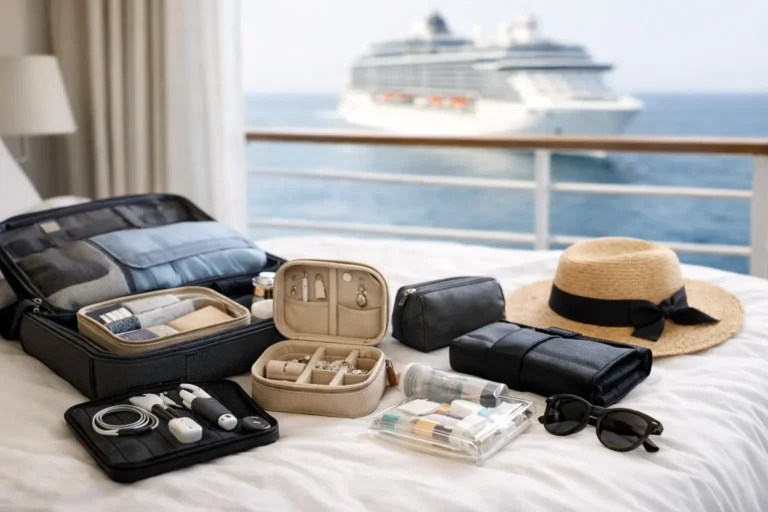
The best-packed case is not the fullest one. Leave some space for laundry, purchases and the reality that folded clothes rarely return home as neatly as they left. A few well-chosen outfits, comfortable shoes and an organised embarkation bag will let you focus on the part that matters: settling into the rhythm of the ship and enjoying every port with confidence.
Frequently Asked Questions
Additional Resources

The Essential Cruise & Travel Shop

Disclaimer
The Essential Cruise Shop Blog provides this guide for informational purposes and does not act as a travel agency or professional travel adviser. The information contained within this guide is provided for general guidance only. Whilst every effort is made to ensure that information is correct and up to date, we make no representations or warranties of any kind regarding its completeness or accuracy. Cruise line dress codes, prohibited cabin items, electrical safety rules, luggage guidelines, and excursion entry requirements are subject to change without notice. You must verify all important details directly with your cruise line, excursion operator, or appropriate authoritative provider before making bookings, decisions, or financial commitments. We cannot be held liable for any financial loss arising from a failure to follow this advice.
Affiliate Disclosure
Many of the links are affiliate links, The Essential Cruise Shop Blog may receive a commission from qualifying clicks, orders or bookings. This income helps support our efforts to provide and improve our site and turn it into a one stop resource for travellers with a bias towards cruising.