How to Pack Cruise Medication Without the Stress
Introduction
A missed suitcase is inconvenient when it contains swimwear. It is a far more serious problem when it contains the medicine you need every day. Knowing how to pack cruise medication properly means planning for the whole journey – the flight or drive to the port, embarkation day, time at sea and the journey home – rather than simply adding a few boxes of tablets to your case.
For most cruise guests, the safest approach is straightforward: keep essential medication with you in your hand luggage, carry more than you expect to use, and make sure it can be clearly identified. A little preparation before you leave home can prevent a stressful search for treatment in an unfamiliar port or a costly visit to the ship’s medical centre.
Keep essential medication in your hand luggage
Never place regular prescription medication, critical over-the-counter treatment or medical equipment in a suitcase that will be checked in for a flight or handed to porters at the cruise terminal. Checked bags can be delayed, misplaced or inaccessible until later on embarkation day. On some ships, luggage may not reach your cabin until the evening.
Your hand luggage should contain enough medication to cover your immediate needs, along with a sensible reserve for the full holiday. This includes items you may need at short notice, such as inhalers, insulin, EpiPens, blood glucose supplies, migraine treatment, anti-sickness tablets and pain relief you know suits you.
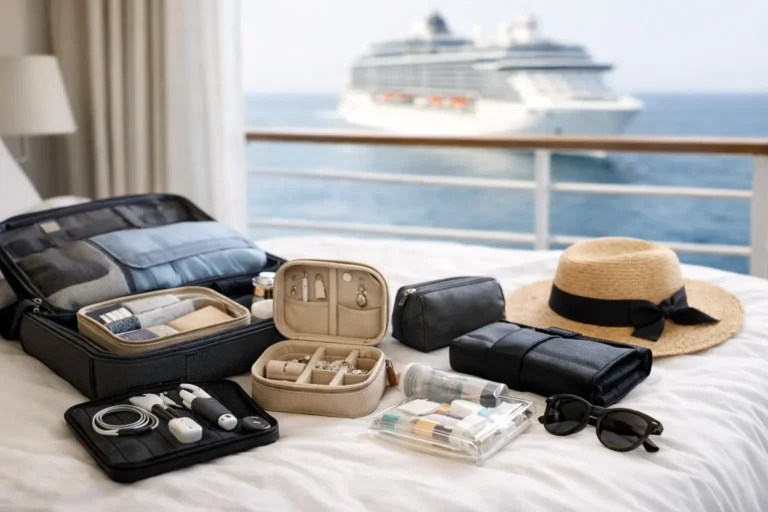
Use a small pouch or packing cube that stays in your day bag throughout the journey. It is easier to find at airport security, on the plane, in the terminal and once you board. If you are travelling as a couple, it can be sensible to split a supply of essential medication between two hand-luggage bags. That offers some protection if one bag is lost, but each person should still keep their own immediate medicines within reach.
Take extra medication for delays and changes
Cruise itineraries are carefully planned, but travel rarely follows a perfect timetable. A delayed flight, missed connection, weather disruption or an unexpected extended stay ashore can all affect your supply. As a general rule, take at least seven extra days of regular medication beyond the length of your trip. For a longer sailing, or one involving several flights and independent travel arrangements, ask your GP or pharmacist whether a larger buffer is appropriate.
Do not assume the ship’s medical centre will be able to replace your usual prescription. Medical facilities on cruise ships are designed for urgent assessment and treatment, not as a full pharmacy for every brand, dose or specialist medicine. The same applies in ports, where the medicine may be sold under a different name, require a local prescription or simply not be available.
If your prescription is issued in short quantities, arrange it well ahead of departure. Your GP practice may need time to consider an early request, particularly if you are asking for more than your usual month’s supply. Be open about your travel dates and take any relevant cruise or flight confirmation if requested.
Leave medicines in their original packaging
Original pharmacy packaging is your best friend when travelling. It shows the medicine name, your name, dosage instructions and the dispensing label, which can be useful at airport security, during a medical consultation and at border control.
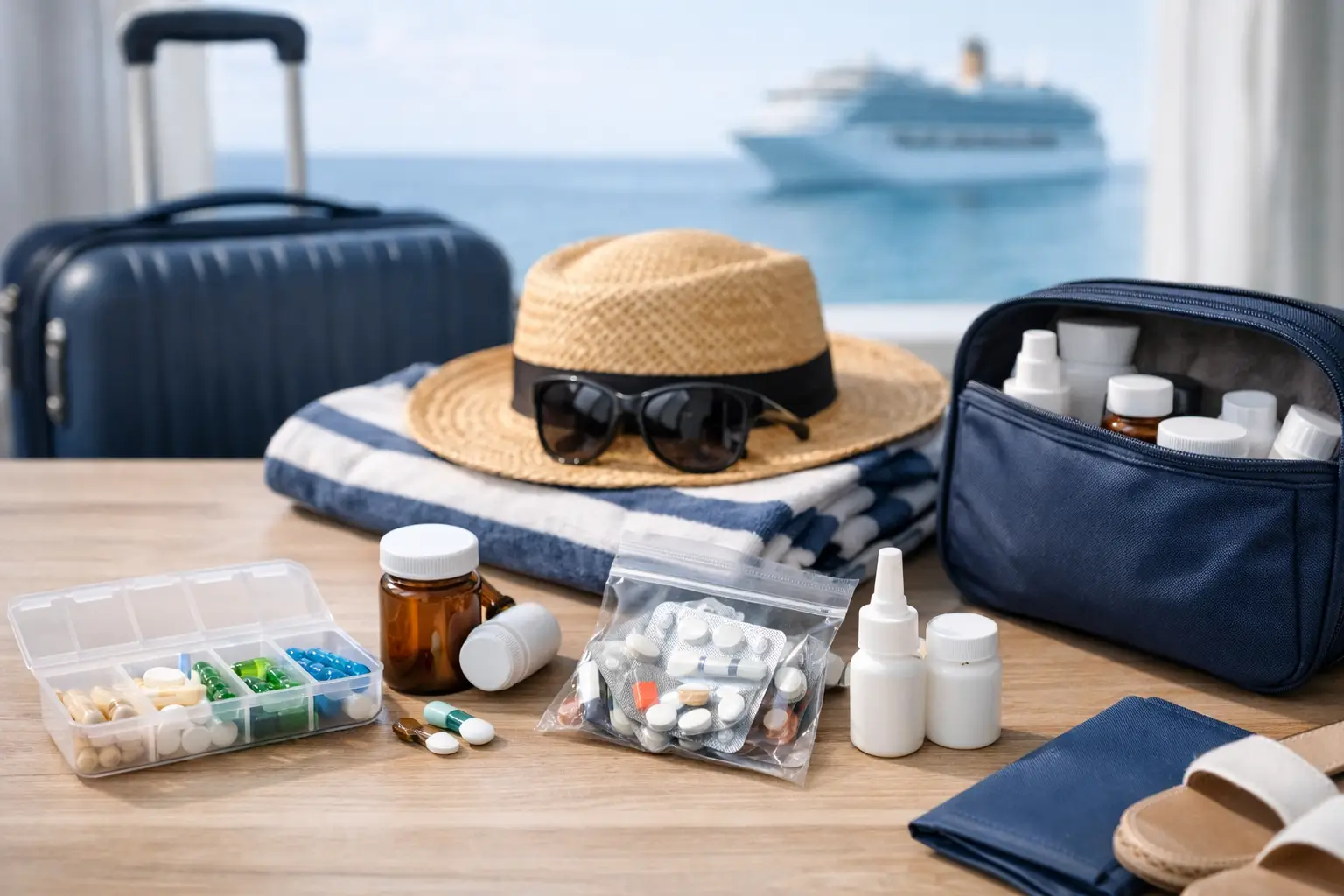
A weekly pill organiser is convenient once you are in your cabin, especially if you take several tablets at different times. However, it should not be the only place you carry medication while travelling. Keep the main supply in its labelled boxes or bottles, then prepare a small organiser for day-to-day use after embarkation.
This matters even more for medicines that look alike or have unfamiliar generic names. If you become unwell, the ship’s doctor needs to know exactly what you have taken. A clear label removes guesswork when it matters most.
Check whether your medicine has travel restrictions
Most common prescription medicines can be taken on a cruise without difficulty. The exception is controlled medication, which may be subject to restrictions in certain countries. Examples can include strong painkillers, some sleeping tablets, medication for ADHD and anxiety medicines containing controlled substances.
Rules depend on the countries on your itinerary, not just where your cruise begins and ends. A medicine that is routinely prescribed in the UK may be restricted or prohibited in a port country. This can be particularly relevant on cruises visiting multiple regions, or when you are flying through a country before joining the ship.
Check the requirements for each destination well before you travel. You may need a letter from your GP or prescriber stating your name, the generic and brand names of the medicine, your dosage, and that it is prescribed for your personal use. Some destinations require advance permission for controlled medicines, and a letter alone may not be enough.
Carry a copy of your prescription list as well. It should include medical conditions, allergies, emergency contact details and the generic names of your medicines. Generic names are especially useful abroad, where the brand name may differ. Keep a paper copy with your medication and save a secure digital copy separately.
Plan for liquids, injections and refrigerated medicines
Liquid medicines, injectable treatment and medical supplies can usually be taken through airport security when they are needed for your journey. Pack them together and tell security staff what you are carrying. Keeping labels and supporting documentation to hand will make the process easier.
If you use insulin or another medicine that needs temperature control, speak with your pharmacist or healthcare team before travel. Do not freeze medication unless its instructions specifically allow it, and do not place it directly against a gel pack. An insulated medication travel case can help during long flights, transfers and embarkation, but it must be suitable for the temperature range your medicine requires.
Once onboard, do not presume the cabin minibar is an appropriate medical fridge. Its temperature may be inconsistent and it may be too cold for certain medicines. Contact the cruise line before sailing to ask about refrigeration arrangements. Depending on the line and the medicine, they may be able to provide a medical fridge, arrange secure storage or advise you on the best option.
For sharps such as needles or lancets, take a compact sharps container rather than relying on your cabin bin. Let the cruise line know in advance if you need medical equipment in the cabin, particularly if you use a CPAP machine, oxygen equipment or a refrigerated medicine. Their accessibility or special requirements team can confirm practical arrangements before you travel.
Pack a small cruise health kit alongside prescriptions
Prescription medication is only part of the picture. A modest personal health kit can save time and discomfort, particularly on sea days when shops may have limited choice or higher prices. Choose items you already know you can take safely, and check for interactions with your regular prescriptions.
Useful additions often include seasickness treatment, paracetamol, plasters, indigestion relief, antihistamines, diarrhoea treatment and rehydration sachets. For some guests, sea sickness tablets can cause drowsiness, dry mouth or blurred vision. Test a new treatment before your holiday where possible, rather than discovering its effects on the first formal night.
If you are prone to travel sickness, start with a plan rather than waiting until you feel unwell. Your preferred treatment may depend on your health conditions, the length of the sailing and whether you want to avoid drowsiness during excursions. A pharmacist can help you choose an appropriate option.
Organise medication around your ship routine
Cruise days can blur together, especially when you cross time zones. Before sailing, decide how you will manage medicines that must be taken at fixed intervals. For some prescriptions, following your usual home-time schedule for a day or two may be suitable; for others, you may need to adjust gradually. Ask your pharmacist or prescriber for individual advice, particularly for insulin, anticoagulants, epilepsy medication or medicines where timing is critical.
Set alarms on your mobile phone or watch, and keep a simple written record if you take multiple medicines. On a ship, late dinners, shore excursions and an afternoon nap can easily disrupt a familiar routine. A small daily organiser in your cabin can help, but take enough medication with you when going ashore for a delayed return to the ship.
Keep medication away from direct sunlight, humid bathrooms and hot balconies. A cabin drawer or wardrobe shelf is often a better choice, provided it is out of reach of children and not close to a heat source. Read the storage instructions on each medicine, as some need room temperature while others have specific limits.
A final check before you leave for the port
Before closing your hand-luggage bag, check that you have your regular medicines, extra supply, labelled packaging, prescription list, relevant medical letters and any cooling or sharps equipment. Also make sure you have travel insurance details that cover existing medical conditions where required.
Medication planning is not the most glamorous part of a cruise holiday, but it is one of the preparations that gives you real freedom once you are onboard. With the right items close at hand, you can focus on the sea views, shore days and the pleasure of having everything you need already sorted.