Best Cruise Travel Organisers to Pack
Introduction
If you have ever found yourself rummaging for a passport at check-in, untangling chargers on embarkation day, or wondering where to put smaller items in a compact cabin, the best cruise travel organisers quickly earn their place in your case. On a cruise, organisation is not just about neat packing. It makes travel days calmer, helps you settle into your cabin faster, and cuts down on those small frustrations that can nibble away at the first day of your holiday.
Cruise travel tends to involve more moving parts than a standard hotel stay. You may have flights, a pre-cruise hotel, transfers, embarkation paperwork, luggage labels, shore day essentials and a cabin with limited drawer space. That is why the right organisers can make such a noticeable difference. The key is choosing items that suit cruising specifically, rather than buying generic travel gear that sounds useful but ends up taking up space.
What makes the best cruise travel organisers?
The best cruise travel organisers do three things well. They keep important items easy to find, they reduce clutter in a smaller cabin, and they do not create extra bulk of their own. That last point matters more than many people expect. An organiser that is too rigid, too heavy or too large can become part of the problem.
For cruise holidays, practicality usually matters more than having a matching set. Soft-sided organisers tend to work better than hard cases because they fit more easily into wardrobes, drawers and under-bed luggage storage. Clear sections are helpful for security checks and quick access. Water-resistant materials are useful too, especially for pool decks, excursions and transfers where your belongings may be exposed to rain or splashes.
It is also worth thinking in stages. Some organisers are best for the journey itself, such as document wallets and tech pouches. Others come into their own once you are on board, such as hanging toiletry bags and cabin storage organisers. If you try to solve every packing issue with one product, you often end up with something that does none of the jobs particularly well.
The best cruise travel organisers by type
Document organisers for embarkation day
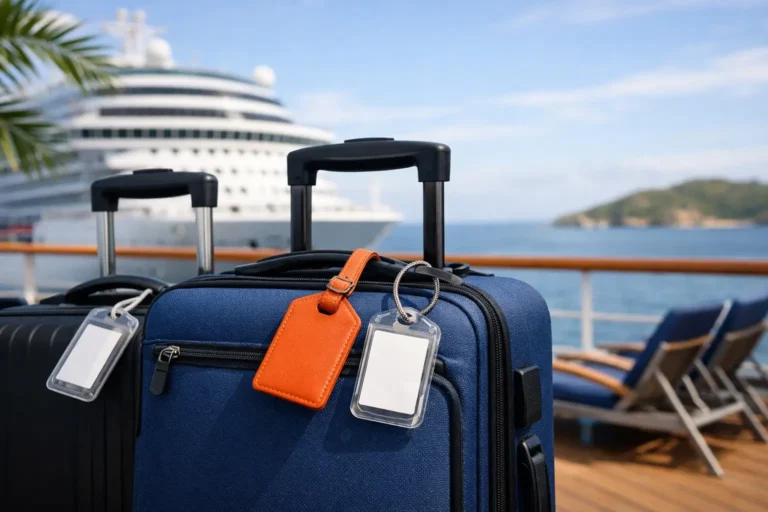
A good travel document organiser is one of the most useful items you can bring on a cruise. It keeps passports, boarding information, travel insurance details, printed luggage tags, hotel confirmations and transfer paperwork in one place. Even if much of your trip is handled digitally, having key details together can save time when airport Wi-Fi is unreliable or you need to show documents quickly.
For couples, a larger wallet with separate sections often works best. For solo travellers, a slim zip-around wallet may be enough. Look for secure closure, easy access and enough room for folded A4 paperwork without everything becoming crumpled. RFID protection is often mentioned as a selling point, and while it may appeal to some travellers, layout and practicality usually matter more than extra features you may never notice in use.
Packing cubes for clothing and day-to-day order
Packing cubes are often the first thing people think of, and for good reason. They make it much easier to separate formalwear, casual clothes, swimwear, underwear and excursion outfits. They are especially useful if your cruise includes a stay before or after sailing, because you can keep one cube aside for the hotel and leave the rest untouched until you reach the ship.
The best ones for cruising are lightweight and flexible rather than heavily structured. Compression cubes can be helpful if you are trying to fit more into a suitcase, but they are not always ideal for delicate eveningwear. Standard cubes are often easier to manage, especially if you want to move them straight into cabin drawers.
A common mistake is buying too many. A small, sensible set is usually enough. Too many cubes can make it harder to remember where things are, which defeats the point.
Tech organisers for chargers, adaptors and accessories
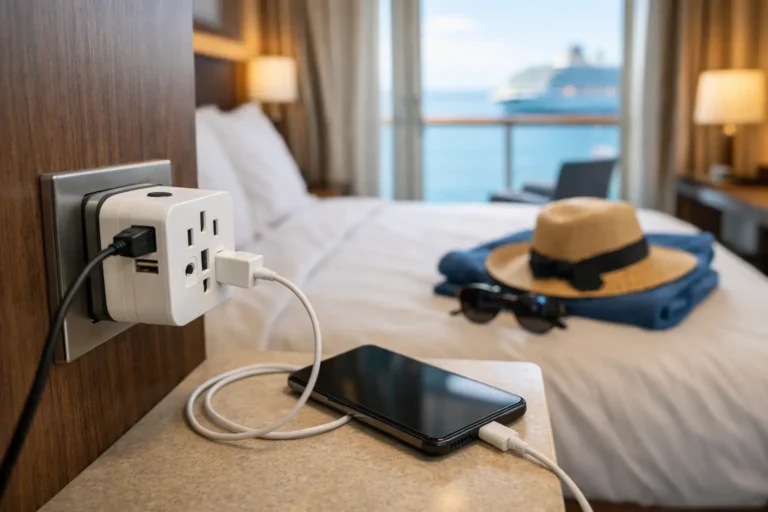
Cruise cabins rarely feel generous when it comes to keeping cables tidy. Between phones, smartwatches, tablets, e-readers and travel adaptors, it does not take much for one dressing table area to become cluttered. A compact tech organiser keeps cables in one place and helps prevent the familiar last-day panic of checking sockets and bedside tables for forgotten chargers.
Choose one with a slim profile and elastic loops or mesh pockets rather than a bulky gadget case. If you are cruising internationally, leave room for your plug adaptors too. This is particularly useful on fly-cruise itineraries, where you may need different plug types before and after boarding depending on your route.
Hanging toiletry organisers for small bathrooms
Cruise bathroom storage can be limited, particularly on older ships and smaller cabins. A hanging toiletry organiser can help, but only if it is chosen carefully. Very large ones designed for long land tours can be awkward in a cruise bathroom, where hook space may be limited.
A medium-sized hanging bag with a sturdy hook and a few compartments usually works best. It should hold the essentials without becoming too heavy to hang properly. Leak-resistant sections are worth having, especially for sun cream, aftersun and liquid toiletries. If you prefer unpacking once and leaving things in place for the whole cruise, this type of organiser can make your bathroom routine much simpler.
Day bag organisers for port days
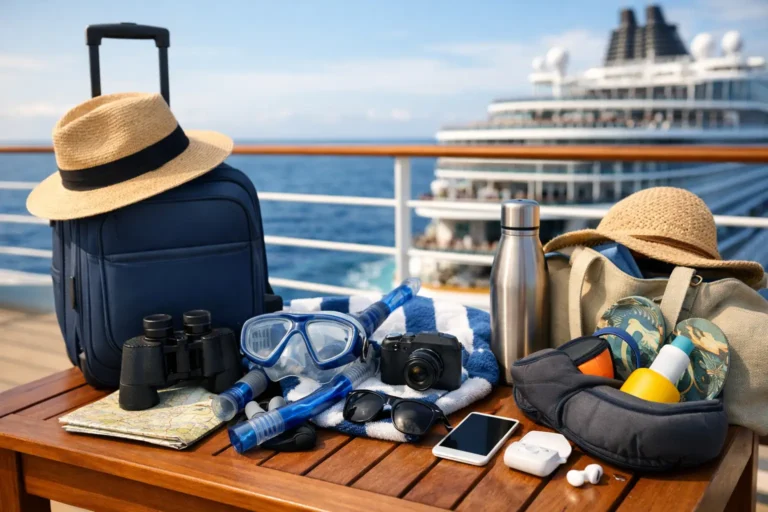
On sea days, organisation is mostly about the cabin. In port, it shifts to your day bag. A small bag organiser insert can be surprisingly helpful if you carry sunscreen, sunglasses, medication, a reusable water bottle, your cruise card and excursion tickets. Rather than everything sinking to the bottom of a tote or backpack, you keep the essentials visible and easy to reach.
This is particularly useful on river cruises and port-intensive itineraries, where you may be on and off the ship regularly. A lightweight insert with a few pockets is usually enough. Anything too rigid can make a bag less comfortable to carry.
How to choose the right organisers for your cruise style
The right setup depends on how you travel. A seven-night no-fly cruise from Southampton calls for a slightly different approach from a Mediterranean fly-cruise with hotel stays at either end. If you are driving to port and have a little more luggage flexibility, you may prioritise cabin tidiness and outfit organisation. If you are flying with stricter baggage limits, every organiser needs to justify the space it takes up.
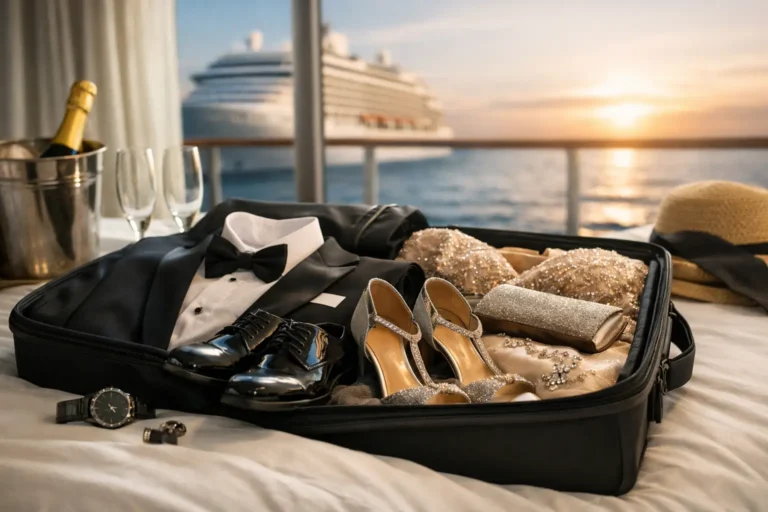
Cruise line style matters too. If you expect formal nights or multiple evening dress codes, clothing organisers become more valuable because they help protect and separate smarter items. If your cruise is more casual, you may get more benefit from a practical toiletries setup and a reliable document wallet.
Cabin type can also influence what is worth packing. In a suite, you may have enough storage that extra cabin organisers feel unnecessary. In an inside cabin or on a smaller ship, they can make the space feel easier to live in. It depends not only on the ship, but on your own habits. Some travellers are happy living out of a suitcase. Others feel more settled when everything has a place from day one.
What not to overpack
Not every so-called organiser is useful on a cruise. Over-door organisers are often recommended, but they are not always ideal. Some cabin doors are heavier or differently fitted than expected, and bulky organisers can become awkward if they interfere with the door or simply make the cabin feel busier.
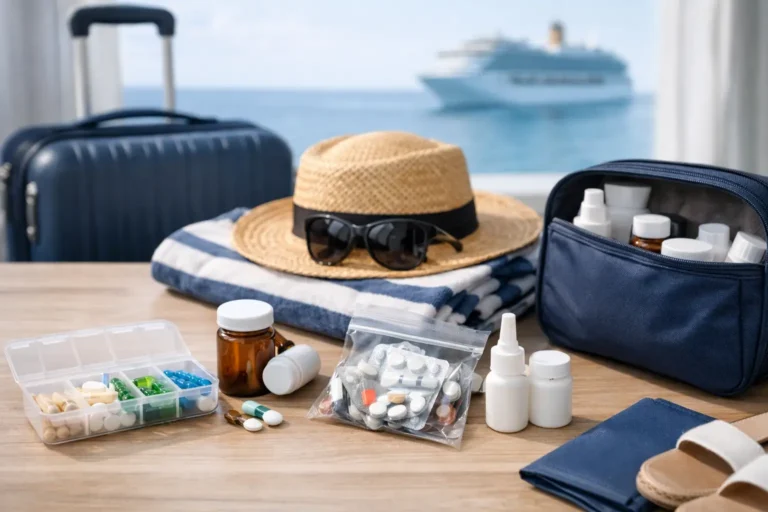
Large medicine organisers can also be more than most travellers need unless you are managing multiple prescriptions. A small pouch or clearly labelled compartment is often enough. The same applies to oversized jewellery rolls, shoe organisers and hard-shell travel cases. If the organiser itself is difficult to store, it is probably not helping.
A better approach is to focus on problem-solving. If your main issue is keeping documents together, solve that properly. If your bathroom always becomes cluttered, address that. The best system is the one that removes friction from your own trip, not the one with the most compartments.
A simple cruise organiser setup that works for most people
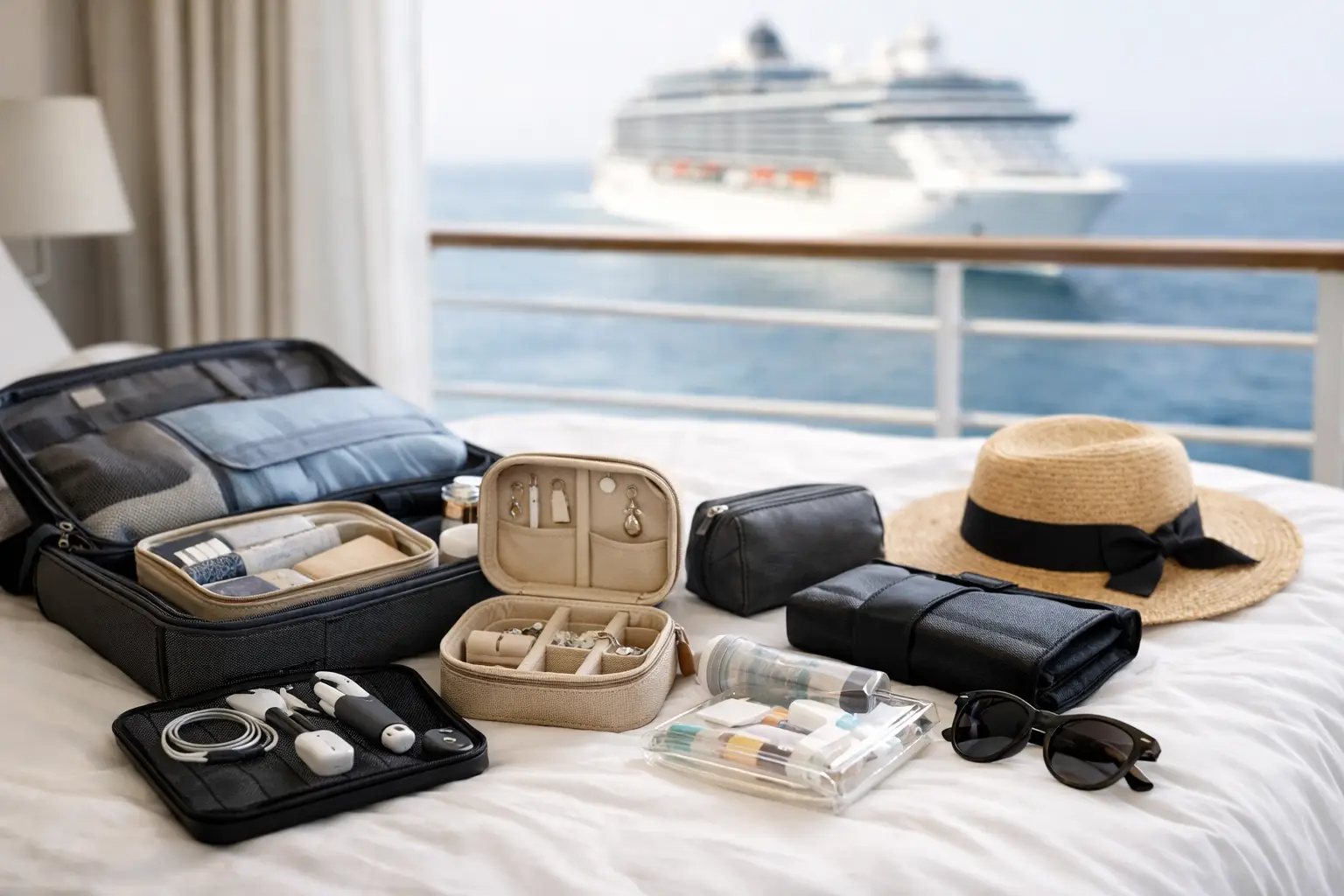
For most cruise travellers, a balanced setup includes four essentials: a document organiser, a few packing cubes, a slim tech pouch and a medium toiletry organiser. That combination covers the main pressure points without adding too much bulk.
If you are a particularly organised packer, you can refine it further with a small day bag insert or a separate laundry pouch. If you prefer to keep things simple, even just starting with packing cubes and a proper document wallet can noticeably improve the journey. At The Essential Cruise Shop, this is often the sweet spot – practical items that support the way cruise holidays actually work, rather than gimmicks that sound clever but rarely leave the cupboard.
The real test is this: when you arrive at your cabin, do your organisers help you settle in quickly, or do they create another layer of unpacking? The best ones quietly make the trip easier. And that is exactly what good cruise preparation should do – spend less time worrying about the details, and more time enjoying the holiday ahead.
Frequently Asked Questions
Additional Resources

The Essential Cruise & Travel Shop

Disclaimer
The Essential Cruise Shop Blog provides this guide for informational purposes and does not act as a travel agency or professional travel adviser. The information contained in this guide is for general guidance only. While we do our best to ensure the information is up-to-date and correct, we make no representations or warranties of any kind about its completeness or accuracy. Airline baggage restrictions, cruise cabin storage dimensions, luggage regulations, and organiser product specifications are subject to change without notice. We strongly recommend that you verify all details directly with your airline, cruise operator, or equipment retailer before making any purchases, travel decisions or financial commitments. We cannot be held liable for any financial loss due to the reader's failure to follow the above advice.
Affiliate Disclosure
Many of the links are affiliate links, The Essential Cruise Shop Blog may receive a commission from qualifying clicks, orders or bookings. This income helps support our efforts to provide and improve our site and turn it into a one stop resource for travellers with a bias towards cruising.