Can You Bring an Iron Onboard a Cruise Ship?
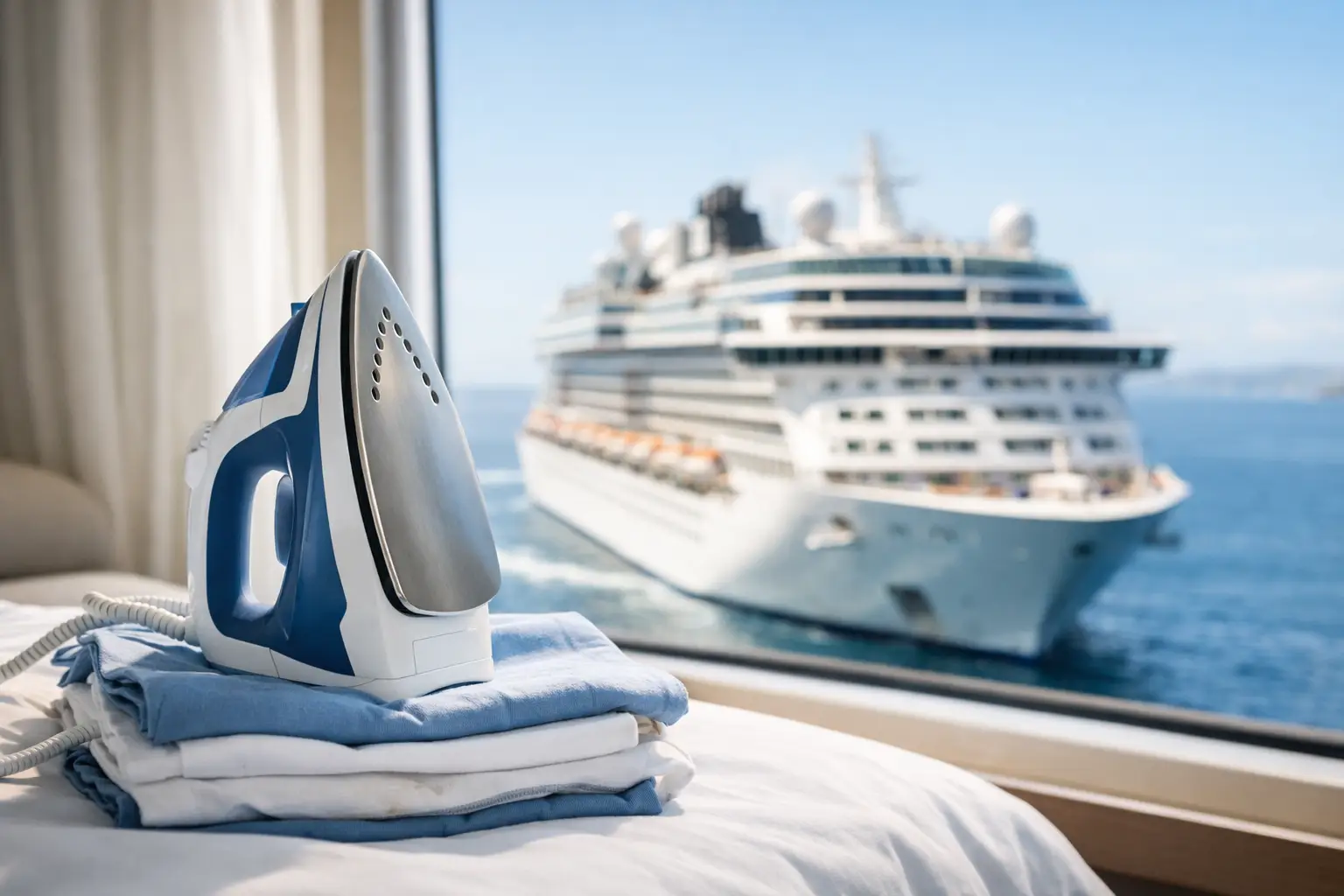
Your formal-night shirt has arrived from the suitcase looking as though it spent the flight at the bottom of it – so can you bring an iron onboard a cruise ship to put things right? In almost all cases, the answer is no. Personal irons are generally prohibited on cruise ships because they present a fire risk in cabins.
This catches out many first-time cruisers, particularly those used to taking a travel iron on city breaks. The good news is that a little planning, plus the ship’s laundry options, can keep your cruise wardrobe looking smart without creating problems at embarkation.
Can You Bring an Iron Onboard? The Cruise Ship Rule
Cruise lines typically list clothes irons among their restricted or prohibited items. The reason is straightforward: cabins contain soft furnishings, compact electrical systems and many potential ignition sources in a relatively confined space. A forgotten hot iron, damaged lead or overloaded socket is a risk the ship cannot sensibly take.
Security staff may spot an iron during the boarding screening process. Depending on the cruise line, it may be removed and stored until the end of your sailing, or returned to you when you disembark. Do not rely on a small or folding model escaping notice. Travel irons, cordless irons and plug-in pressing tools are usually treated in exactly the same way as a full-size iron.
The policy also applies if you are travelling from a UK airport. An airline may permit an iron in checked luggage, but that does not mean it is acceptable to take onto the ship. Cruise line rules, rather than airport security rules, are the ones that matter once you embark.
Why Cruise Lines Take Irons So Seriously
A cruise ship is built with extensive fire prevention and response systems, but preventing a fire is always safer than dealing with one at sea. A cabin iron can be left switched on, placed on a bed or chair, or used with an unsuitable adaptor. Even a minor incident can affect neighbouring cabins and trigger a wider safety response.
This is also why many cruise lines restrict other heat-producing or high-wattage appliances. Items such as hot plates, kettles, toaster appliances and some garment steamers may be prohibited too. A garment steamer can sound like a sensible alternative, but do not assume it is allowed. Policies differ, and some lines ban steamers for the same safety reasons as irons.
Check the prohibited-items list for your specific cruise line shortly before packing. Rules can change, and river ships, expedition vessels and ocean ships do not always operate identically. If the wording is unclear, ask the cruise line directly rather than risking a confiscated item.
How to Keep Clothes Smart Without an Iron
The easiest solution begins before you leave home. Choose fabrics that travel well, pack with fewer hard folds and give garments time to relax once you reach your cabin. Creases often soften naturally after hanging a shirt, dress or pair of trousers in the bathroom while you shower. The humidity can help, although it will not produce a crisp pressed finish.
Rolling casual clothes can reduce deep fold lines, while more structured garments are often better folded carefully with tissue paper between layers. Keep jackets, dinner shirts and delicate dresses near the top of the case, or use garment bags where practical. For a fly-cruise, remember that everything will be handled more than once – at home, at the airport, in transfer vehicles and at the terminal – so a careful packing method is worthwhile.
For a compact cruise wardrobe, favour:
- jersey, ponte, knit and technical fabrics that are naturally crease-resistant;
- separates that can be worn in more than one outfit, reducing the amount you pack;
- a lightweight jacket or wrap that smartens an outfit without needing sharp pleats;
- garments with simple shapes rather than heavily pleated linen or stiff cotton.
Linen is wonderfully comfortable in warm weather, but it creases quickly and visibly. That does not mean you should avoid it altogether. It simply helps to accept its relaxed appearance, particularly for daytime wear, rather than expecting it to look freshly pressed all day.
Use the Ship’s Laundry and Pressing Services
Most mainstream ocean cruise lines offer paid laundry, dry-cleaning and pressing services. The precise menu varies, but pressing a shirt, dress or eveningwear item is often available and may be the most convenient answer before a formal evening, celebration dinner or special photograph.
Place the item in the laundry bag supplied in your cabin, complete the form and follow the collection instructions. Standard turnaround may be one or two days, while some ships provide an express service for an additional charge. Prices can be higher than at home, so it is sensible to reserve this option for the pieces that genuinely need a professional finish.
Some ships also have self-service launderettes, particularly on selected cruise lines and longer itineraries. These are useful for washing holiday clothes, but they do not necessarily provide an iron for passenger use. Where ironing facilities are available, they are normally located in a supervised or designated laundry area rather than in cabins. Never assume this will be the case, especially if looking forward to a particular ship or cruise line.
River cruises can be different again. Cabins are often smaller, and onboard laundry arrangements may be limited or offered only as a chargeable service. If smart eveningwear is part of your river cruise plan, pack low-crease fabrics and check the ship’s guest information in advance.
Are Wrinkle-Release Sprays and Steamers Allowed?
Wrinkle-release spray can be a practical packing aid, but assess it as you would any liquid product. A small bottle belongs in your checked suitcase for a fly-cruise unless it meets hand-luggage liquid rules. Keep the cap secure in a leakproof bag, and test it on an inconspicuous part of a garment before your holiday. Some fabrics can mark or react poorly.
Travel steamers are more complicated. They are not an automatic substitute for an iron, because many cruise lines prohibit them. Even where a steamer is permitted, it needs careful use around cabin smoke detectors and confined spaces. Steam can drift upwards, and no guest wants to cause an avoidable call to ship security while getting ready for dinner.
A hand-held crease-release tool that does not generate heat may be acceptable, but it is unlikely to transform deeply creased clothing. For most guests, it is more useful to pack well, hang items promptly and use professional pressing for the occasional important outfit.
Dress Codes Matter More Than Perfect Creases
Cruise dress codes vary from relaxed resort casual to smart casual, elegant casual and formal or gala evenings. The standard expected on board is usually neat and appropriate, not a perfectly pressed business wardrobe. A small crease in a dinner shirt is unlikely to spoil your evening, especially after a few minutes of wear.
If you are concerned about formal nights, take one outfit that travels particularly well and can be relied on without pressing. A dark dress, a tailored knit, a crease-resistant jumpsuit, or a jacket and trousers in a forgiving fabric can remove much of the stress. Returning cruisers often find that a smaller, better-chosen wardrobe works more comfortably than packing several outfits for every possible occasion.
A Better Way to Pack for a Crease-Free Cruise
As you unpack, hang your evening clothes first, then place shoes and heavier items away from delicate fabrics. If an item needs attention, deal with it early in the voyage rather than discovering the problem an hour before dinner. Laundry services can become busier around formal evenings, sea days and the final nights of a cruise.
Bringing an iron onboard is rarely worth the risk or the luggage space. A few fabric choices, thoughtful packing and a realistic view of what needs pressing will leave you free to enjoy the ship, the ports and the occasion – rather than spending embarkation day worrying about a confiscated appliance.