Benoa Cruise Port Guide: Visiting Bali
Introduction
Arriving at Bali Benoa Cruise Port introduces travellers to an island rich in culture, natural beauty, and unique maritime traditions. Stepping off your ship into South East Asia can feel slightly overwhelming, especially when navigating port logistics and regional transport options for the first time.
This practical guide breaks down everything you need to know for a smooth visit, from terminal facilities and local transport options to shore excursion ideas and essential cultural etiquette. With measured preparation, your day ashore can be entirely unhurried and stress-free.
Quick Overview for Cruise Passengers
Situated in South Denpasar, the maritime facility is fully equipped to host large ocean vessels for port-of-call visits, as well as handle passenger embarkation and disembarkation. The location serves as the island’s central maritime gateway, welcoming a steady stream of international itineraries throughout the year.
Traffic and passenger volumes have grown significantly in recent years.
Ship Docking and Terminal Facilities
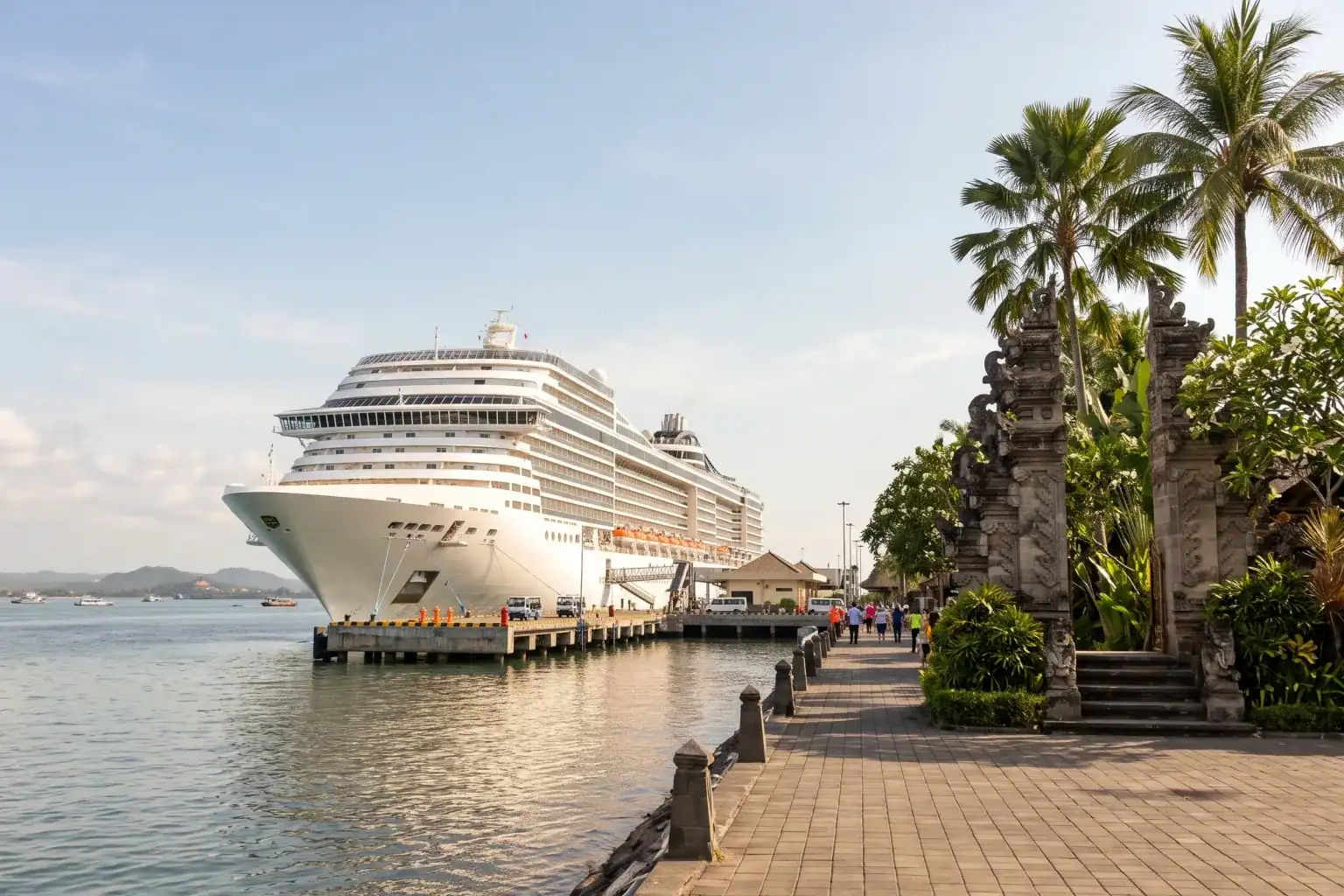
Ships access the berth area via a 2-mile-long shipping channel. The facility features two main berths, with the East Berth functioning as the primary location for cruise ships. The eastern berth itself was expanded from 350 metres to 500 metres, enabling two large cruise ships to dock simultaneously, as demonstrated when the port successfully accommodated the Anthem of the Seas on February 28, 2025.
Inside the passenger terminal building, travellers are greeted by Balinese cultural and art displays, including traditional sculptures, paintings, woodcarvings, and intricate batik artwork.
When an itinerary involves a tender call where the ship anchors offshore, or when planning visits to multiple distant sites, booking an organised shore excursion is advisable because tender queues can reduce available time ashore.
Airport and Regional Transport Connections
Denpasar airport sits approximately 12 kilometres (7.5 miles) from the cruise terminal, offering convenient connections for fly-cruise passengers. Please note that traffic, weather, and local road conditions can alter travel times significantly, so building a sensible time cushion into your plans is strongly advised.
For travellers transferring directly on disembarkation day, specific shore excursion options are designed to streamline your departure, such as an Ubud Art & Shopping tour that includes a direct airport transfer at the end of the excursion.
Taxis, Ride-Hailing and Private Drivers
Navigating local roads requires careful planning. Official meter-based taxi companies operating on the island include Bluebird. If you choose to book app-based transport, note that ride-hailing services like Grab and Gojek face pickup restrictions around ports and established tourism zones, making them far easier to use for return journeys back to the ship rather than for initial pickups outside the passenger terminal.
Hiring a private car with a dedicated driver is often recommended due to poor local traffic discipline and high rates of motorbike accidents. When arranging an independent full-day driver in advance, ensure you provide your ship name, precise cruise terminal location, and required return time.
There is no dependable public sightseeing shuttle service operating directly from the harbour. Cruise passengers should check their daily programme or verify with ship staff on embarkation day whether any dedicated cruise-line shuttles are being offered into nearby commercial centres.
- Always confirm whether your taxi fare is metered or pre-agreed prior to setting off.

Top Shore Excursions and Key Attractions
Featured shore excursions departing from the port include trips to the scenic Munduk Highlands, the spectacular cliffs of Uluwatu Tall Cliff, and combination tours featuring the Royal Temple, Monkey Forest, and Tanah Lot Pagoda. Uluwatu Temple itself is an iconic oceanside Hindu shrine situated just a short drive from the pier, while Pura Tanah Lot sits dramatically atop a rock formation off the island’s western coast.
For cultural immersion, the village of Ubud serves as the artistic centre of the region, renowned for vibrant art markets and boutique shops selling traditional crafts, hand-woven textiles, and silver jewellery. Nearer to the coastal zone, visitors can explore the Pasifika Museum, which displays artwork from renowned local artists, notable European immigrants, and historical artefacts from the South Pacific.
Nearby spiritual and natural sights include the Coa Eng Bio Chinese Buddhist temple, where visitors can view a dragon boat sculpture and an intricately decorated pagoda. Nature lovers can also enjoy paddling through the lush greenery of the quiet and secluded Mangrove Forest located near the harbour.
Beach enthusiasts heading to Pantai Geger in Nusa Dua will find classic white sand beaches and some of the warmest ocean water temperatures in the region. If visiting Water Blow on Peninsula Island in Nusa Dua, always observe safety barriers and posted closures, as powerful waves can make the rocky walkways wet and slippery.
For active water sports such as scuba diving excursions, travellers should strictly verify operator credentials, check insurance coverage, and ensure emergency oxygen equipment is present on board.
Independent Exploration and Cultural Etiquette
Independent walking directly outside the port area is somewhat limited, as the immediate vicinity lacks a central shopping area. Cruise passengers seeking local souvenirs such as Batik fabric or Balinese incense can find them at terminal stalls, local art markets, or dedicated souvenir shops.
When exploring independently, keep legal mandates in mind. Visitors to Indonesia are legally required to carry their original passport or a valid stay permit with them at all times. Foreign drivers cannot use a standard UK driving licence alone to operate vehicles in Indonesia and must possess an International Driving Permit (IDP). In the event of a road traffic accident, drivers must stop and report the incident to the police, though they may leave the scene to report directly at a local police station if safety threats or emergencies arise.
Indonesia strictly enforces zero-tolerance laws regarding illegal drugs, including cannabis and CBD products, which carry harsh prison sentences or the death penalty. Furthermore, because Bali is predominantly Hindu, travellers visiting during Ramadan are not subject to daytime public restrictions on eating, drinking, smoking, chewing gum, playing music, or swearing.
During the observance of the Balinese New Year (Nyepi), local customs mandate remaining indoors and silent for 24 hours, during which Ngurah Rai International Airport is completely closed for the full day. For modest dress requirements at sacred temples, travellers should verify guidelines with their tour lead or check official destination notices prior to departure.
Food, Drink and Local Dining Options
Local Balinese cuisine reflects rich Chinese and Indian influences, using aromatic spices on fresh seafood, rice, vegetables, and grilled meats. Unlike the rest of predominantly Muslim Indonesia, Hindu Balinese culture incorporates pork into its traditional cooking, with Babi Guling (whole roasted pig) standing out as a celebrated classic dish. Beef is excluded from local recipes due to religious traditions.
Vegetarian diners are well catered for across the island, with popular choices including local tofu dishes and sayur mesanten, which consists of mixed vegetables braised in fragrant coconut milk. For general health safety, avoid drinking untreated tap water ashore and opt for sealed bottled water.
A variety of notable dining spots are located within easy reach of the harbour zone in Tanjung Benoa and Nusa Dua. Bumbu Bali in Tanjung Benoa offers authentic local cuisine in a traditional village home setting, where the chef-owner conducts cooking classes three times a week. Nearby, Bali Luna provides pool-front dining with views of a lush garden and golden sandy beach, operating daily from 11:00 AM to 6:00 PM.
For international flavours, RIN at Conrad Bali in Tanjung Benoa serves fine Japanese cuisine, including fresh sashimi and sushi items. Ru Yi at Awarta Nusa Dua Luxury Villas & Spa offers Cantonese-style Chinese fine dining with options like sea cucumber braised in special sauce.
Additional options include Tamarind Kitchen & Lounge at Nusa Dua Beach Hotel & Spa, featuring a bamboo pavilion serving fresh grilled fish and regional dishes with upper-level ocean views. Prego at The Westin Resort Nusa Dua serves classic Italian dishes including wood-fired pizza and custom pasta right alongside a garden terrace. For a memorable evening, the Samabe Cave Dinner at Samabe Bali Suites & Villas in southern Nusa Dua offers a 5-course seafood and BBQ dinner inside a natural beach cave lit by candles and lanterns.

Currency, Safety and Practical Travel Tips
Cruise passengers should carry local currency ashore, as Indonesian rupiah is required for local transport, minor entry fees, and small market purchases. To make mental calculations easier when managing large note denominations, travellers can estimate each 10,000 Indonesian Rupiah note as roughly equivalent to 50p.
When exchanging money, ensure you use officially licensed exchange counters that clearly display the Bank of Indonesia logo along with a verifiable QR code to avoid fraudulent transactions.
Personal safety requires sensible awareness in popular spots. Street crimes such as bag-snatching, pickpocketing, and drink spiking occur frequently in busy tourist districts. Additionally, cases of dangerous methanol poisoning have been reported in tourist areas from alcoholic beverages sold in licensed bars, shops, and hotels, so stick to reputable venues and sealed drinks.
Sun protection is essential in this tropical climate. Carry high-factor sunscreen, a wide-brimmed hat, and adequate hydration during your time ashore.
Pre- and Post-Cruise Accommodation
For travellers starting or ending their fly-cruise itinerary at the port, the area surrounding Denpasar airport features numerous hotel options suitable for pre- or post-cruise stays. Staying close to the airport or southern resort districts minimises transfer complications on embarkation day.
When planning your return trip to the terminal at the end of a port day, build in generous additional buffer time beyond expected traffic delays. This extra time accounts for terminal security checks, port entry procedures, and any tendering operations required to reach your ship before all-aboard time.
Summary and Ideal Visitor Profile
Visiting this vibrant destination is ideal for travellers who appreciate rich spiritual culture, artistic heritage, and tropical landscapes. Because unpredictable driving conditions make long journeys challenging, cruise visitors are strongly advised to focus on attractions relatively close to the port rather than trying to reach distant inland sites that appear close on a map.
Passengers with limited mobility should check specific vessel berthing details and tour arrangements with their cruise line, as terminal transfers and local transport may involve steps or unpaved paths. By keeping plans measured and allowing extra buffer time for all transit, you can look forward to a rewarding and memorable day ashore.
Frequently Asked Questions
Additional Resources

The Essential Cruise & Travel Shop

Disclaimer
The Essential Cruise Shop Blog provides this guide for informational purposes and does not act as a travel agency or relevant professional adviser. The information contained in this guide is for general guidance only. While we do our best to ensure the information is up-to-date and correct, we make no representations or warranties of any kind about its completeness or accuracy. Local transport options, ride-hailing pickup restrictions, taxi fare structures, port shuttle availability, transfer travel times, passport and stay permit laws, driving licence requirements, operator safety credentials, and cultural or religious observance closures (such as Nyepi or Ramadan) are subject to change without notice. We strongly recommend that you verify all details directly with your cruise line, local port authorities, official transport providers, or relevant government bodies before making any bookings, decisions, or financial commitments. We cannot be held liable for any financial loss due to the reader's failure to follow the above advice.
Affiliate Disclosure
Many of the links are affiliate links, The Essential Cruise Shop Blog may receive a commission from qualifying clicks, orders or bookings. This income helps support our efforts to provide and improve our site and turn it into a one stop resource for travellers with a bias towards cruising.