Jeju Island Cruise Port Guide: Top Excursions & Sightseeing
Introduction
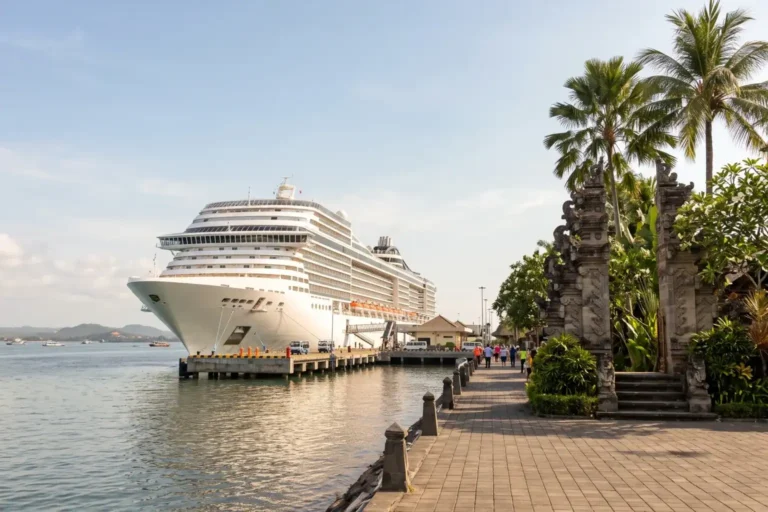
The Jeju Island Cruise Port Guide helps travellers navigate one of South Korea’s most versatile ports of call with confidence and ease. Arriving by ocean vessel presents an extraordinary landscape shaped by volcanic geology, coastal beauty, and rich regional heritage. Whether you are stepping off a fly-cruise itinerary or exploring East Asia on a longer voyage, understanding the island layout before disembarkation ensures a smooth experience ashore.
Geographically, the territory is split into two primary areas: Jeju City in the north and Seogwipo City in the south. The island operates two dedicated cruise passenger facilities, meaning your exact berth depends on the vessel size and schedule. Having clear logistical guidance ensures you can plan your time ashore efficiently, whether you prefer structured excursions or independent exploration.
Quick Overview for Cruise Passengers
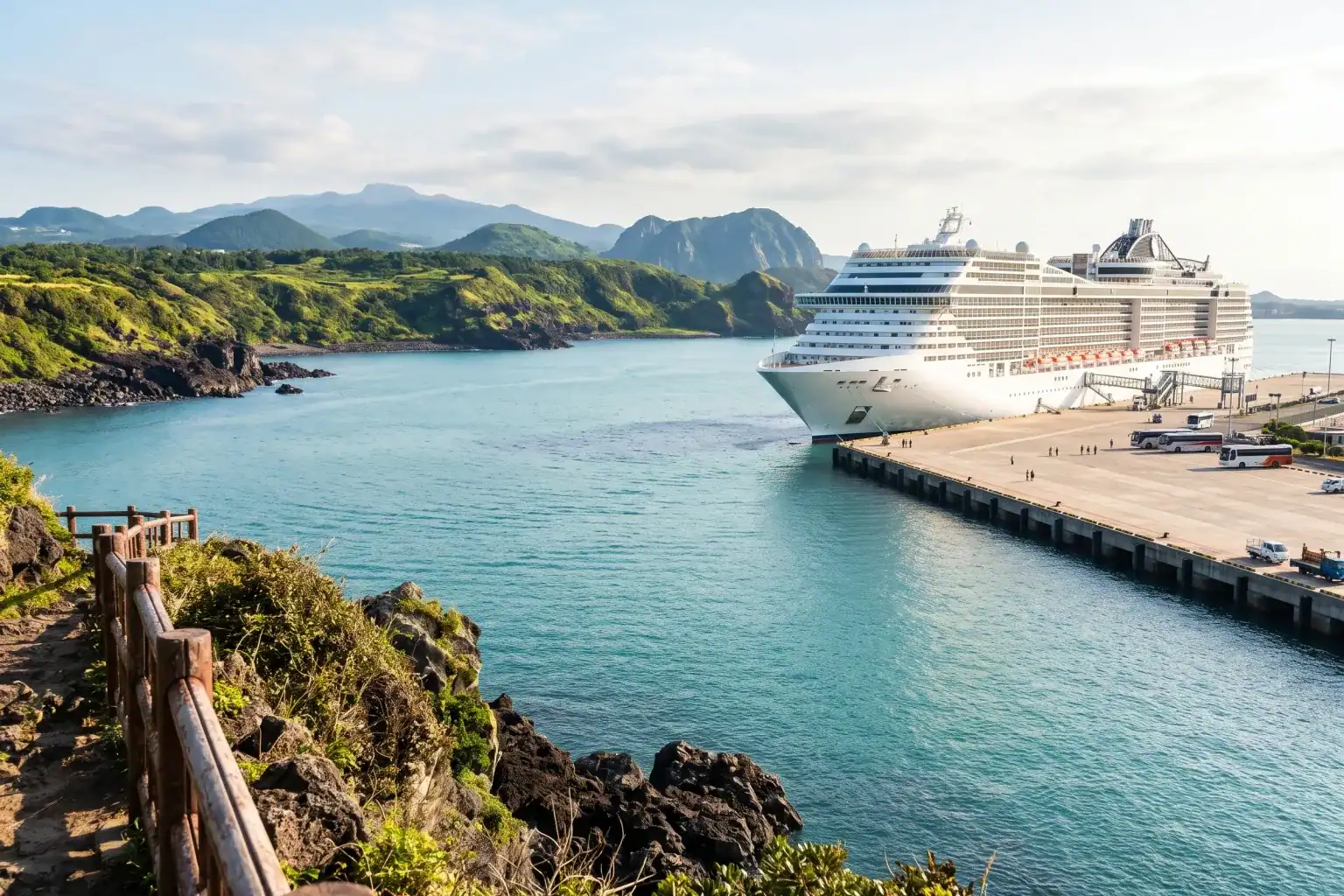
Two separate maritime facilities accommodate arriving vessels: Jeju Port situated in the north near the main urban centre, and Seogwipo Gangjeong Cruise Terminal positioned in the south near Jungmun.
Navigating between key travel hubs is straightforward once ashore. The Jeju City Tour Bus circular route connects the major transport nodes across the region, including the Cruise Passenger Terminal, Jeju International Airport, Jeju Coastal Ferry Terminal, and Jeju Bus Terminal. For specific details regarding local currency exchange rates or official language guides not provided in advance, travellers should consult their ship’s daily programme or check with the port authority upon arrival.
Where Do Cruise Ships Dock and What Facilities Exist?
Ocean liners under roughly 140,000 tons typically berth at the northern port, while larger modern cruise ships are assigned to Seogwipo Gangjeong Cruise Terminal in the south. Both facilities officially operate from around 09:00 to 18:00 seven days a week, and all arriving passengers must complete standard customs, immigration, and quarantine checkpoints prior to exiting into the main concourse.
Terminal amenities provide convenience and occasional local entertainment for visitors. The northern terminal occasionally hosts short cultural performances for arriving guests, offering an opportunity to try on a traditional Korean hanbok. Connectivity is available across both locations, with over 2,600 free public Wi-Fi hotspots distributed across the island and complimentary Wi-Fi provided inside terminal spaces and commercial venues.
Transfer times to key locations vary based on your point of arrival. When departing from the northern dock, taxi journeys to Jeju International Airport are usually around 20 minutes. Conversely, driving between the southern terminal at Gangjeong and the airport takes at least 60 minutes; please note that local traffic, weather conditions, and roadwork can alter these transfer times throughout the day.
How Do You Get Around from the Port?
Outside the northern dock exit, local taxis and the Jeju City Tour Bus serve as the primary transport options for passengers heading into town. The tour bus operates a single day pass ticket model covering a circular route of 22 key locations, travelling along oceanfront coastal roads and stopping at traditional markets. Additionally, complimentary shuttle services are occasionally organised by the local tourism body, offering connections from the northern port to the Gwandeokjeong market area roughly every 20 minutes, as well as transfers from Gangjeong into downtown Seogwipo.
Local public buses run on a completely cashless system, accepting transportation cards, mobile QR payments, and international contactless Visa cards for convenient fare payment. However, standard navigation tools require attention: Google Maps does not function for driving or walking turn-by-turn navigation in South Korea due to strict government mapping regulations, though public transport directions are available. Passengers exploring independently should download Naver Map or KakaoMap to their mobile devices before stepping ashore.
Taxis provide reliable transport, operating legally on metred rates. Standard taxis feature silver, white, or orange exteriors, whereas premium deluxe vehicles are painted black. Most licensed taxis accept physical international credit cards alongside cash and T-money cards, though visitors should strictly avoid unlicensed drivers soliciting private tours outside arrival halls. Ride-hailing is facilitated by Kakao T, South Korea’s main app, which operates in English, though foreign cards cannot be linked for in-app payment. Kakao T has strong coverage in urban centres and allows groups of four or more to request larger passenger vans, though driver availability drops significantly near remote coastal villages or rural trailheads.
What Are the Top Excursions and UNESCO Sites?
Natural heritage forms the centrepiece of local excursions. The volcanic island and lava tubes were designated South Korea’s first UNESCO World Natural Heritage Site in 2007, alongside receiving UNESCO Global Geopark certification in October 2010. Among these features is Seongsan Ilchulbong, a crown-shaped volcanic crater that visitors can reach via a hike taking about 40 minutes with regular rest stops. On the coast, Yongduam Rock presents a striking volcanic rock structure shaped like a dragon’s head rising from the ocean.
At the centre of the island, Hallasan reaches 1,950 metres above sea level as South Korea’s tallest peak. Hallasan National Park features seven official hiking trails, five of which—Eorimok, Yeongsil, Donnaeko, Eoseungsaengak, and Seokguram—can be accessed without prior booking. However, advance reservations are strictly mandatory for those attempting the summit, with daily limits set under normal operations at 1,000 hikers for the Seongpanak trail and 500 for the Gwaneumsa trail. To protect the landscape, disposable lunch boxes are banned in the park, though options like gimbap and hamburgers are permitted.
Smaller volcanic formations, known locally as oreums, offer alternate scenic routes. Jigeuri Oreum comprises two volcanic cones: Keunjigeuri, which features a horseshoe-shaped crater opening to the southwest, and Jokeunjigeuri, whose southeast-facing crater creates a crescent moon profile. On the eastern shore, Jimibong Volcanic Cone—named ‘Jimi’ or ‘Ttangkkeut’ as it represents the island’s eastern tail—retains historic beacon fire station ruins at its summit that once communicated with the Wangga and Seongsan stations, with Hado-ri Changheung-dong Fish Farm resting at its northwestern foot.
Structured tours and boat trips provide alternative ways to experience the coast. Yacht Tour Shangri-La operates year-round from sunrise to sunset, offering coastal trips to view Daepo Jusangjeolli Cliff, enjoy onboard fishing, and relax in private bedrooms equipped with wine and tea, subject to advance booking. For inland sites like Manjanggul Lava Tube, damp conditions mean bringing a waterproof phone pouch is sensible for taking photographs. When arranging independent day trips to remote areas, cruise travellers should exercise caution relying solely on point-to-point ride-hailing apps, as delayed returns from secluded spots can risk missing the ship’s scheduled departure time.
Can You Explore the Area Near the Port on Foot?
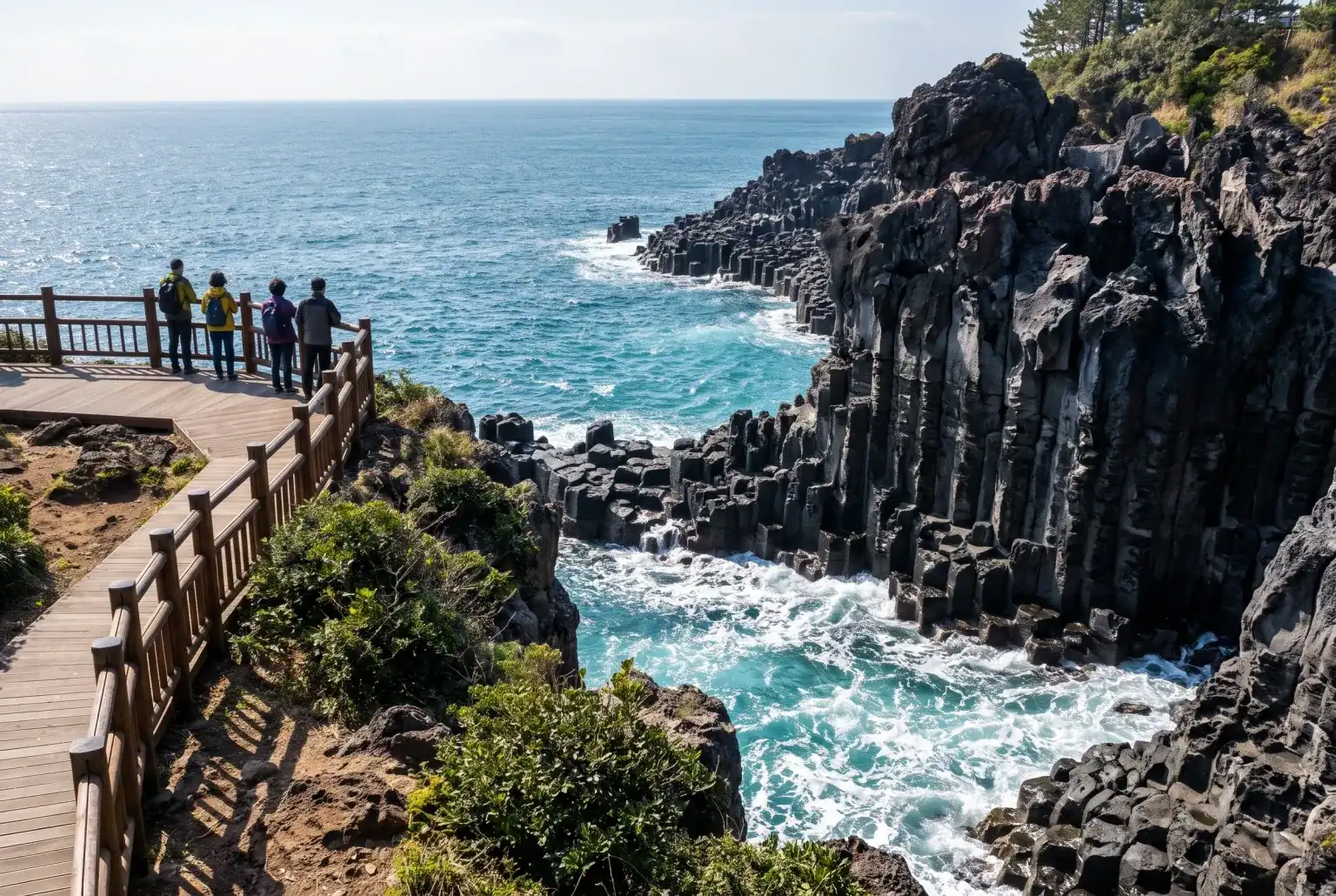
Passengers docking at Seogwipo Gangjeong Cruise Terminal will find a coastal walking path right by the berth, though broader leisure and town options require local transportation. Jungmun Tourist Complex sits a short drive from the southern terminal, offering convenient sightseeing without extensive travel. Nearby walking opportunities include the Gangjeong Haeoreum Sunset Path, which traces the coast right next to the terminal gates, as well as Yakcheonsa Temple, a magnificent Buddhist temple situated just a short drive away.
For those berthed at the northern harbour, several urban sights lie within walking distance or brief transfer links. Yongduam Rock is located near the northern terminal, where local female divers (haenyeo) set up along the coast to serve fresh raw seafood such as abalone, sea cucumber, and octopus. In the heart of the city, Sanjicheon Stream and Tapdong Square can easily be explored together on foot, offering pleasant open spaces right next to the shopping district.
Walking enthusiasts can also connect to regional trail systems directly from urban stops. Dongmun Market links directly with Routes 17 and 18 of the Jeju Olle Trail, serving as a convenient resting point during self-guided city walking tours.
What Local Dishes and Dining Experiences Should You Try?
Local cuisine relies on fresh regional ingredients and traditional preparations. Black Pork Street, situated a short walk from Dongmun Market, is lined with dedicated eateries serving barbecue lunch sets featuring native black pork. Alternatively, Seomun Market in Jeju City offers a traditional sangcharim dining experience, where visitors purchase black pork or beef from butcher stalls and take the meat to nearby restaurants to be grilled at their table. Local street food skewers known as heuk dwaeji ggochi gui also highlight this famous regional pork.
Seafood highlights are abundant across market venues and excursion options. Opened in 1945 in old downtown Jeju City, Dongmun Market is the oldest local market on the island and features a stand-alone fish market selling fresh hairtail, tile fish, abalone, and raw fish (hoe) that can be eaten on site or taken to nearby dining spots. Guests joining coastal boat excursions with Yacht Tour Shangri-La can also sample fresh seafood by eating their catch alongside pre-prepared meals onboard.
Traditional snacks and regional specialities are widely available at street stalls. Native dishes include bingddeok, a savoury thin buckwheat pancake filled with chopped radish or red beans, and modakchigi, a combined platter serving gimbap, tteokbokki, kimchi jeon, twigim, somyeon, sundae, and mandu together. Sweet options include hoddeok—flat fried dough stuffed with sugar, cinnamon, or nuts—and pulbbang, sweet pancake dumplings filled with red bean paste and baked in flower or fish moulds. When dining out, take note of local customs: guests sitting in floor-seating areas of traditional eateries must remove their shoes prior to stepping inside.
Where Are the Best Markets and Shopping Venues?
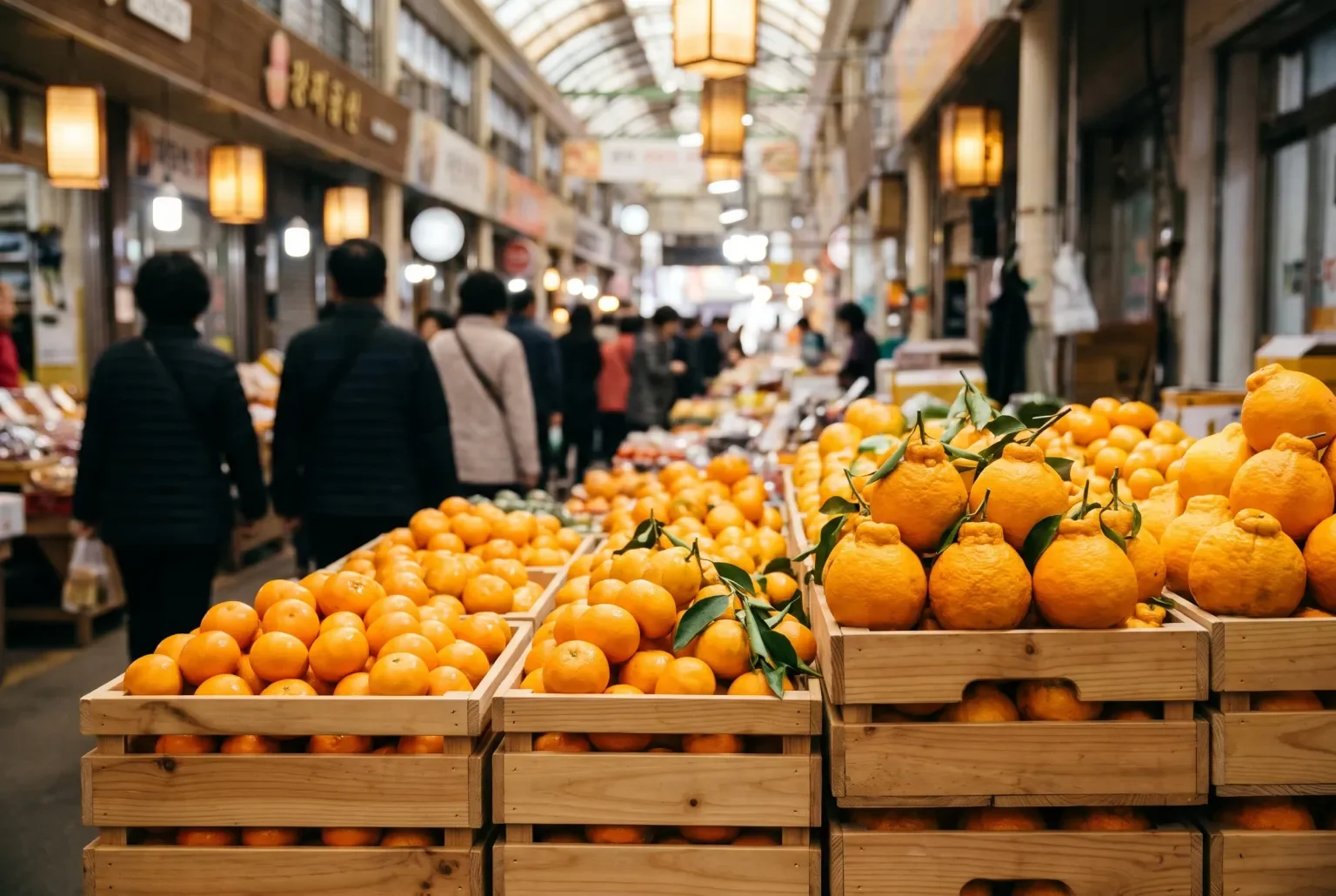
Traditional markets provide vibrant cultural shopping. Dongmun Traditional Market is the island’s largest and oldest permanent market hub, bringing together a street market, night market, seafood market, and general traditional market in one venue. Stalls stock regional agricultural produce such as tangerines, as well as fresh seafood, clothing, souvenirs, and local delicacies. In the evening, its night market lights up with food stalls selling dish options made from local ingredients alongside retail souvenir vendors.
Additional market options exist across both northern and southern districts. Near the southern resort area, Jungmun Five-day Market operates on the 3rd, 8th, 13th, 18th, 23rd, and 28th of each month from 08:00 to 17:00. Originally founded by refugees in the 1950s and officially established in 1965, this market offers parking for approximately 60 cars and features local seafood, homegrown produce, meat, clothes, medicinal herbs, and general merchandise. Other prominent regional shopping spots include Seogwipo Maeil Olle Market and the Jeju City Traditional 5-Day Market.
For modern retail and weather-protected shopping, Jeju Jungang Underground Shopping Mall is located near Dongmun Market. This fully air-conditioned subterranean arcade features extensive selections of K-Beauty cosmetics and contemporary Korean fashion brands, ideal for browsing out of the sun or rain.
Essential Practical Details: Visas, Currency, and Customs
Entry procedures and border regulations require advance preparation. Western citizens from the UK, US, select EU countries, and Australia are currently exempt from the electronic travel authorisation (K-ETA) through December 31, 2026, though passengers without a valid K-ETA must submit an e-Arrival Card prior to disembarking. Once ashore, visitors must respect strict local laws; authorities enforce minor public infractions rigorously, issuing fines of 20,000 to 30,000 Won for tourists caught jaywalking near port and market zones.
Financial logistics are straightforward across most commercial areas. Banking hours on the island generally run on weekdays from 09:00 to 16:00, with branches closed on weekends and public holidays. International credit cards are widely accepted in South Korea, though foreign cardholders cannot link international credit cards for in-app payment on transport apps like Kakao T due to domestic payment gateway restrictions, requiring riders to select the “Pay to driver” option instead. Power outlets throughout the country run on 220V at 60Hz using European-style type F plug sockets.
Weather conditions differ slightly across the regional geography. The southern district around Seogwipo is typically warmer and sunnier than the northern coast. During winter months, snowfall is primarily confined to the summit of Hallasan Mountain, while low-lying urban areas experience very little snow.
Tourist support and emergency resources are well organised for international visitors. The Jeju Tourist Information Centre can be reached by phone at 064-740-6000 or 064-740-6001, or by fax at 064-740-6090, while the physical Jeju Welcome Centre is located at 23 Seondeok-ro in Jeju City. Multilingual translation support is provided through Naver Papago, supporting Thai, Vietnamese, Indonesian, English, Chinese, and Japanese. Tourists can report travel inconveniences by dialing 120 without a prefix, or access official guidance online via the Visit Jeju website. For nationwide assistance, the Korea Tourism Organization operates a 24/7 hotline at 1330 in eight languages, while local police (112), emergency medical and fire services (119), non-emergency reports (182), and disease control (1339) provide complete safety cover.
Who Will Enjoy Visiting This Destination Most?
This destination caters to a broad spectrum of cruise travellers, ranging from avid nature lovers and hikers to food enthusiasts and cultural shoppers. Active visitors will appreciate the dramatic volcanic craters, coastal trails, and expansive geopark landscapes, while those seeking a relaxed day ashore can focus on downtown street markets and local culinary treats.
Passengers with reduced mobility or specific accessibility requirements should plan their transit inside port facilities carefully. When disembarking at Seogwipo Gangjeong Cruise Terminal, travellers should be prepared for a long walk equipped with moving walkways from the ship berth to the main terminal exit gate. For detailed accessibility planning across attractions, the Visit Jeju tourism platform maintains dedicated information resources specifically tailored for disabled tourists visiting the island.
Frequently Asked Questions
Additional Resources

The Essential Cruise & Travel Shop

Disclaimer
The Essential Cruise Shop Blog provides this guide for informational purposes and does not act as a travel agency or professional travel adviser. The information contained in this guide is provided for general guidance only. While we strive to ensure that all details are up to date and correct, we make no representations or warranties of any kind regarding its completeness or accuracy. Port berth assignments between Jeju Port and Seogwipo Gangjeong Cruise Terminal, e-Arrival Card entry procedures, Hallasan summit permit availability, local transport options, navigation app functionality, and venue operating hours are subject to change without notice. We strongly recommend that you verify all practical details directly with your cruise line, relevant port authorities, official bodies such as the Jeju Tourist Information Centre or Visit Jeju, or official service providers before making any bookings, travel decisions, or financial commitments. We cannot be held liable for any financial loss incurred as a result of a failure to follow this advice.
Affiliate Disclosure
Many of the links are affiliate links, The Essential Cruise Shop Blog may receive a commission from qualifying clicks, orders or bookings. This income helps support our efforts to provide and improve our site and turn it into a one stop resource for travellers with a bias towards cruising.