Ocean Cruise Line Comparison Made Simple
Introduction
Choosing a cruise line can feel harder than choosing the itinerary. Two ships may sail the same Mediterranean route in the same month, yet the holiday onboard can be completely different. That is why an ocean cruise line comparison matters so much. It helps you look beyond glossy brochures and focus on what will actually shape your time at sea – the atmosphere, the dress expectations, what is included, and how easy the whole experience feels once you are onboard.
For most travellers, the best cruise line is not the one with the biggest ship or the newest launch. It is the one that matches how you like to holiday. Some people want easy-going days, familiar food, and straightforward pricing. Others are happy to pay more for quieter spaces, stronger service, and a more refined onboard rhythm. The right choice depends less on status and more on fit.
How to approach an ocean cruise line comparison
A useful comparison starts with the practical details, not the marketing language. Cruise lines often describe themselves in similar ways, relaxed, premium, family-friendly, destination-focused, but those labels can cover a wide range of onboard styles.
Start by thinking about four things: your budget, your preferred atmosphere, how formal you want evenings to be, and what level of planning you are comfortable with. If you want a cruise that feels simple from the outset, a line with more included in the fare may suit you better even if the headline price looks higher. If you are happy to build your own package, a lower base fare can still represent good value.
It also helps to think about who will be onboard with you. Some lines are strongly geared towards families and multigenerational groups. Others naturally attract couples and older travellers because of their entertainment, dining pace, and overall feel. Neither is better. The point is to avoid booking a ship that feels out of step with the sort of holiday you want.
Ocean cruise line comparison by holiday style
Mainstream cruise lines usually appeal to the broadest range of travellers. These are often the best starting point for first-time cruisers because the onboard experience is familiar, well structured, and generally good value. You can expect plenty of dining choice, organised entertainment, pools, theatre shows, and a busy social atmosphere. The trade-off is that extras can add up quickly, and on larger ships the experience can feel less peaceful during peak periods.
Premium lines sit in the middle ground. They often offer a calmer environment, more attentive service, and a stronger sense of space onboard. Dining tends to be a step up, the décor is usually more polished, and the overall pace feels less hectic. For many couples and mature travellers, this category hits the sweet spot between comfort and cost. The fare may be higher, but it can feel better value if it includes more and matches your preferred style.
Luxury cruise lines take that further with smaller guest numbers, a high staff-to-guest ratio, and more inclusions. You are often paying for ease as much as elegance. Excursions, drinks, speciality dining, gratuities, and sometimes flights or transfers may be included. That can remove a lot of decision-making, which some travellers value highly. The obvious trade-off is price, and for some guests the atmosphere can feel a little too quiet or formal if they prefer a livelier ship.
There is also the contemporary large-ship segment, where the focus is squarely on choice and activity. These ships can be excellent for travellers who want variety and plenty happening from morning to night. They suit those who enjoy a resort-style holiday at sea. They are less ideal if your priority is peace, personal space, and a slower pace.
What really changes from one cruise line to another
Dress codes and evening style
This is one of the biggest points of difference, and it affects the feel of the whole holiday. Some cruise lines have relaxed evening expectations, where smart casual is enough on most nights and formal evenings are optional or limited. Others still place a clear emphasis on dressing for dinner, gala nights, or elegant evenings.
If you enjoy that sense of occasion, it can be part of the fun. If you do not, it can feel like hassle before you have even packed your suitcase. A cruise line may look ideal on price and itinerary, but if the evening dress expectations do not suit you, it may not be the right fit.
Dining approach
Dining varies far more than many first-time cruisers expect. On one ship, you may have fixed dining times and a traditional main dining room structure. On another, flexible dining is the norm, with multiple venues and more freedom over when you eat.
Neither system is automatically better. Fixed dining can feel reassuring and sociable, especially if you enjoy routine and seeing the same serving team. Flexible dining suits travellers who want more control over their evenings. It is also worth checking what counts as included dining, because some cruise lines rely more heavily on speciality restaurants than others.
Pricing and what is included
This is where many comparisons become misleading. A lower fare can look attractive until you add drinks, Wi-Fi, gratuities, speciality dining, and shore excursions. A higher fare may include enough to make the final cost more predictable.
For some travellers, paying more upfront is worth it because it reduces decision fatigue onboard. Others would rather keep the base fare low and only pay for the extras they know they will actually use. If you are comparing lines, always think in terms of likely final spend, not just the fare shown at the start.
Cabins and onboard space
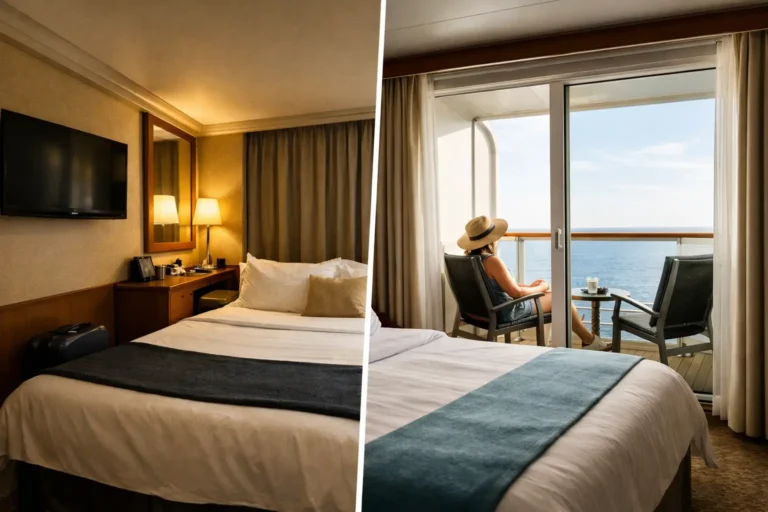
Cabin design matters more than people realise, particularly on longer sailings. Storage, bathroom layout, plug sockets, and seating can all affect comfort. Some lines make excellent use of space in standard cabins. Others reserve the better layouts for higher categories.
Public space matters too. A ship can carry a similar number of guests to another vessel yet feel noticeably more crowded if lounges, pool areas, and dining rooms are tighter. Photos rarely tell the full story. Looking at ship size alone is not enough – guest capacity and layout are just as important.
Service style
Service is not only about speed. It is also about tone. Some cruise lines are polished and formal. Others are friendly and relaxed. Many travellers have a clear preference once they experience both.
If you want a cruise where staff quickly know your routine and the service feels very personal, you may be happier on a premium or luxury line, or on a smaller ship. If you are content with efficient service in a busier environment, a mainstream line can still work very well.
Which cruise line suits which traveller?
For first-time cruisers, a mainstream or premium line often makes the easiest starting point. You get enough structure to feel confident, but not so much formality that the holiday feels intimidating. If you are worried about making mistakes, lines with clearer dress guidance and straightforward dining arrangements can feel more manageable.
For couples looking for a quieter break, premium lines usually deserve close attention. They often provide a more adult atmosphere without moving fully into luxury pricing. This can be a particularly good fit for travellers who care about comfort, decent dining, and a calmer onboard environment.
For retirees or seasoned cruisers who value service and ease, the all-inclusive elements of a luxury line can make genuine sense. The cost is higher, but so is the level of simplicity. If you prefer fewer onboard decisions and a more polished experience, that can be money well spent.
For families or those who like lots of activity, large contemporary ships remain hard to beat. They offer strong entertainment, wide dining choice, and plenty to do on sea days. The compromise is that they can feel busy, especially during school holidays.
Common mistakes in an ocean cruise line comparison
One of the most common mistakes is choosing purely on itinerary. Of course the route matters, but on a cruise holiday the ship is part of the destination. If the onboard style does not suit you, even a brilliant itinerary can feel flat.
Another mistake is assuming all premium or all luxury lines are broadly the same. They are not. Some lean more traditional, some more contemporary, some more destination-focused, and some more indulgent. Category labels help, but they do not replace reading the finer details.
It is also easy to underestimate practical issues such as embarkation style, transfer arrangements, dress expectations, and whether the ship is likely to feel crowded. At The Essential Cruise Shop, that is often where travellers gain the most confidence – not from broad claims, but from understanding the small operational details that shape the whole experience.
The best cruise line for you is usually the one that removes the most friction from your holiday. It fits your budget without constant onboard upselling, matches your preferred level of formality, and feels comfortable rather than impressive on paper. If you compare cruise lines through that lens, the right choice becomes much clearer – and the holiday itself usually starts off on much steadier footing.
Frequently Asked Questions
Disclaimer
The Essential Cruise Shop Blog provides this guide for informational purposes and is not a travel agency. The information contained in this guide is for general guidance only. While we do our best to ensure the information is up-to-date and correct, we make no representations or warranties of any kind about its completeness or accuracy.
Cruise line policies, itineraries, and loyalty programs are subject to change without notice. We strongly recommend that you verify all details directly with your cruise line or a certified travel agent before making any bookings or financial commitments.
We cannot be held liable for any financial loss due to the reader’s failure to follow the above advice.
Affiliate Disclosure
Many of the links are affiliate links, The Essential Cruise Shop Blog may receive a commission from qualifying clicks, orders or bookings. This income helps support our efforts to provide and improve our site and turn it into a one stop resource for travellers with a bias towards cruising.