Tunis Cruise Port Guide: Carthage & Medina Tips
Introduction
Cruise ships visiting Tunis dock at the port of La Goulette. Mediterranean fly-cruise itineraries calling at this North African gateway frequently connect major regional ports of call such as Barcelona in Spain and Palermo in Italy.
The berth welcomed steady maritime traffic in recent years, with MSC scheduling 38 cruise calls to the destination in 2022, averaging approximately one call per week. During the 2024 cruise season, the port projected hosting 82 cruise calls carrying 220,000 ocean travellers.
Arrival facilities accommodate a broad spectrum of vessel sizes, handling large ships such as MSC Grandiosa carrying 5,500 passengers alongside smaller boutique ships like MS Hebridean carrying 94 passengers.
Quick Overview for Cruise Passengers
The port is widely recognised as one of the most appreciated destinations in the western Mediterranean basin. Serving as the primary maritime gateway to the most historically rich and culturally diverse region of Tunisia, it provides direct access to the capital city and its surrounding coastal suburbs.
The region offers a unique blend of Arabic, African, and European traditions. In the capital, the Ville Nouvelle district displays French colonial architecture built around the historic centre, serving a metropolitan population of over 2.6 million people. Historical landmarks near the water include the Kasbah in La Goulette, a 16th-century fortress constructed by Holy Roman Emperor Charles V and Charles I of Spain. At the start of the 19th century, this coastal site was the country’s principal maritime town, whereas the historical port of Tunis sits 9 kilometres inland.
Key tourist highlights accessible during a day stop include the ruins of Carthage, the coastal village of Sidi Bou Said, the capital’s historic Medina, and the Bardo Museum. The commercial pier functions as the primary cruise terminal and is situated about 13 km (8 miles) north of central Tunis.
Where Do Cruise Ships Dock?
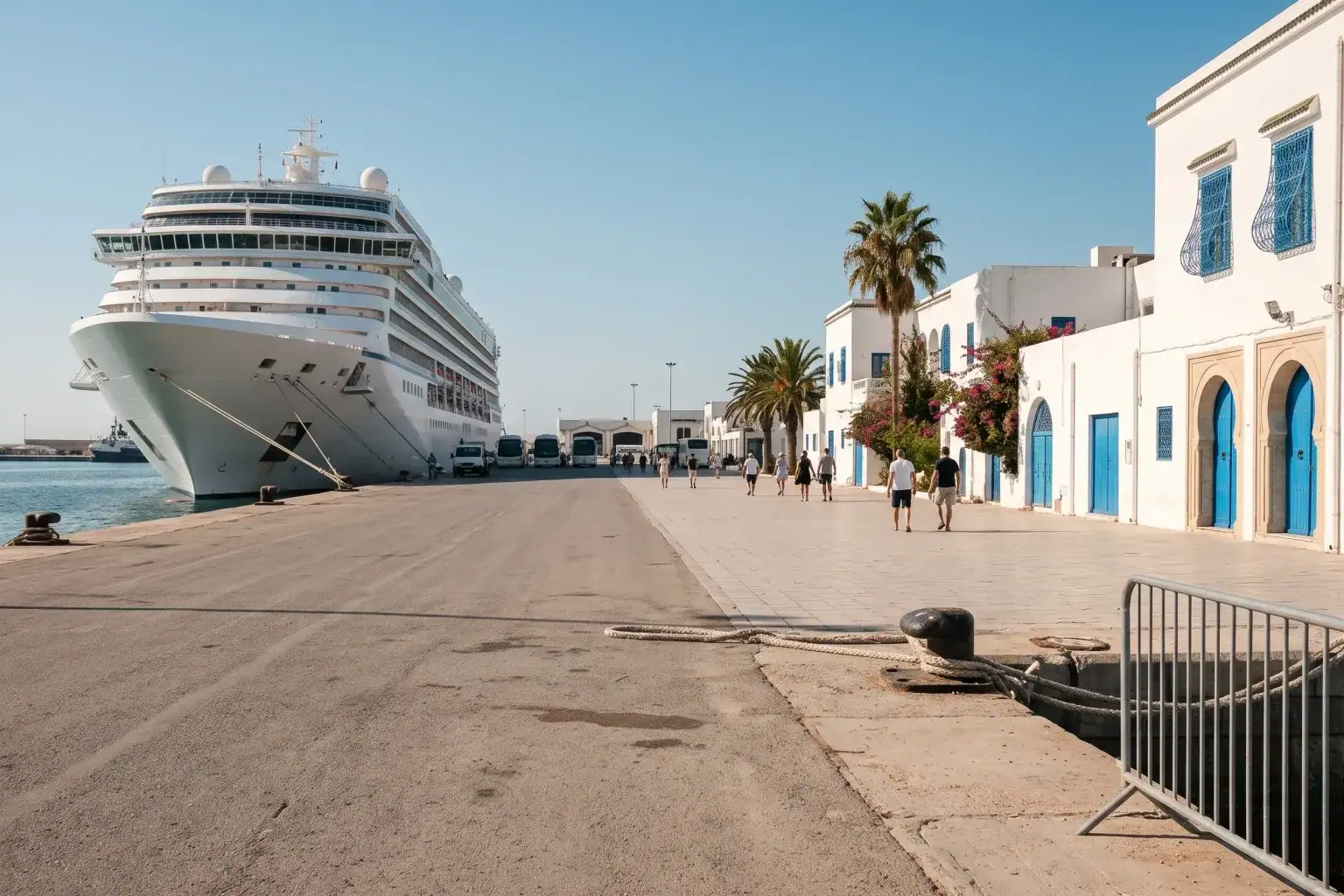
The maritime facilities at the berth include two dedicated berths reserved exclusively for cruise ships over a length of 657 metres. Disembarking foot passengers step directly into a 5,000 square metre passenger hall designed to process arriving crowds efficiently. To streamline arrival logistics, police and customs formalities can be completed aboard the ship en route to Tunisia, shortening transit times upon arrival.
Directly adjacent to the disembarkation quay is Goulette Village Harbour, a dedicated tourist village accessible directly by arriving cruise passengers. This cruise terminal complex provides an array of amenities including local souvenir shops, food and drink venues, banking services, tour desks, live cultural entertainment, and spa facilities. Wi-Fi service is not available inside the main cruise port terminal building, but wireless internet can be accessed at cafés and restaurants throughout the village harbour.
Passenger support services are available throughout the terminal. Porters from the SUPS society assist travellers with unloading, loading, and transporting hand luggage and heavy bags. On the ground floor of the maritime station, a medical guard service operates 24/7 from June 1 to September 30. Outside, designated parking is provided for tour buses, though on-site parking for private passenger vehicles is not available.
Travellers should be mindful of strict customs prohibitions at the port. Importing palm trees, palm tree branches, their derivatives, or henna is strictly prohibited. Furthermore, importing attack or dangerous dog breeds, including Pitbull, Rottweiler, Tosa, Mastiff, or Boer bull breeds, is forbidden.
Transport Options from the Port to Key Sights
The port area functions as the primary convergence point for major road and rail transport networks. Highway transport connects directly to major motorways, including the Tunis-M’saken and Tunis-Bizerte highways. When planning your excursions, please keep in mind that local traffic, weather conditions, and unexpected road delays can alter transfer durations, so building a sensible time buffer before returning to the ship is always advised.
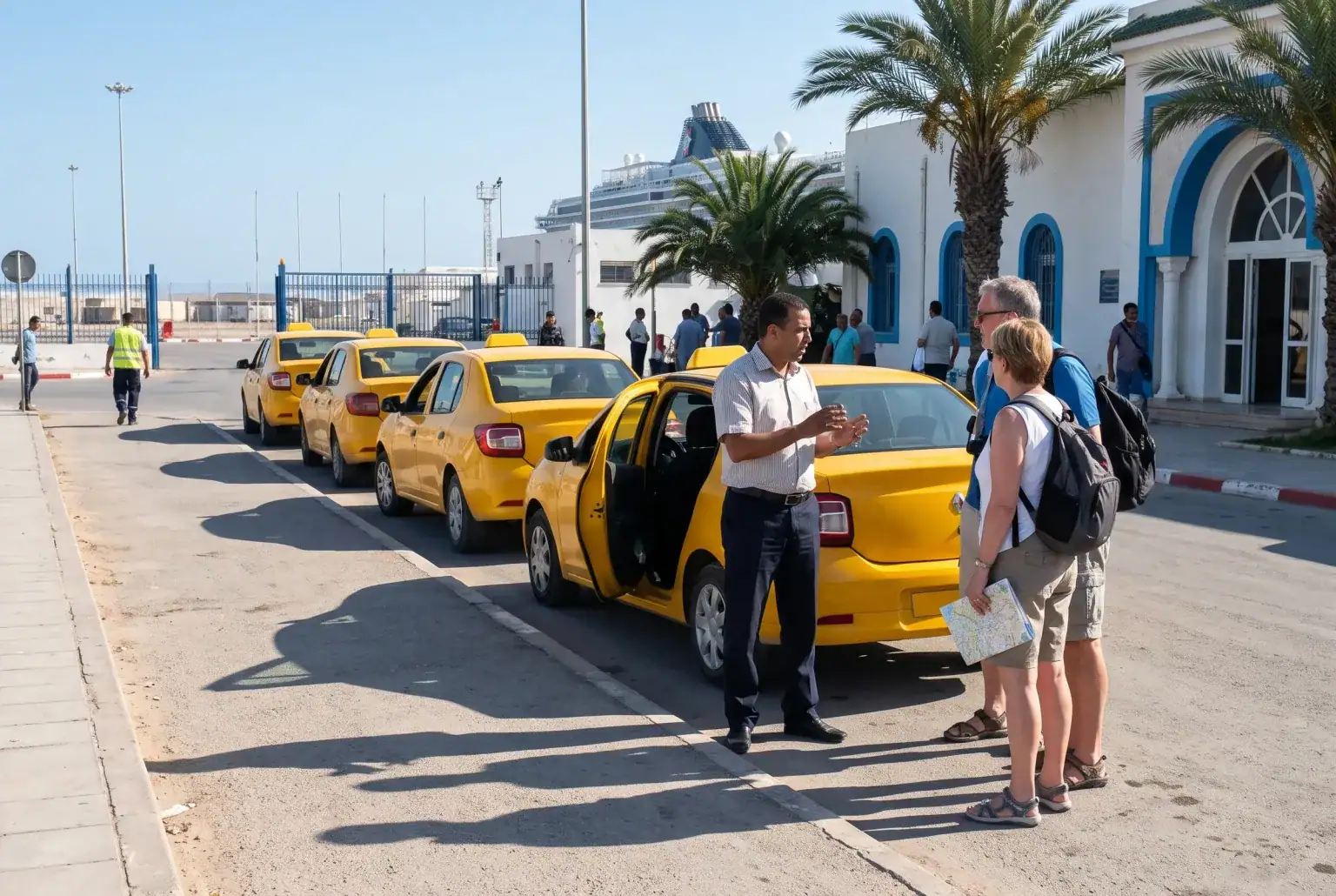
Taxis are located inside the port terminal area for direct transport to regional sights. It is standard practice to negotiate fixed rates or daily fares with the driver before embarking on your journey. For those interested in public transport, electric trains operate near the port area as an alternative transit route. Public transport is accessible near the exit, with the closest train station on the dedicated light rail line (Métro léger) situated approximately 900 metres away.
The TGM electric railway (Tunis-Goulette-Marsa rail line) connects the harbour area directly to Tunis City, located about 11 km (7 miles) away. Upon arriving at the urban terminus, Avenue Habib Bourguiba connects the TGM train station directly to the main entrance of the Medina. For travellers heading toward the northern coast, the village of Sidi Bou Said is located approximately 7 km (4 miles) north of the port and 20 km (12 miles) east of Tunis City.
Must-See Attractions Ashore
Ancient Carthage offers compelling historical exploration near the shore. In ancient times, Carthage was a major maritime power known for its naval and merchant fleet, and the remains of its ancient ports still show the historical importance of the area’s maritime activity. Today, the ancient ruins lie a short drive from downtown Tunis and feature extensive Roman archaeological remains, such as the Antonine Baths. Ancient history enthusiasts can also view the ancient Roman theatre of Carthage, which has hosted the International Festival of Carthage since its establishment in 1964.
Further along the coast sits Sidi Bou Said, a village known for its distinct architectural style featuring buildings predominantly painted in white and blue. This picturesque coastal village is located close to the sandy beaches of La Marsa, offering scenic vistas over the Mediterranean bay.
In the capital, the UNESCO-listed Medina contains a winding maze of alleys and covered souks featuring approximately 700 historic monuments, traditional craft shops, jewellers, perfumeries, and fabric merchants. The district centres around the Al-Zaytouna Mosque (the Grand Mosque Ezzaitouna), constructed in 732 CE by the Umayyad dynasty using 160 columns taken directly from the ancient ruins of Carthage. It is the only mosque in the city open to non-Muslim visitors, though entry is restricted to the central courtyard. The primary entrance into the old quarter is Bab El-Bahr, also known as the French Gate, marked by a historic stone arch.
Within the Medina, preserved historical buildings document local life under Ottoman rule. The Dar Ben Abdallah museum, an 18th-century palace, exhibits traditional crafts, textiles, and furniture illustrating artistic life during the Ottoman era. Nearby, Tourbet el-Bey serves as the largest Ottoman mausoleum in the city, housing the tombs of over 160 Husaynid princes and dignitaries.
For museum enthusiasts, the National Bardo Museum is housed inside a 13th-century palace and holds the largest and finest collection of Roman mosaics in the world. The exhibits also display Roman and Ancient Greek artifacts alongside historical items from the Punic, Numidian, Byzantine, and Islamic eras. To enjoy a quieter experience, cruisers visiting the Bardo Museum can avoid tour bus crowds by scheduling their visit early in the morning or later in the afternoon.
Independent Exploring vs Guided Excursions
Cruise ship passengers visiting the port do not require a visa to enter Tunisia, provided they present a valid passport upon arrival. Choosing between self-guided travel and structured tours comes down to your personal preferences for transit and scheduling.
Booking a guided shore excursion through your cruise line or an official provider offers seamless, dedicated transport and structured commentary when travelling between multiple historic districts. Alternatively, hiring a private local driver for the day at the terminal allows you to tailor your itinerary to specific cultural sights while maintaining direct control over your timing.
Suggested One-Day Shore Itineraries
A typical cruise port stop schedule allows docking from 9:00 AM to 6:00 PM (18:00), offering ample time for day tours across the capital region’s primary highlights. Standard shore excursion itineraries feature visits to ancient Carthage in the morning, followed by a walk through Sidi Bou Said, before heading into the central souks. Passengers spend the day exploring these iconic sites before returning to the ship in the evening to resume their cruise.
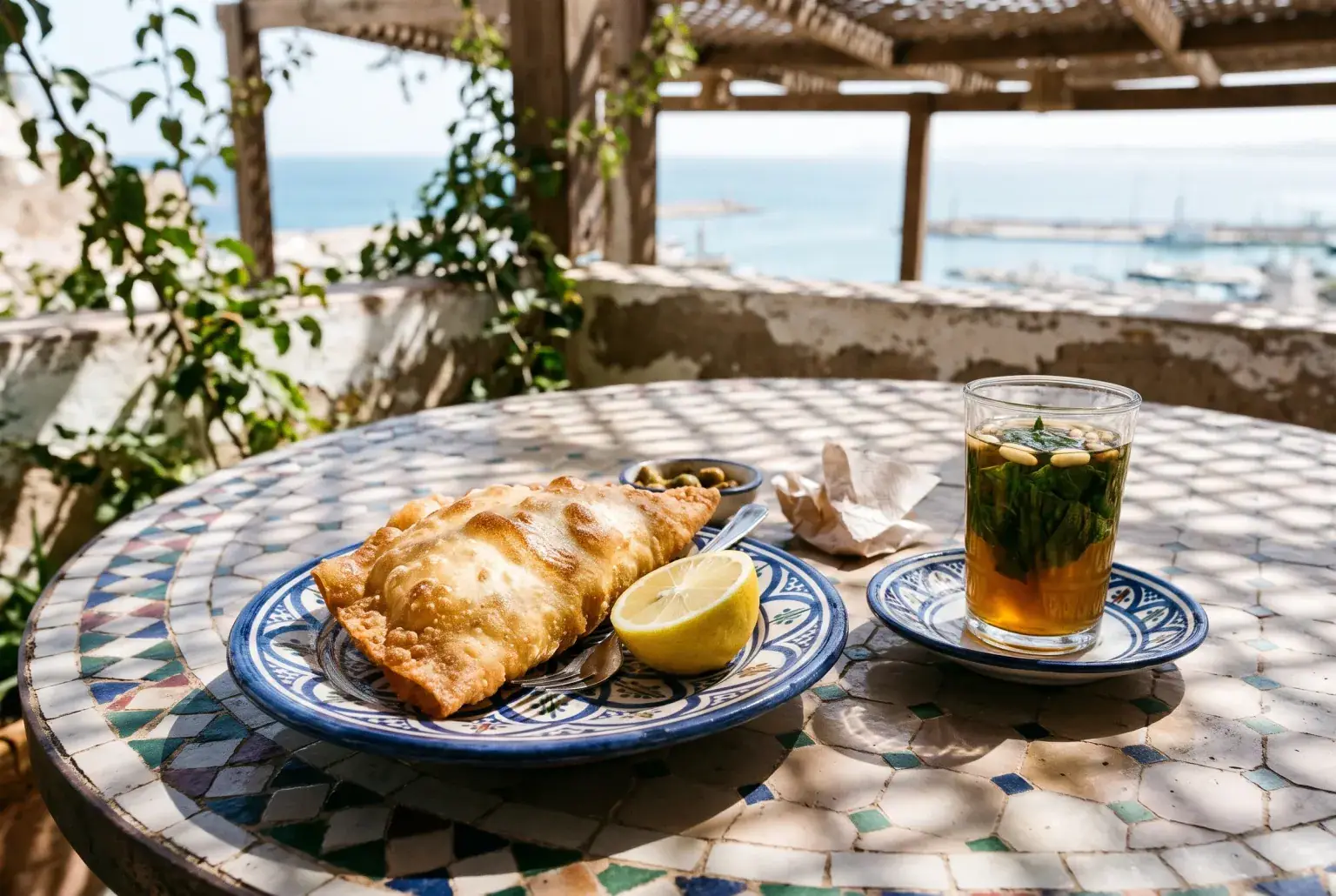
Taking time for a traditional local lunch enhances your day ashore. Regional food options include Brik, a classic dish made from fried Malsouka dough stuffed with egg, tuna, and parsley. Popular street food includes Fricassé, a fried savoury doughnut filled with tuna, boiled egg, olives, harissa, and potato, alongside Bambalouni, a sweet treat made from fried flour dough topped with sugar or honey. Downtown La Goulette is also within walking distance of the cruise terminal, offering local seafood restaurants and relaxed cafés.
Money, Haggling and Local Practicalities
Managing local currency during your port visit is convenient upon disembarking. Currency exchange facilities, including exchange boxes and automatic exchange ATMs, are available directly at the port terminal. While major tourist establishments accept card payments, having cash on hand is helpful for minor purchases, street food, and market shopping.
When exploring the narrow streets of the UNESCO-listed Medina, visitors can haggle with local sellers for handcrafted goods, leatherwork, ceramics, and souvenirs. Bargaining is a standard cultural custom, and polite negotiations are expected when shopping in the market stalls.
When visiting historic or religious sites, choosing smart casual attire that covers your shoulders and knees is appreciated out of respect for local traditions. Lightweight, loose-fitting clothing is ideal for staying comfortable while exploring outdoor archaeological sites under the sun.
Who Is This Destination Best For?
This port of call is ideally suited for cruisers interested in ancient history, unique architecture, and traditional Mediterranean trade culture. During a port stop, cruise passengers can visit archaeological sites, tourist areas, and traditional craft shops in the capital city within a manageable day schedule.
Travellers with mobility concerns should plan carefully, as ancient ruins and historical cobblestone streets in the old town feature uneven steps and narrow stone alleys. Checking accessibility arrangements with your tour operator or cruise line prior to departure will ensure a smooth day ashore.
Frequently Asked Questions
Additional Resources

The Essential Cruise & Travel Shop

Disclaimer
The Essential Cruise Shop Blog provides this guide for informational purposes and is not a travel agency. The information contained in this guide is for general guidance only. While we do our best to ensure the information is up-to-date and correct, we make no representations or warranties of any kind about its completeness or accuracy.
Cruise line policies, itineraries, and loyalty programs are subject to change without notice. We strongly recommend that you verify all details directly with your cruise line or a certified travel agent before making any bookings or financial commitments.
We cannot be held liable for any financial loss due to the reader’s failure to follow the above advice.
Affiliate Disclosure
Many of the links are affiliate links, The Essential Cruise Shop Blog may receive a commission from qualifying clicks, orders or bookings. This income helps support our efforts to provide and improve our site and turn it into a one stop resource for travellers with a bias towards cruising.