Cruise Line Dress Codes Explained
Introduction
You can board a cruise with the right passport, the right cabin number and every excursion booked, then still feel wrong-footed at dinner because everyone else seems to know what “smart casual” means. Cruise line dress codes catch many travellers out for one simple reason – they are rarely as formal, or as uniform, as people imagine.
The good news is that most cruise lines are far more practical than intimidating. The challenge is not usually whether you need a ballgown or black tie. It is understanding how expectations shift between daytime, evenings, dining venues and different cruise brands. Once you know where the line really sits, packing becomes much easier.
How cruise line dress codes usually work
Most cruise line dress codes are built around three settings: daytime onboard wear, evening wear for main dining and public spaces, and a more polished dress-up night on selected sailings. That sounds simple, but wording varies. One line may say casual, another may say country club casual, and another may use evening chic. Often, they mean broadly similar things with slightly different levels of polish.
During the day, comfort leads. Shorts, polo shirts, sundresses, casual tops, skirts and comfortable footwear are usually fine in buffet areas, on open decks and around the ship. Swimwear is generally acceptable only at the pool, with a cover-up needed when walking indoors. Bare feet are not usually welcome away from the pool deck.
In the evening, the standard usually moves up a notch. For men, that often means chinos or tailored trousers with a collared shirt or smart polo. For women, it may mean a casual dress, jumpsuit, blouse with trousers, skirt and top, or other neatly put-together options. On many mainstream lines, dark jeans can be acceptable in some venues if they are tidy and paired with smarter pieces, but ripped denim, sportswear and beachwear are commonly discouraged.
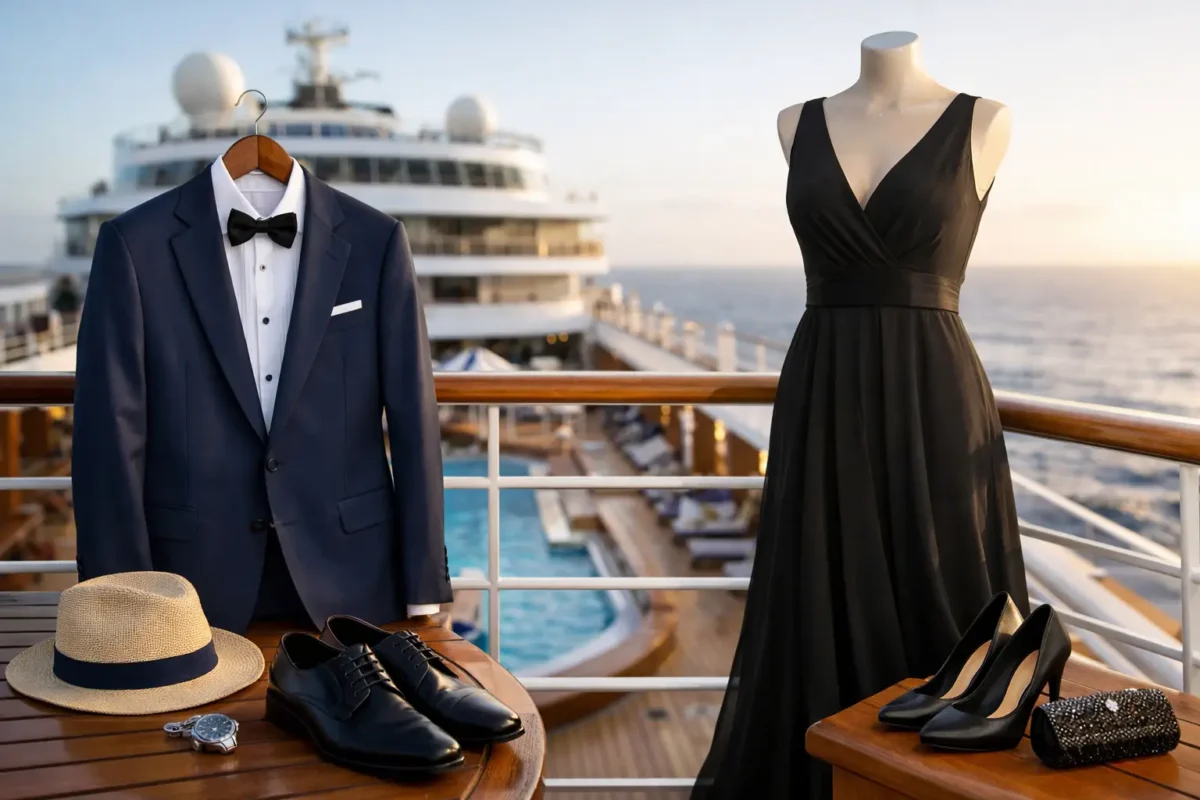
Then there is formal night, gala night or whatever name a cruise line prefers. This is where first-time cruisers tend to overthink things. On most mainstream cruises, it is less about strict rules and more about encouraging guests to dress more smartly for photographs, special menus and a slightly more occasion-led evening.
What the wording really means
Dress code language can sound more complicated than it is. Casual usually means holiday wear that is clean, presentable and suitable for shared spaces. Smart casual is the most common evening standard and also the vaguest. In practice, it usually means you should look ready for a nice restaurant rather than a pub garden after a day at the beach.
Formal, elegant casual and chic nights depend heavily on the cruise line and itinerary. On a premium or luxury line, these labels may genuinely signal jackets, cocktail dresses and a more traditional evening atmosphere. On a family-focused mainstream line, they often mean an opportunity to dress up rather than a requirement to go fully traditional.
This is where cruise line choice matters. A line known for relaxed dining and resort-style holidays will usually interpret dress codes more loosely than a line built around classic cruising rituals. River cruises often sit somewhere in the middle – generally smart, understated and less theatrical than ocean formal nights.
Cruise line dress codes by type of cruise
Mainstream ocean cruise lines usually aim for flexibility. They know guests want to feel comfortable, and many no longer enforce highly formal standards across the ship. You may still find a gala or dress-to-impress evening, but in reality a smart shirt and trousers or a simple dress will often be enough in main dining rooms.
Premium and luxury lines tend to expect a more polished look overall, even when the wording remains gentle. You may not be required to wear a tuxedo or full-length gown, but the onboard mood often leans more refined. Guests on these lines are more likely to dress for dinner as part of the experience.
River cruise dress codes are usually the easiest to manage. Days are practical because of excursions, walking and changing weather. Evenings are smart but rarely fussy. A jacket for men and a dress or smart separates for women usually cover nearly every scenario.
Expedition cruises are the clear outlier. Function comes first, especially in colder regions. You might still want one smarter outfit for dinner, but nobody expects formal glamour after zodiac landings and outdoor briefings.
Where dress codes are usually enforced
A common misconception is that one evening dress code applies everywhere on the ship. In practice, enforcement tends to centre on the main dining room and certain speciality restaurants. Buffet venues are often more relaxed, although basic standards still apply.
Some lines are strict about no shorts, no flip-flops and no sleeveless vests in the main dining room at dinner. Others are more relaxed unless clothing is clearly inappropriate. Theatre venues, lounges and bars may reflect the evening standard, but staff are less likely to challenge guests unless the outfit is very obviously too casual.
Speciality restaurants often expect a slightly smarter look, particularly steakhouses, fine dining venues and chef’s table experiences. If you plan to book these, it is worth packing one or two outfits that feel a touch more polished than your standard evening wear.
What to pack without overpacking
The most useful approach is to pack around the smartest likely requirement, not every possible one. For many cruises, that means daytime casual wear, a few smart casual evening outfits, and one dressier option for a formal or gala night.
For men, that may be lightweight trousers, chinos, collared shirts and one jacket if the cruise line leans more traditional. A tie is increasingly optional on many lines, though some premium sailings still make it worthwhile. For women, a versatile dress, a jumpsuit or coordinated separates can work across several evenings with different accessories.
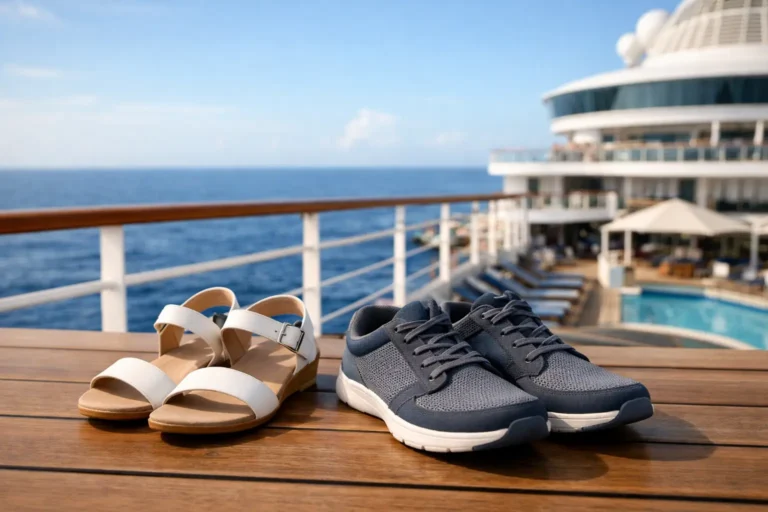
Shoes matter more than many travellers expect. Smart trainers may pass in some casual settings, but they do not suit every evening venue. One pair of comfortable daytime shoes, one pair for excursions and one smarter evening option is often enough.
Fabric choice can save space and stress. Crease-resistant pieces, darker colours and items that can be reworn in different combinations work especially well on cruise holidays. If your cruise includes flights, pre-cruise hotels or train travel to port, lighter packing becomes even more valuable.
Common mistakes travellers make
The biggest mistake is assuming formal night means you must buy an entirely new wardrobe. Usually, you do not. Most cruise guests already own something suitable if they think in terms of polished, not theatrical.
Another common issue is packing for the brochure rather than the actual itinerary. A Mediterranean summer sailing has different needs from a Norwegian fjords cruise, even if the evening dress code is identical on paper. Weather, sea days and excursion style all affect what you will realistically wear.
It is also easy to forget transitions. If you spend the day ashore and return close to dinner, you will want outfits that are quick to change into and easy to freshen up. Clothing that needs special care or heavy steaming is often more trouble than it is worth.
How to check your specific cruise line dress codes
If you are sailing with a particular brand, the safest approach is to look at the wording for your exact line and ship before you pack. Cruise line dress codes are not only different between brands. They can also vary by itinerary length, restaurant and whether the line is repositioning itself towards a more relaxed or more traditional onboard style.
Look for the evening dining guidance rather than only general packing advice. If the line offers app-based daily schedules, check how dress-up evenings are labelled. It also helps to think about your own comfort level. If you dislike dressing formally, choose outfits that meet the standard without making you feel unlike yourself. You will enjoy the holiday more.
At The Essential Cruise Shop, our view is simple: being prepared should make your cruise feel easier, not more restrictive. A well-chosen small wardrobe nearly always beats a large suitcase of guesswork.
The real aim of cruise dress codes
Most cruise lines are not trying to catch guests out. Dress codes exist to create a shared atmosphere in certain spaces, particularly at dinner. They help the evening feel distinct from the daytime and maintain a sense of occasion without requiring everyone to interpret “holiday clothes” differently.
That means there is usually room for personal style, practical choices and sensible shortcuts. If your outfit is neat, appropriate for the venue and in step with the tone of the line, you are unlikely to feel out of place.
If you are deciding what to pack, aim for clothes that let you move easily from deck to dinner with confidence. That is usually the sweet spot where cruise preparation starts paying off.
Frequently Asked Questions
Disclaimer
The Essential Cruise Shop Blog provides this guide for informational purposes and is not a travel agency. The information contained in this guide is for general guidance only. While we do our best to ensure the information is up-to-date and correct, we make no representations or warranties of any kind about its completeness or accuracy.
Cruise line policies, itineraries, and loyalty programs are subject to change without notice. We strongly recommend that you verify all details directly with your cruise line or a certified travel agent before making any bookings or financial commitments.
We cannot be held liable for any financial loss due to the reader’s failure to follow the above advice.
Affiliate Disclosure
Many of the links are affiliate links, The Essential Cruise Shop Blog may receive a commission from qualifying clicks, orders or bookings. This income helps support our efforts to provide and improve our site and turn it into a one stop resource for travellers with a bias towards cruising.